NECO Reveals How It Overcame Credibility Challenges in 25 Years
NECO disclosed that over 28 million candidates have registered for its examinations since inception, with significant improvements in pass rates and performance in English Language and Mathematics. The council also noted that female candidates now outperform males in recent years. NECO credited its success to stronger security systems, digital transformation and continuous efforts to curb examination malpractice while expanding operations to nine countries.
 judithhh

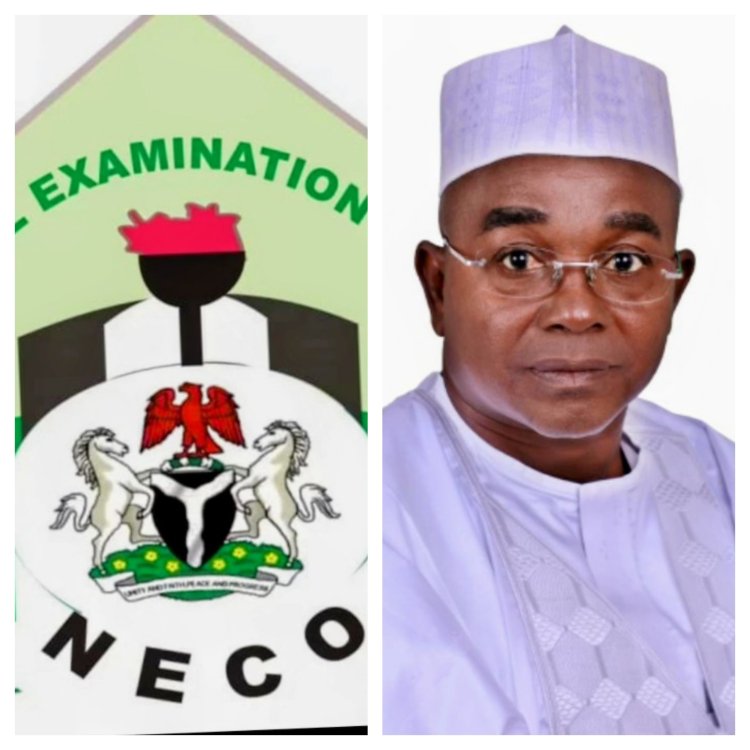
The National Examinations Council has revealed how it overcame public skepticism to become one of Nigeria’s most trusted examination bodies after 25 years of operation. Speaking at the council’s anniversary celebration in Abuja, NECO Registrar, Ibrahim Wushishi, said the organisation was established to expand access to examinations and reduce Nigeria’s dependence on the West African Examinations Council.
The National Examinations Council has reflected on its 25-year journey, revealing how it overcame early public skepticism to become one of Nigeria’s most trusted examination bodies.Speaking during the council’s 25th anniversary celebration in Abuja, NECO Registrar, Ibrahim Wushishi, said the organization faced serious credibility challenges when it was established in 1999. At the time, many Nigerians were reluctant to embrace the new examination body because they had long depended on the West African Examinations Council for Senior School Certificate Examinations (SSCE).
According to Wushishi, NECO was created to expand access to examinations, strengthen Nigeria’s educational independence and provide a credible alternative to existing assessment systems.
He explained that before NECO’s emergence, Nigeria relied heavily on WAEC for secondary school certification, a situation many critics believed did not fully align with the country’s educational priorities.
The registrar noted that NECO has transformed significantly over the past two decades, evolving into one of Africa’s largest and technology-driven examination institutions.
He said the council now conducts several major examinations, including: Senior School Certificate Examination (SSCE), Basic Education Certificate Examination (BECE), National Common Entrance Examination (NCEE), National Gifted Examination
Over the years, NECO has expanded beyond Nigeria and currently conducts examinations in nine countries, including the United Kingdom, Saudi Arabia, Benin Republic, Niger Republic and Togo.
Data released by the council showed that more than 28 million candidates have registered for NECO examinations since inception, while over 27 million candidates eventually sat for the exams nationwide.
In 2000, about 890,729 candidates participated in NECO examinations. By 2025, the figure had increased to 1,358,329 candidates, representing a 52.5 per cent growth in participation.
NECO’s data also revealed a major improvement in academic performance over the years.
In 2000, the overall pass rate with at least five credits stood at 55.84 per cent. By 2025, the pass rate had risen to 84.26 per cent.
Performance in core subjects also improved significantly. Only 25 per cent of candidates obtained credits in both English Language and Mathematics in 2000. The figure later dropped to 8.25 per cent in 2011 before rising sharply to 60.26 per cent in 2025.
The council attributed part of its success to continuous investments in examination security, digital monitoring systems and anti-malpractice measures aimed at protecting the integrity of its certificates.
One of the most striking revelations from the report was the steady rise in female academic performance.
According to NECO, male candidates initially performed better in the early years of the examination body. However, the trend gradually changed from the mid-2000s.
By 2025, female candidates recorded stronger participation and better performance rates in both English Language and Mathematics.
The council described this shift as evidence of improved female educational attainment and reduced gender inequality in examination outcomes.
NECO noted that while gender disparities have reduced significantly, major differences still exist across states due to factors such as infrastructure, teacher quality and socio-economic conditions.
State-by-state analysis showed remarkable improvement in examination performance over the years.
In 2000, only a few states performed strongly in Mathematics and English, with Bayelsa, Ogun and Rivers leading the rankings.
However, by 2025, states such as Abia, Imo and Ebonyi emerged among the best-performing states nationwide.
Abia State recorded one of the most dramatic improvements, rising from 4.82 per cent performance in 2000 to 83.31 per cent in 2025.
Other states, including Anambra and Ebonyi, also posted significant gains, while some northern states continued to face challenges despite gradual improvement.
Wushishi described NECO’s establishment as a major turning point for Nigeria’s education sector because it ended the effective monopoly previously held by WAEC.
According to him, NECO introduced competition into the examination system, made examinations more affordable and strengthened institutional reforms aimed at improving transparency and reducing malpractice.
He added that the council’s consistent focus on integrity and public confidence helped it gain the trust of millions of candidates across Nigeria.
“As the value of any certificate depends on the trust it commands, NECO has continued to invest in systems that protect the credibility of its examinations,” he said.