Nigerian Student Mudashiru Ayeni Who Built a Robot in 1971 Was Reportedly Sent to a Psychiatrist
Mudashiru Ayeni reportedly built a battery-powered robot receptionist in 1971, but his invention was allegedly met with suspicion rather than encouragement.
 judithhh

Mudashiru Ayeni reportedly built a robot in Nigeria in 1971, but his unusual invention allegedly attracted suspicion instead of support.
Long before artificial intelligence, robotics and automation became familiar concepts in Nigeria, a young Nigerian student was reportedly experimenting with an invention that appeared far ahead of its time.
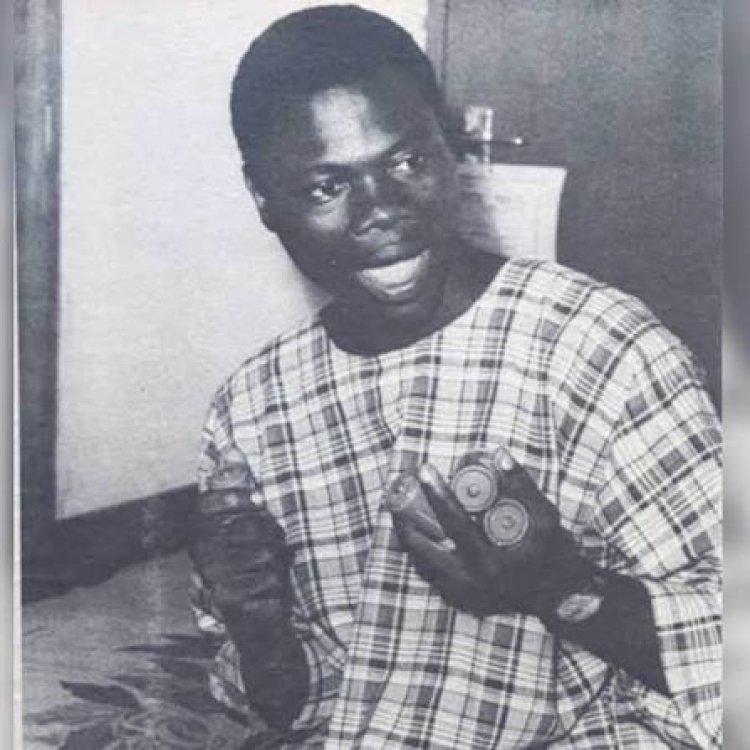
In 1971, Nigerian student Mudashiru Ayeni reportedly built a battery-powered robot receptionist, an achievement that, if properly documented and verified, would represent a remarkable chapter in the country’s history of science, technology and student innovation.
Yet instead of receiving encouragement to develop or demonstrate his invention, Ayeni was reportedly subjected to psychiatric evaluation and later forced to leave school after his claims and invention were allegedly viewed with suspicion.
The story, which has resurfaced as an example of Nigeria’s complicated relationship with unconventional thinking, raises important questions about how schools respond to students who challenge established expectations and demonstrate unusual abilities.
According to the account, Ayeni believed strongly enough in his invention to ask his school to arrange an opportunity for him to demonstrate it to the country’s head of state. Rather than securing the requested meeting, the school reportedly arranged an appointment with a psychiatrist because officials allegedly believed the student was mentally unwell.
The episode, as narrated, presents a disturbing contrast: a young person attempting to demonstrate an unusual technological invention at a time when such ideas were uncommon, but whose unconventional behaviour was reportedly interpreted as evidence that something was wrong with him.
When unusual ideas become a problem
The story highlights an issue that remains relevant to Nigerian education: how institutions respond to students whose abilities, ideas or methods fall outside conventional expectations.
Education is expected to develop curiosity, creativity and critical thinking. Yet students who question established practices or propose ideas that appear unusual can sometimes encounter resistance from adults who interpret non-conformity as disobedience.
The alleged experience of Ayeni provides a historical example of the potential consequences of such an environment.
Rather than asking how the invention worked, what problem it was intended to solve or how the student could improve it, the reported response centred on whether the young inventor was behaving normally.
If the account is accurate, it represents a missed educational opportunity. A school confronted with an extraordinary student invention could have invited engineers, scientists or technology teachers to examine it, document the innovation and help the student develop it further.
Even if the invention had technical limitations, the appropriate educational response would have been to investigate, test and teach.
The danger of confusing questioning with disrespect
The story also feeds into a broader debate about the culture of learning in Nigeria.
Children are often taught to respect parents, teachers, religious leaders and other authorities. Respect is important, but education becomes weaker when respect is interpreted as unquestioning obedience.
A child who asks why something is done differently may be regarded as troublesome. A student who challenges a teacher’s explanation may be accused of disrespect. A young person who proposes an alternative approach may be told that the idea is unrealistic.
Such attitudes can discourage the very qualities required for innovation.
Scientific progress depends on asking questions. Engineers improve existing systems by challenging assumptions. Researchers question established explanations. Entrepreneurs identify opportunities by seeing possibilities that others may overlook.
A society that wants technological innovation must therefore create space for responsible disagreement, experimentation and failure.
From obedience to inquiry
The alleged story of Ayeni is particularly relevant to Nigeria’s current push towards science, technology, engineering and mathematics education.
The country is investing increasing attention in digital skills, artificial intelligence, robotics, coding and technology entrepreneurship. But equipment and technology programmes alone cannot produce innovators.
Innovation also requires an educational culture in which students are encouraged to ask questions, experiment and defend their ideas.
A student should be able to say, “I think there is another way of doing this,” without automatically being labelled disobedient.
That does not mean every unconventional claim should be accepted without examination. Quite the opposite.
Schools should teach students to provide evidence, test hypotheses, build prototypes, accept criticism and revise their ideas. Teachers should be able to distinguish between genuine misconduct and intellectual curiosity.
The appropriate response to an unusual invention is neither automatic acceptance nor immediate rejection. It is investigation.
What could have been different?
If Ayeni’s reported invention had been approached as an educational project rather than a source of suspicion, the outcome might have been different.
The school could have documented the robot, invited technical experts to assess it, allowed the student to demonstrate its functions and helped him identify areas for improvement.
Even if the invention had not been technologically sophisticated by today’s standards, the exercise could have provided valuable lessons in engineering, electronics, mechanics and problem-solving.
More importantly, the student could have received encouragement to continue experimenting.
This is one of the greatest responsibilities of education: identifying potential and providing an environment in which it can develop.
Nigeria’s forgotten innovators
The reported Ayeni story also raises questions about how Nigeria records its history of innovation.
Countries that develop strong technology ecosystems often celebrate the scientists, engineers, inventors and entrepreneurs who contributed to their technological development.
Nigeria has produced remarkable scientists, engineers and innovators, but many stories of early experimentation and indigenous invention remain poorly documented or are remembered largely through anecdotes.
The reported story of a Nigerian student building a battery-powered robot in 1971 deserves careful historical investigation.
Old school records, newspaper archives, photographs, technical descriptions, testimonies from surviving colleagues or teachers and other primary evidence could help establish what Ayeni built, how the device operated and what happened afterwards.
Proper documentation is particularly important because extraordinary historical claims should not be allowed to survive only as social-media narratives. They should be investigated, verified and preserved so that future generations can distinguish documented history from folklore.
The most important lesson from the story is not necessarily that every unconventional student is a hidden genius. It is that schools must create systems for examining unusual talent rather than suppressing it.
A student who claims to have built a robot should be given the opportunity to demonstrate it.
A student who proposes an unconventional scientific theory should be encouraged to research and test it.
A student who challenges an established idea should be taught how to construct a reasoned argument.
And a student who fails at an experiment should be helped to understand why it failed.
This is the foundation of genuine innovation.
Nigeria cannot simultaneously demand global competitiveness from its young people and maintain an educational culture in which questioning is automatically treated as disrespect.
From ‘obey’ to ‘understand’
The debate surrounding Ayeni’s reported experience ultimately goes beyond one student and one invention.
It concerns the kind of citizens Nigeria wants its education system to produce.
An education system can produce students who are good at following instructions. But the technological challenges of the modern world require people who can also identify problems, question assumptions, develop new ideas and create solutions.
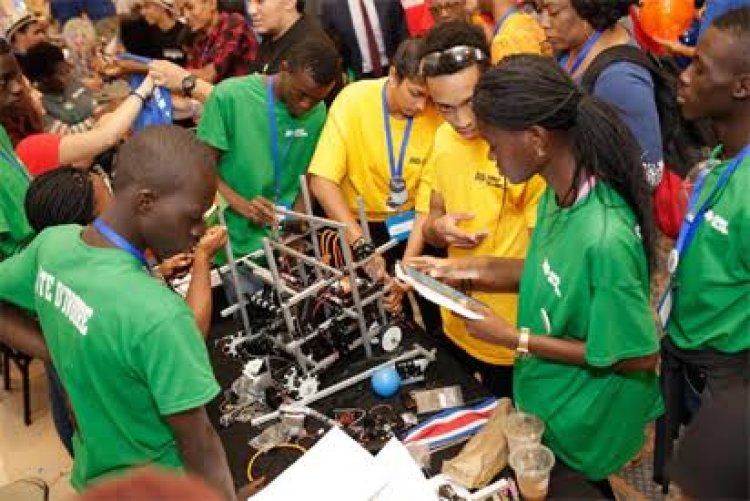
Obedience may help a student complete an assignment exactly as instructed. Critical thinking enables that student to ask whether the assignment itself could be approached differently.
Nigeria needs both discipline and curiosity, both respect and questioning, both knowledge and experimentation.
The story attributed to Mudashiru Ayeni therefore deserves more than nostalgia. It should prompt serious reflection on how Nigerian schools treat unusual intelligence and creativity.
If the account is ultimately verified, it would represent not merely the story of an inventor who was allegedly misunderstood, but also a warning about the cost of failing to recognise and nurture unconventional talent.
The lesson for today’s educators is straightforward: when a student presents an extraordinary idea, the first response should be curiosity, not condemnation.
Before telling a young person that an idea is impossible, Nigeria’s education system must be willing to ask a more important question: what if this student has discovered something we have not yet understood?