UI Professor Urges Nigeria to Establish National Newborn Screening Programme
A Professor of Surgery at the University of Ibadan (UI), Professor Taiwo Akeem Lawal, has called for the establishment of a comprehensive national newborn screening programme to enable the early detection and treatment of birth defects in Nigeria.
 Philip22

A Professor of Surgery at the University of Ibadan (UI), Professor Taiwo Akeem Lawal, has called for the establishment of a comprehensive national newborn screening programme to enable the early detection and treatment of birth defects in Nigeria.

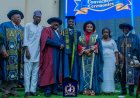
He made the call while delivering the University of Ibadan’s 629th Inaugural Lecture on behalf of the Faculty of Clinical Sciences. The lecture was titled “Creating Passageways in Dark Alleys: The Bumps, The Spurs and The Speed-Breakers.”
Professor Lawal explained that birth defects, also known as congenital malformations, are structural or functional abnormalities present in infants at birth. He noted that they are generally classified as either major or minor defects.
He identified examples of birth defects to include congenital heart defects, neural tube defects, cleft lip and palate, underdeveloped lungs, conjoined twins, and structural abnormalities of the gastrointestinal tract, anus and rectum.
The professor emphasised that major birth defects are life-threatening and remain among the leading causes of mortality in newborns and infants. Minor birth defects, however, are generally less severe and do not cause significant medical problems.

He noted that the presence of multiple minor anomalies could sometimes indicate an underlying major birth defect. Examples of such minor anomalies include birthmarks, webbing of the digits, extra nipples, and preauricular skin tags or pits.
According to him, although the exact causes of many birth defects remain unknown, several teratogenic and environmental factors have been associated with an increased risk. These include maternal smoking during pregnancy, the use of certain embryotoxic medications, exposure to radiation, ingestion of harmful chemicals through contaminated food or water, and parental occupations involving contact with hazardous materials.
The inaugural lecturer disclosed that his research into birth defects had revealed significant gaps in prenatal screening and public awareness in Nigeria.
He explained that a five-year review of children treated for birth defects at the University College Hospital (UCH), Ibadan, identified 1,479 cases, with approximately 60 per cent of the children having multiple defects. However, only 11 children had their conditions detected before birth.
Professor Lawal said the findings highlighted the limited use of prenatal screening in the country and underscored the need for an organised national programme to facilitate early detection and ensure timely medical intervention.

He added that subsequent studies conducted at UCH demonstrated the benefits of fetal abnormality scanning in identifying congenital conditions before delivery.
According to him, these efforts contributed to the establishment of the Newborn Screening Consortium, Nigeria, to investigate structural, metabolic and other forms of birth defects.
The Professor of Surgery further disclosed that a study involving 714 mothers found that only one-quarter were aware of birth defects, while just 10 per cent knew that folic acid could help prevent certain congenital abnormalities.
He expressed concern that only 2.5 per cent of the women studied had taken folic acid around the time of conception during their most recent pregnancies.
Professor Lawal also highlighted challenges confronting paediatric surgery in developing countries, including inadequate surgical equipment and shortages of essential medical supplies. He explained that these limitations had compelled practitioners to develop alternative techniques and adapt existing procedures to local conditions.
He further lamented that many paediatric surgeons in low- and middle-income countries lacked the appropriate tools needed for the effective perioperative management of children with colorectal malformations.

The lecturer stressed the need for stronger public enlightenment campaigns and improved access to information on birth defect prevention, particularly among women of reproductive age. He reiterated the importance of promoting folic acid intake before conception and during early pregnancy.
Professor Lawal advocated the examination of every newborn in Nigeria by a paediatrician or another appropriately trained healthcare professional where a paediatrician is unavailable.
He also urged the government and relevant institutions to strengthen paediatric colorectal surgery as a specialised field and establish regional centres of excellence capable of providing comprehensive, multidisciplinary care.
Expressing optimism about the future of paediatric surgical care, he said sustained research, innovation and collaboration could help reduce surgical complications, improve treatment outcomes and enhance the quality of life of children living with congenital abnormalities.

The lecture was the 25th in the University of Ibadan’s inaugural lecture series for the 2025/2026 academic session.