UI VC Calls for Strategic Partnerships to Sustain Public University Funding
The Vice-Chancellor of the University of Ibadan, Professor Kayode O. Adebowale, has reiterated the need for strategic partnerships, stronger alumni engagement and external collaborations to ensure the sustainability of public universities.
 Philip22
The Vice-Chancellor of the University of Ibadan, Professor Kayode O. Adebowale, has reiterated the need for strategic partnerships, stronger alumni engagement and external collaborations to ensure the sustainability of public universities.
The Vice-Chancellor made the call in a speech delivered on his behalf by the Director of Academic Planning, Professor Abiodun E. Ayodele, during a Gown-Town Seminar, Projects Commissioning and the rollout of the Youth4Climate Initiative organised by the Department of Crop Protection and Environmental Biology (CPEB), Faculty of Agriculture, University of Ibadan.
Professor Adebowale described the commissioned projects as significant interventions that would positively impact livelihoods and strengthen the University's engagement with society.
He noted that government funding alone is no longer sufficient to meet the increasing demands of higher education, stressing that the changing realities within the sector require universities to rethink their funding models, as government subventions can no longer sustainably support public institutions.
According to him, the University of Ibadan has continued to explore alternative funding sources through strategic collaborations, partnerships and alumni engagement, a move that informed the establishment of the Office of Alumni Relations.
He urged stakeholders, development agencies, alumni and well-meaning individuals to continue partnering with the University in advancing teaching, research, innovation and community development.
The Vice-Chancellor also congratulated the Head of the Department of Crop Protection and Environmental Biology, Professor Morufat O. Balogun, for the initiative and commended the department's alumni and benefactors for their continued commitment to its growth and development.
The Oyo State Commissioner for Agriculture and Rural Development, Barrister Olasunkanmi Olaleye, whose goodwill message was delivered by the Director of Planning at the ministry, Mrs. Funke Adeniran-Adediran, described the programme as a timely initiative for empowering young people through digital agriculture.
She said the programme's theme, "Pathways to Digitalizing Agricultural Entrepreneurship Without Borders," highlights the growing opportunities digital technology offers in agricultural production, processing, marketing and value addition.
She encouraged young people to embrace digital tools such as mobile applications, e-commerce platforms, precision agriculture technologies and social media marketing to transform agriculture into a profitable, innovative and globally competitive enterprise.
The Dean of the Faculty of Agriculture, Professor Tolu O. Ososanya, commended Professor Morufat O. Balogun for her exemplary leadership and dedication to the department's growth, describing her as a resilient leader and administrator whose ability to coordinate several activities within a single programme reflected exceptional organisational competence.
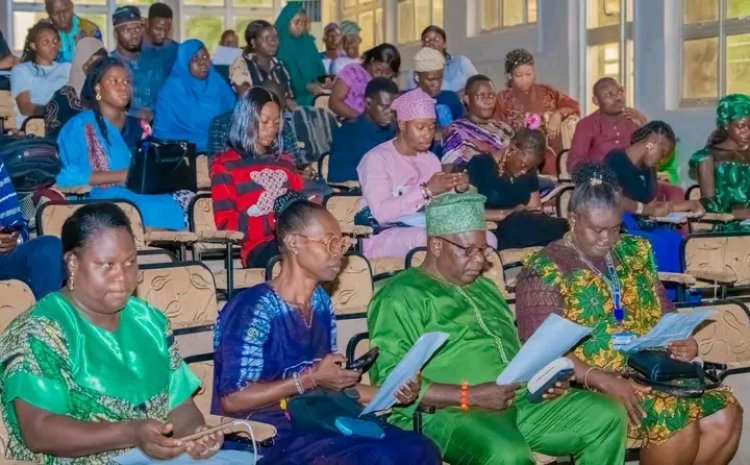
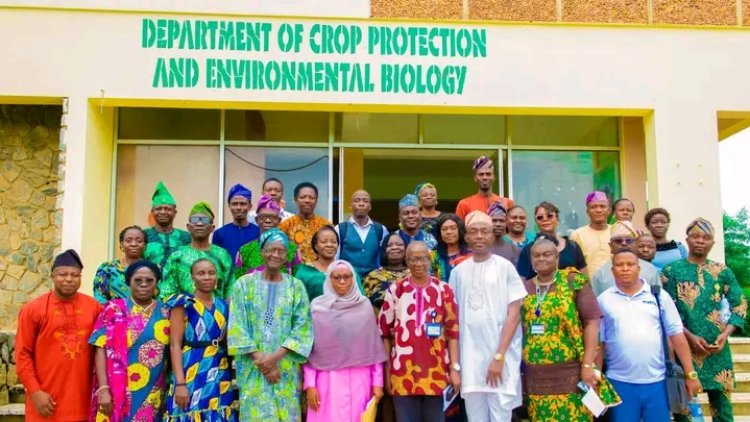
In her welcome address, the Head of the Department of Crop Protection and Environmental Biology, Professor Morufat O. Balogun, described the programme as a significant milestone for the department.
The Permanent Secretary, Bureau of ICT and Digital Innovation, Oyo State, Engineer Raheemat Adabanija, delivered the keynote address, while a keynote discussion titled "Prospects of Agricultural Value Chains in Livelihood Creation: The Case of Vegetatively Propagated Seed Systems" was led by the Managing Partner of Sahel Consulting, Mr. Temitope Adegoroye.
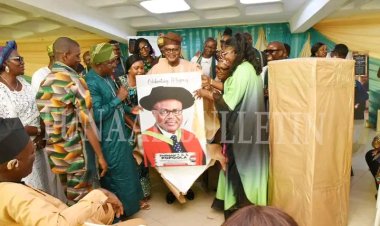
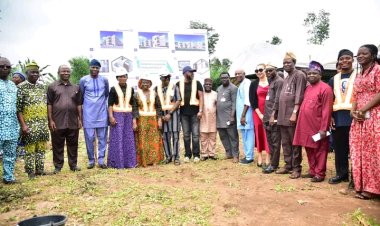
Several projects and initiatives facilitated through the support of alumni, corporate organisations, development partners and individual benefactors were commissioned and unveiled in furtherance of the department's commitment to excellence in teaching, research and community engagement.
The commissioned projects included:
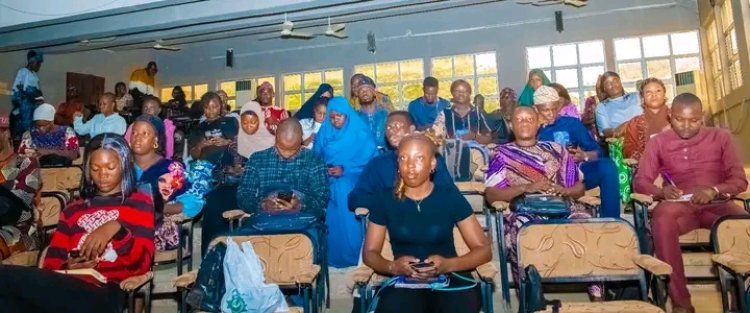
- Upgrading and renovation of the department's seminar room by Harvestfield Nigeria Ltd.
- Upgrade of the Nematology Laboratory by Professor Bamidele Fawole and Friends.
- Donation of lithium batteries for backup power by the Gani and Kudi Oladimeji Foundation (GAKOF).
- Provision of an interactive whiteboard by Harvestfield Nigeria Ltd.
- Resurfacing of some of the first-year teaching laboratory tables by the National Root Crops Research Institute.
- Design of a students' sit-out and logistics support for the CPEB@60 celebrations by Mr. Olusola Olanipekun.
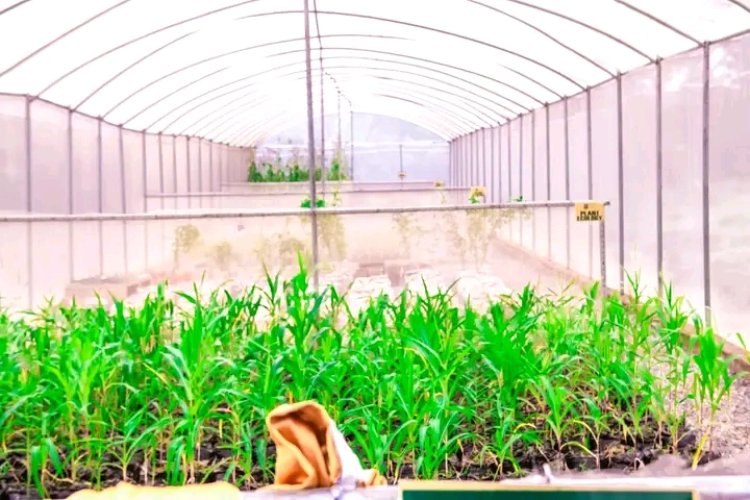
- A hybrid solar/inverter-powered cold room for seed yam storage and a screenhouse for seed yam production donated by the Abdulkabir Aliyu Foundation.
- An ultra-filtered water purification system donated by Professor Morufat O. Balogun.
- A screenhouse for tomato bacteriology research provided by Dr. Uzoechina Arinzechukwu.
- Sixty-five drums of paint for the departmental building donated by Matrix Fertilizer and Agro-Allied Ltd.
The programme also featured the launch of the Youth4Climate Initiative, with words of encouragement from the Abdulkabir Aliyu Foundation and Afruitful Environment Ltd., which will sponsor a free Environmental Management Tool Capacity-Building Training Course for three nominated postgraduate students of the department.
Other youth-focused initiatives unveiled during the event included Mushroom Entrepreneurship and Seed Yam Entrepreneurship and Youth Empowerment programmes supported by the Abdulkabir Aliyu Foundation, as well as the Going Green campaign, which involved the planting of one hundred economic trees.