UNIMAID Centre For Arid Zone Studies Partners With Wfp To Engage Siwes Students In Community Extension Programme
UNIMAID Centre For Arid Zone Studies Partners With Wfp To Engage Siwes Students In Community Extension Programme
 UmarFarouk123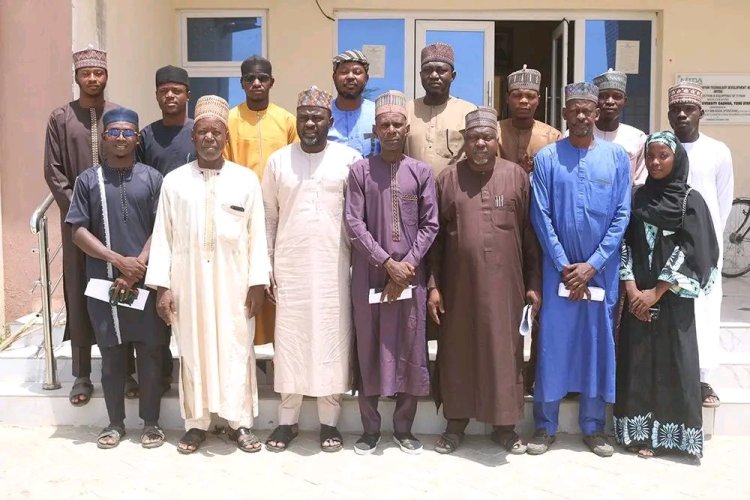
The Director of the Centre for Arid Zone Studies, CAZS, at the University of Maiduguri, UNIMAID, Professor S. B. Adamu, has reaffirmed the Centre's commitment to bridging academic learning with practical community development through a strategic partnership with the World Food Programme, WFP.
Speaking recently during a stakeholder engagement at the Federal University Gashua, Professor Adamu announced the deployment of selected Students' Industrial Work Experience Scheme, SIWES, participants to serve as Village Extension Agents, VEAs, and data collectors for their six-month internship period.
The initiative, implemented under a Memorandum of Understanding, MoU, between CAZS and the WFP, is strategically designed to provide students with hands-on field experience while equipping them with practical skills in community engagement, agricultural extension services, and accurate data collection.
According to Professor Adamu, the internship programme offers participants a unique opportunity to complement their classroom learning with real-life, field-based experience. He noted that this exposure will significantly enhance their employability and build their capacity to contribute to sustainable development in rural communities.
Funded by the World Food Programme, the initiative also heavily supports ongoing efforts to strengthen community-based interventions and promote knowledge transfer across arid and semi-arid regions. This perfectly aligns with the core mandate of the Centre for Arid Zone Studies to advance research and development for sustainable livelihoods.