UNIZIK Medical Centre to Commence Residency Training in Family Medicine, Says VC
The Nnamdi Azikiwe University Medical Centre will soon commence residency training in Family Medicine for newly graduated medical doctors, with the possibility of introducing residency programmes in other specialties in subsequent phases.
 Philip22
The Nnamdi Azikiwe University Medical Centre will soon commence residency training in Family Medicine for newly graduated medical doctors, with the possibility of introducing residency programmes in other specialties in subsequent phases.
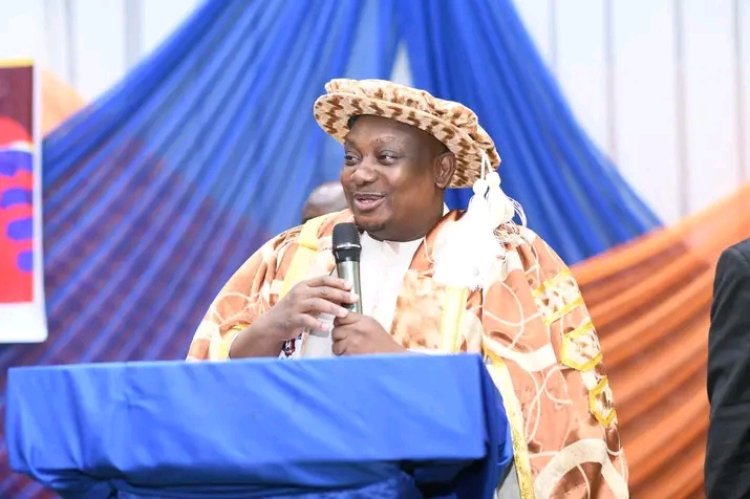
The Vice-Chancellor of Nnamdi Azikiwe University, Awka, Professor Ugochukwu Stanley Bond Anyaehie, disclosed this on Tuesday, August 11, 2026, while inaugurating the University Medical Centre Board.
The Vice-Chancellor charged the Board members to provide effective policy direction and support the transformation of the Centre into a global-standard healthcare and training facility.
The inauguration took place at the Council Chambers of the University, with Professor Azuoma Lasbery Asomugha appointed as Chairman of the Board.
Inaugurating the Board, Professor Anyaehie explained that its primary responsibility was to provide policy direction for the Medical Centre without interfering with its day-to-day administration.
He noted that the Board should take ownership of issues relating to projects, budgeting, development and strategic planning, stressing that once programmes and projects were captured in the budget, the Board should be able to drive their implementation without subjecting routine matters to unnecessary administrative processes and bottlenecks.
The Vice-Chancellor further disclosed that plans to commence residency training in Family Medicine at the Medical Centre were aimed at making the facility not only a healthcare provider but also an important training arm of the University.
He also revealed that qualified medical lecturers in the University had been appointed as consultants to the Medical Centre and urged the Board to develop a framework that would enable them to contribute regularly to clinical services and the training of residents.
Professor Anyaehie said the University was also exploring opportunities to expand specialist services and attract additional professionals, noting that the ultimate goal was to develop a Medical Centre capable of providing quality healthcare services to members of the University community and the wider public.
He disclosed that the University had commenced the deployment of an electronic medical records system through an existing Memorandum of Understanding, adding that the initiative would improve efficiency, record keeping and healthcare management at the Centre.
He further announced plans to extend the University’s health insurance scheme to primary and secondary school pupils, explaining that the initiative would make healthcare more accessible while strengthening the financial sustainability of the Medical Centre.
Professor Anyaehie also disclosed that efforts were underway to upgrade emergency medical services at the Centre. He said the University had received donations and pledges for some medical equipment, including a ventilator, but emphasised that acquiring equipment alone was not enough.
He stressed the importance of training personnel to properly operate and maintain the equipment in order to ensure effective emergency care.
On the expansion of healthcare services across the University community, the Vice-Chancellor disclosed that the administration had plans to establish additional medical facilities at strategic locations, including Agulu, Ifiteogwuari and Okofia, while existing mobile clinic arrangements would also be reviewed.
He said the University was also considering the acquisition of electric vehicles to support mobile healthcare operations and reduce the cost of fuel.
Professor Anyaehie expressed confidence in the capacity of the Board to contribute meaningfully to the development of the Medical Centre, describing its members as reliable partners in the University’s drive for improved healthcare delivery.
He shared his experience at another institution where, as a Provost, he had supported the transformation of an underdeveloped medical facility into a modern healthcare centre through strategic partnerships.
According to him, the facility eventually provided specialist clinics and other services not only to students but also to members of the surrounding community.
He said the experience demonstrated the importance of partnerships, strategic planning and sustainable healthcare financing in developing a functional university medical centre.
The Vice-Chancellor therefore charged the newly inaugurated Board to work collectively towards building a Medical Centre that would provide quality and accessible healthcare services while also supporting teaching, training and research.
The Chairman of the University Medical Centre Board, Professor Azuoma Lasbery Asomugha, expressed optimism that the inauguration of the Board would provide a new platform for the development of the Medical Centre.
Professor Asomugha recalled that efforts to strengthen the Medical Centre had been considered during previous administrations but encountered challenges, particularly in accessing facilities and services at the teaching hospital.
He noted that the distance and disruptions associated with industrial actions had further highlighted the need for the University to develop stronger healthcare facilities within its own environment.
The Board Chairman proposed the establishment of a modern diagnostic centre equipped with facilities such as CT scan, MRI, echocardiography and other advanced diagnostic equipment.
He said the Board was open to partnerships with credible organisations and individuals, including potential partners outside Anambra State, to achieve the objective.
Professor Asomugha also drew attention to an earlier Memorandum of Understanding involving diagnostic equipment, including a CT scan, and called for the matter to be reviewed to determine how the existing arrangement could be revived or renewed.
He stressed the need for the University’s Legal Office and relevant stakeholders to examine existing agreements and develop appropriate frameworks for new partnerships.
The Director of Medical Services, Dr. Jane Nkolika Ezeonu, in her speech, expressed optimism about the various initiatives being proposed for the University Medical Centre.