Federal Governent to Introduce CNG-Powered Buses, Tricycles in Nigerian Universities
The Federal Government has announced plans to introduce compressed natural gas (CNG)-powered buses and tricycles across Nigerian university campuses to make transportation more affordable for students and staff.
 judithhh
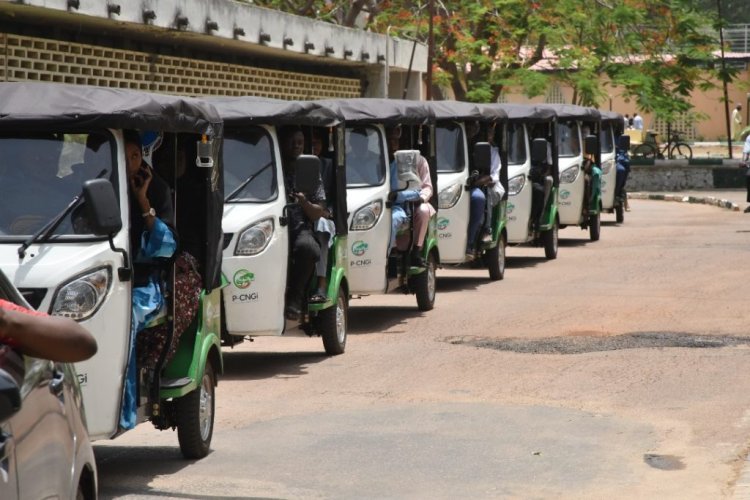
Federal Government has announced plans to introduce compressed natural gas (CNG)-powered buses and tricycles within and around university campuses nationwide as part of efforts to reduce transportation costs for students and staff.
The Executive Chairman of the Presidential Initiative on Compressed Natural Gas and Electric Vehicles (PiCNG & EV), Ismaeel Ahmed, disclosed this during a CNG awareness campaign at Bayero University Kano (BUK).
Ahmed, who was represented by Louisa Afu, said the campaign would be extended to universities across the country under Project SPROUT, a campus mobility initiative designed to provide more affordable and cleaner transport options.
The project is being implemented through a partnership involving PiCNG & EV, FEMADEC Energy and the Midstream and Downstream Gas Infrastructure Fund (MDGIF).
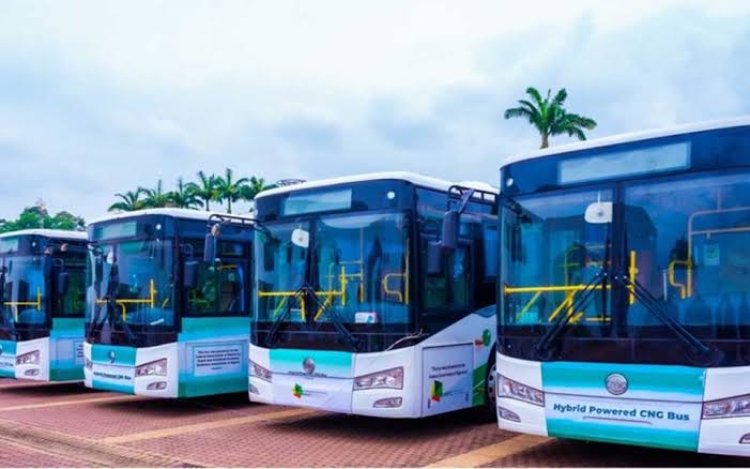
Afu said the initiative would involve constructing CNG refuelling stations and vehicle conversion centres, alongside the phased introduction of CNG-powered buses and tricycles to serve university communities.
She explained that the programme was intended to ease the financial burden of commuting on students and university employees while promoting awareness of CNG as an alternative fuel.
“Transportation is an important part of everyday life for students and staff of universities, and when the cost of transportation is high, it affects everyone,” she said.
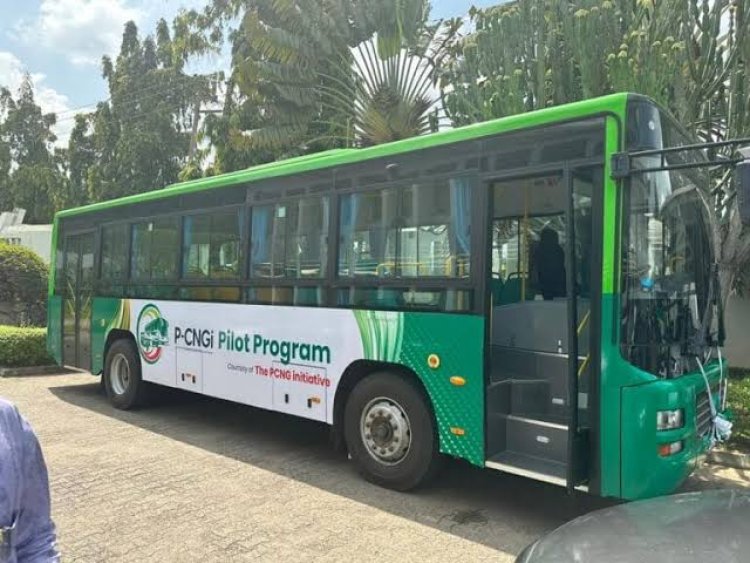
As part of the awareness campaign, free rides on CNG-powered buses were provided to BUK students, giving them an opportunity to experience the vehicles and ask questions about the technology, including its safety, operation and benefits.
Afu urged students to help promote public understanding and acceptance of CNG-powered transport, saying community support would be important to the success of the clean-energy initiative.
She said the Presidential Initiative on CNG and Electric Vehicles was established following President Bola Tinubu’s May 29 inaugural address and the subsequent removal of the petrol subsidy, with a mandate to promote cleaner energy and mobility solutions while attracting investment.
The Project Coordinator for MDGIF-PiCNG projects at FEMADEC Energy, Engr. Ovoke Obire, said the company was supervising the construction of CNG stations and vehicle conversion centres in different parts of the country.
Obire explained that MDGIF was funding the construction of the facilities, while PiCNG was responsible for providing buses and tricycles for transportation services at participating institutions.
He added that subsidised CNG conversion kits would also be made available to university staff, with up to 1,200 kits expected to be provided for each participating institution.
The Dean of Student Affairs at BUK, Mukhtar Ibrahim Bunza, welcomed the initiative, saying it could help address transportation difficulties faced by students.
Bunza thanked President Tinubu for the intervention, describing affordable campus transport as an important measure for easing the financial pressure on students.
The planned rollout is expected to combine transport services with supporting infrastructure, including refuelling stations and conversion centres. However, details on the implementation timeline, the number of universities to be covered in the initial phase and the proposed fares for campus rides were not provided at the awareness campaign.