AE-FUNAI Professor of Banking and Finance Warns Against Borrowing for Consumption at 12th Inaugural Lecture
AE-FUNAI Professor of Banking and Finance Warns Against Borrowing for Consumption at 12th Inaugural Lecture
 UmarFarouk123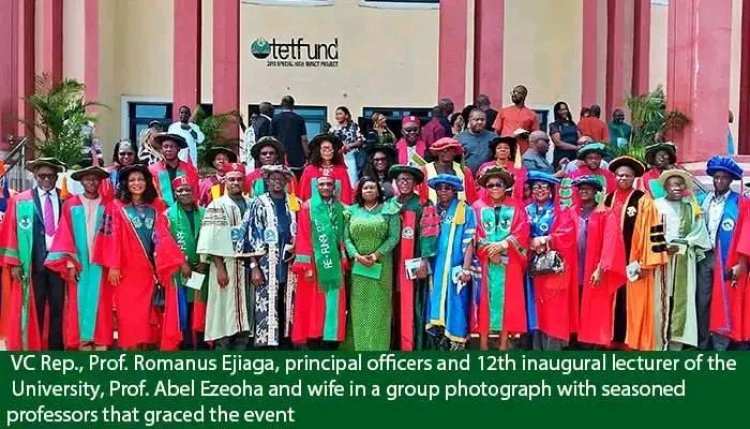
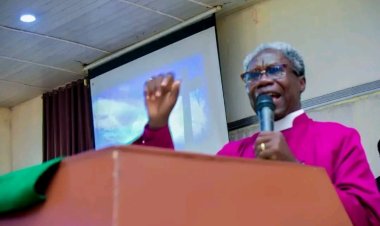
Abel Ezeoha, a Professor of Banking and Finance at Alex Ekwueme Federal University Ndufu-Alike, Ebonyi State, has warned businesses, governments and households against excessive borrowing, saying debt becomes harmful when borrowed funds fail to generate sufficient income to repay existing obligations
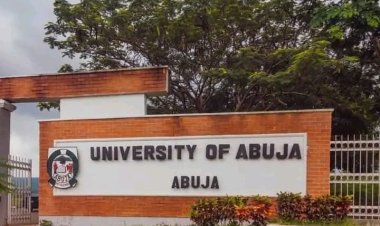
Prof. Ezeoha gave the warning while delivering the 12th Inaugural Lecture of the University, titled "Leveraging Under Constraints: The Act of Digging a Hole to Fill a Hole," on October 8, 2026, at the University Senate Chamber.
He explained that while debt financing could enable businesses to acquire productive assets, expand operations and take advantage of opportunities beyond their current capacity, borrowing becomes dangerous when it is used to address existing financial problems without creating new income streams.
According to him, the problem affects not only businesses but also governments and households, noting that under constrained leverage, debt financing could cease to support productive investment and instead become part of the problem it was meant to solve. He added that the hole-digging situation occurs when a firm borrows to solve an existing financing problem, only for the new debt to create a bigger obligation that requires further borrowing.
He cited Nigeria's debt situation as a major concern, stating that debt servicing consumes approximately 53.7 per cent of government revenue, warning that borrowing for consumption and other non-productive purposes could place serious pressure on future finances. He compared Japan to Sudan, where borrowing is largely domestic and used for productive purposes, saying the difference demonstrates how the purpose and structure of debt determine its outcome.
Prof. Ezeoha identified irregular cash flows, weak corporate governance, inadequate collateral, firm size and age, as well as weak institutional environments as factors that can make businesses financially constrained. He, however, stressed that borrowing is not inherently bad, explaining that the outcome depends largely on what the borrowed funds are used for, the ability to generate sufficient cashflow and the quality of the institutional environment.
Using Dangote Cement as an example of productive borrowing, Ezeoha said the company borrowed $1.27 billion in 2008 to finance expansion and subsequently repaid the facility from its internal earnings, demonstrating how strong profitability could turn debt into productive leverage.
The inaugural lecturer advocated an optimal balance between debt and equity financing, saying such a structure would minimise bankruptcy and ownership-dilution risks while enabling businesses to maximise productive opportunities. He called for stronger institutions, effective governance and efficient credit allocation, stressing that financial inclusion and access to credit can only achieve their intended objectives within a stable, transparent and accountable institutional environment.
He concluded that businesses and governments that borrow for consumption, non-productive purposes, or use short-term loans to finance long-term investments and recurrent needs are likely to face serious financial consequences.
Earlier in his opening remarks, the Vice-Chancellor of the University, Professor Daniel Nwachukwu, described the inaugural lecture as a demonstration of academic maturity and scholarly excellence, while commending the inaugural lecturer for his contributions to financial development, corporate finance and SME financing in Nigeria and Africa
Represented by the Deputy Vice-Chancellor, Academic, Prof. Romanus Ejiaga, the Vice-Chancellor noted that the lecture topic captured critical realities confronting households, businesses, banks and governments, particularly the challenge of surviving when funds are limited and determining whether borrowing becomes a pathway to growth or a trap to failure.
He congratulated Prof. Ezeoha on his achievements, while expressing confidence that he would use empirical evidence and scholarly knowledge to explain and provide insights relevant to Nigeria's economy.