UI Don Calls For Gender-Responsive Family Law Reforms To Strengthen Justice System
 Philip22

A Professor of Family Law, Gender Justice, and Clinical Legal Education at the University of Ibadan (UI), Prof. Omolade Olunike Olomola, has called for comprehensive reforms of Nigeria’s family law system to promote gender justice, protect vulnerable groups, and address structural inequalities.
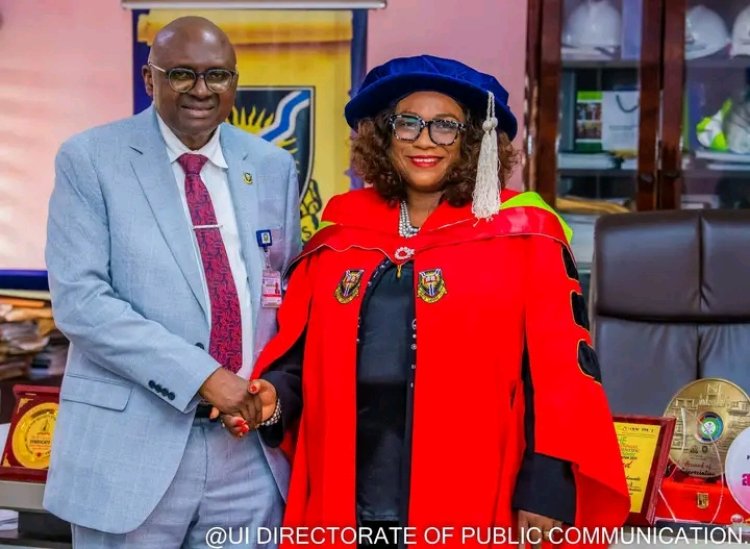
Prof. Olomola made the call while delivering the 620th Inaugural Lecture of the University of Ibadan on behalf of the Faculty of Law.
The lecture, titled “Gender Justice and Intersectionality of Family Law Lifelines,” examined the role of family law in regulating marriage, divorce, child custody, inheritance, adoption, and other domestic relationships.
The legal scholar explained that family law plays a critical role in national development because the family remains the foundation of society. She noted that an effective and just family law system is essential for protecting human rights, promoting gender equality, and strengthening social cohesion.
Prof. Olomola observed that Nigeria’s plural legal system, which comprises statutory, customary, and Islamic laws, presents both opportunities and challenges in the administration of justice, especially in areas concerning family relationships and gender equality.
She explained that gender justice goes beyond equal treatment of men and women, as it seeks to address structural inequalities by considering how factors such as class, disability, age, ethnicity, and economic status influence individuals’ experiences.

The Family Law expert cautioned against viewing gender as an issue exclusive to women, stressing that gender is a social construct that affects both men and women.
According to her, excluding men from gender discussions weakens efforts towards achieving balanced and sustainable gender justice. She noted that men also experience physical, emotional, psychological, and economic abuse, although such cases are often underreported due to societal expectations and stereotypes.
Prof. Olomola distinguished between gender equality, gender equity, and gender justice, explaining that while equality focuses on providing equal rights and opportunities, equity recognises that individuals may require different forms of support due to unequal starting points.
She described gender justice as a broader framework that addresses discrimination by examining how gender interacts with other social identities, including class, age, disability, ethnicity, and economic status.
The don stressed that the concept of intersectionality provides a more inclusive approach to law-making by ensuring that legal systems, policies, and institutions respond effectively to individuals facing multiple forms of disadvantage.
She stated that Nigerian family law must evolve to reflect contemporary realities, including women’s empowerment, technological advancement, assisted reproductive technology, changing family structures, and increasing economic pressures.
Prof. Olomola advocated an intersectional approach to legal reforms and policy development, noting that such a framework would strengthen access to justice, improve legal protection, promote inclusive representation, and ensure that remedies address multiple forms of discrimination.

She recommended the harmonisation and strengthening of Nigeria’s family law framework through improved regulation of statutory, customary, and Islamic marriages, as well as the compulsory registration of all marriages.
The inaugural lecturer also called for the enactment of a Divorce Reform Act, a review of the Child Rights Act to enhance gender sensitivity, and amendments to the Violence Against Persons (Prohibition) Act to provide broader protection against domestic violence.
She emphasised the need for continuous training of judges and legal practitioners on gender justice and intersectionality to promote fair, equitable, and context-sensitive judicial decisions in family law matters.
Prof. Olomola further advocated the reclassification of Family Law as a compulsory course for law students, arguing that the increasing prevalence of family disputes and divorce makes it necessary to equip future legal practitioners with adequate knowledge of the subject.
She reiterated that sustainable gender justice requires legal reforms, institutional accountability, inclusive policymaking, and continuous adaptation of the law to the realities of Nigerian society.

The lecture was the 17th in the University of Ibadan’s Inaugural Lecture Series for the 2025/2026 academic session.