UI VC Urges Stronger Town-Gown Collaboration to Translate Research into Societal Impact
The Vice-Chancellor of the University of Ibadan (UI), Professor Kayode O. Adebowale, mni, FAS, fspsp, has called for stronger collaboration among the University, industry, government and civil society to ensure that research outcomes are translated into societal impact and shared values.
 Philip22
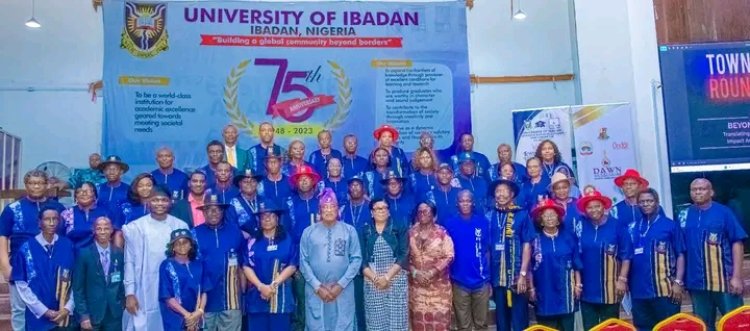
The Vice-Chancellor of the University of Ibadan (UI), Professor Kayode O. Adebowale, mni, FAS, fspsp, has called for stronger collaboration among the University, industry, government and civil society to ensure that research outcomes are translated into societal impact and shared values.

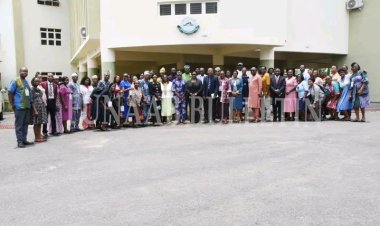
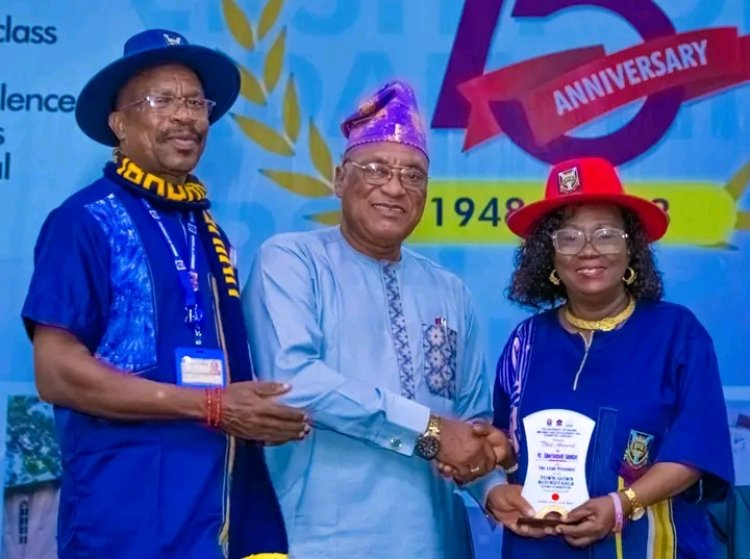
Professor Adebowale made the call in an address delivered on his behalf by the Deputy Vice-Chancellor, Research, Innovation and Strategic Partnerships, Professor Simisola O. Akintola, at a Town-Gown Roundtable organised by the University of Ibadan Research Development (UI-RESDEV) Committee.
The Roundtable was themed “Beyond the Gate: Translating Research into Societal Impact and Commercialization.”
Professor Adebowale said the task before both the Town and the Gown was to dismantle the conceptual gate that keeps research and society as strangers to one another.
The Vice-Chancellor noted that the academia does not lack research ideas, but stressed the need to establish frameworks and incentives capable of connecting scholarship with the market and policy.
Speaking in her capacity as the Deputy Vice-Chancellor, Research, Innovation and Strategic Partnerships, whose office provides oversight functions on the UI-RESDEV Committee, Professor Simisola Akintola noted that research was not in shortage, but translation was lacking.
She stressed that commercialisation was not a betrayal of scholarship but its fulfilment. She explained that when a laboratory discovery becomes a vaccine, an agricultural innovation results in higher yields for farmers, or an engineering solution becomes a functioning piece of public infrastructure, such outcomes do not represent the corruption of scholarship but scholarship finally arriving at its destination.

Professor Akintola therefore urged the Town and the Gown to build together, recommending that industry bring capital, market discipline and the urgency of deadlines; government bring policy instruments and public infrastructure; civil society bring proximity to real needs; while the University bring rigour, talent and the discipline of inquiry.
“None of us can walk this road alone, and none of us should try to,” she admonished.
Professor Akintola assured participants that the University of Ibadan had, over the past months, deliberately widened the gate by building frameworks and partnerships that allow ideas to travel outwards and resources, expertise and opportunities to travel into the University.
She urged participants at the Roundtable to produce a shared and honest inventory of the factors standing between them and the outcomes they all seek.
The Director-General of the Development Agenda for Western Nigeria (DAWN) Commission, Dr. Seye Oyeleye, commended the University for the resources, effort and thoroughness invested in the Roundtable.
He said the Roundtable spoke eloquently of an institution that understands that research findings confined within the gate profit no one, stressing that research findings must be carried deliberately and loudly to the doorsteps of industry and society.
Dr. Oyeleye added that the Roundtable marked a deliberate reversal of the traditional order in which industry was invited into research only after its completion, noting that industry was now being involved from inception.
He reiterated the vision of the DAWN Commission to make the South-West an industrial hub by drawing on the intellectual harvest of institutions such as the University of Ibadan to power sustainable regional development.
The Permanent Secretary and Inspector General of Education, Mrs. Maria Olufunke Karunwi, who represented the Oyo State Ministry of Education, noted that the future belongs not merely to those who generate knowledge but to those who transform knowledge into value.

She stressed that intentional changes must be driven to build a sustainable culture of innovation.
Mrs. Karunwi recommended that universities expand their metrics of success, integrate entrepreneurship and foster interdisciplinary work, while government and industry should engage universities as dynamic Research and Development engines and formulate policies, tax incentives and funding structures that encourage the commercial adoption of local research.
“Let our laboratories become launchpads, our classrooms innovation centres, and our universities engines of economic progress, let our research become policy, technology, enterprise, and hope,” she charged.
The Provost of the UI Postgraduate College, Professor K. M. Samuel, said the theme of the Roundtable resonated profoundly with the mandate of the Postgraduate College.
In a goodwill message delivered on his behalf by Professor A. Tella, the Provost noted that, as the hub of advanced scholarship in the University, the College was committed not only to producing high-quality Master’s and doctoral graduates, but also to nurturing research that addresses societal challenges, drives innovation, informs policy and, above all, creates economic value.
He stated that postgraduate education finds its fullest expression when knowledge generated in the University’s laboratories, studios, libraries and field sites transcends the walls of the institution to improve lives and transform communities.
Professor Samuel said the Postgraduate College had consistently demonstrated its commitment to fostering a vibrant research ecosystem by showcasing postgraduate research, engendering industry partnerships and expanding pathways for research commercialisation.
He encouraged participants at the Roundtable to deepen collaboration between the University of Ibadan and society at large, noting that this could be achieved by ensuring that research remains relevant, impactful and responsive to national and global development needs.
A keynote address was delivered by Dr. Olusola Saheed Ayoola, Founder of Robotics and Artificial Intelligence Nigeria (RAIN).
Dr. Ayoola noted that Nigeria is a gifted nation, adding that the country’s potential is demonstrated daily in its universities, societies, international competitions and institutional arenas.
He stated that what the country lacks in sufficient measure are structures that transport research from the University into society, particularly structures for deployment and those capable of turning knowledge into production.
He advised that Nigeria must unlearn, learn and relearn one central truth: a society can only do better when it deploys solutions researched and built to fit its own environment.
The Honorary Treasurer of the Manufacturers Association of Nigeria, Mr. Sunday Aboriomoh, also made a presentation in which he reiterated the call for improved collaboration between the Town and the Gown.
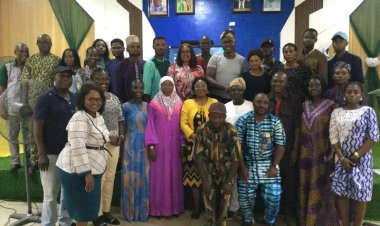
A breakout session based on the thematic areas of Health Sciences; Science and Technology; and Arts and Humanities enabled academic and industry players to interact and exchange ideas at the Roundtable.
The objectives of the Roundtable were:
-
To facilitate the exchange of knowledge between academic researchers and industry professionals.
-
To encourage collaborative research projects aimed at solving societal challenges.
-
To promote industry-sponsored research initiatives and innovation within academic institutions.
-
To identify areas of mutual interest where university-industry collaboration could enhance product development, policy formulation and sustainable solutions.
-
To showcase successful case studies of university-industry collaboration that have led to innovation and societal impact.