Education Minister Alausa Speaks on Decline of Nigeria’s Unity Schools
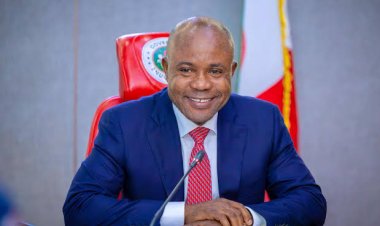
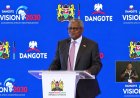
Education Minister Tunji Alausa has raised concerns over the decline of Nigeria’s Unity Schools, saying insecurity, regional concentration, poor infrastructure, indiscipline and weak management have weakened their original national integration purpose.
 judithhh
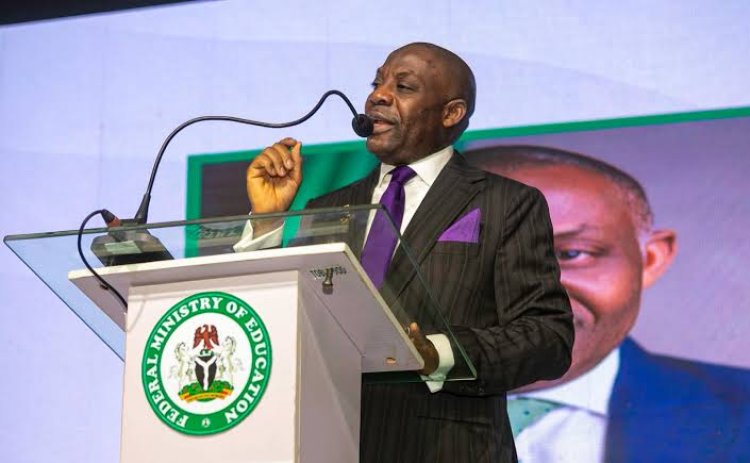
Education Minister Tunji Alausa says Nigeria’s Unity Schools are losing their national integration purpose due to insecurity, regional concentration, poor infrastructure and weak management.
Alausa blamed the development on insecurity, regional concentration of students, infrastructure decay, indiscipline, poor teacher welfare and weak school management.
The Minister explained that Unity Schools were originally established to bring children from different parts of Nigeria together so they could live, study and build relationships across ethnic, cultural and geographical lines.
However, he said changing realities in the country had weakened the concept, with some schools now having students largely from particular regions.
Speaking during a meeting with journalists in Abuja, Alausa cited King’s College, Lagos, as an example, claiming that more than 60 per cent of its students were from one geographical area.
“The idea of unity school is gone,” the Minister said.
He recalled a time when parents could confidently send their children from one part of the country to another without serious concerns about insecurity.

“You could live in Lagos, but you send your son or daughter to Sokoto without fear. Today, you can’t boldly or confidently consider that decision because of several reasons beyond our control,” he said.
Alausa said the challenges facing Unity Schools go beyond student composition, noting that poor infrastructure and weak management have also affected the quality of education.
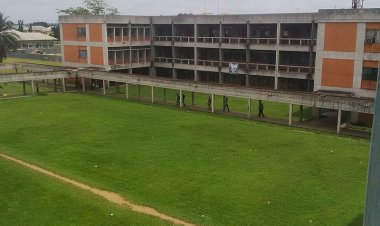
He recalled an inspection of King’s College, Lagos, where he said he witnessed what he described as “total degeneration.”
According to him, some hostels, bathrooms, classrooms and other facilities were in very poor condition, while the laboratory lacked adequate lighting even during the morning.
The Minister also raised concerns about student discipline and welfare, including allegations of truancy and suspected drug use among some students.
He stressed that rebuilding the schools must therefore involve more than renovating classrooms and hostels.
“Teacher welfare, student discipline, school management and the general learning environment must all be addressed,” he said.
The Minister also highlighted poor teacher welfare, citing the case of a PTA teacher who had reportedly worked for 27 years and earned only N60,000 monthly.
He further alleged that admission racketeering had become a problem in some public schools, with admission slots allegedly being sold for millions of naira. However, he did not provide documentary evidence to substantiate the allegation during the briefing.
Alausa also raised concerns about school security after discovering that part of a junior secondary school compound had reportedly been converted into a commercial car park.
He said about 200 vehicles were parked within the school compound, creating unnecessary security risks for students, whose average age was around 13 or 14 years.
The Minister said he ordered that the arrangement be stopped.
Alausa said inadequate funding remains one of the biggest obstacles to restoring the Unity Schools.

“If I have N1 trillion today, it will not be enough to fix our unity schools,” he said.
He estimated that rehabilitating Unity Schools in Lagos alone could cost about N24 billion, while repairs across the South-West could require almost N40 billion.
The Minister said the government was therefore exploring available interventions and development financing to address the infrastructure challenges.
Against this background, Alausa disclosed that old students of King’s College had offered to invest in the rehabilitation and management of the institution.
He said the old boys were not seeking ownership or privatisation of the school but wanted to provide financial and human capital support, improve teacher welfare and restore the institution to a high standard.
According to him, the proposal has faced opposition from some labour unions and the school's Parent-Teacher Association.
Alausa insisted that such intervention should not be viewed as privatisation, arguing that government cannot allow public schools to continue deteriorating simply because of funding limitations.
The Minister said the situation in King’s College reflects a broader crisis affecting the Unity School system.
He stressed that the government must rethink how the schools are managed, improve infrastructure and teacher welfare, strengthen discipline and, most importantly, restore the national character for which the schools were established.
“Status quo is not the solution. If we continue to do the same thing and expect to get the same result, it will never happen,” Alausa said.