Former UI VC Prof. Olayinka Urges Massive Investment in STEM Postgraduate Education for National Development
Former University of Ibadan Vice-Chancellor, Prof. Abel Idowu Olayinka, has called for a significant expansion of postgraduate enrolment in STEM, agriculture, health and public policy to help Nigeria achieve its Vision 2050 agenda and the Sustainable Development Goals (SDGs).
 judithhh

Former UI Vice-Chancellor Prof. Abel Olayinka urges Nigeria to expand postgraduate education in STEM, agriculture, health and public policy, stressing its importance for achieving Vision 2050, the SDGs, research excellence and national development.
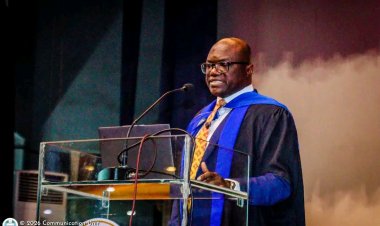
Olayinka, a Professor of Applied Geophysics and the 12th Vice-Chancellor of UI, made the call while delivering the keynote address at the maiden Postgraduate School Discourse of Chrisland University, Abeokuta, themed “Consolidating Postgraduate Education in Nigerian Universities.”
According to him, postgraduate education remains one of the strongest drivers of sustainable national development because it produces the high-level manpower, research capacity and innovation required to tackle Nigeria’s pressing socio-economic challenges.
He said: “Postgraduate education transforms a country’s population from a demographic burden into a demographic dividend by equipping graduates with advanced knowledge and research skills needed for national development.”
The former UI vice-chancellor urged universities to invest heavily in Information and Communication Technology (ICT) infrastructure to enhance postgraduate administration, including admissions, registration, students’ records management and local area network (LAN) facilities.
He also advocated increased investment in research, noting that universities must remain the nation’s leading centres for basic research while developing a culture of applied research capable of addressing societal needs.
According to him, universities must produce research outcomes that are relevant and impactful in order to dispel the perception that academic research is detached from national realities.
He further emphasised the need for universities to strengthen public service through consultancy, community engagements, and outreach programmes, saying such initiatives would create opportunities for staff and students to apply their expertise in solving real-life problems.
The professor disclosed that more than 200 of Nigeria’s 310 universities currently offer postgraduate programmes, adding that with sustained commitment and strategic reforms, many of the challenges confronting postgraduate education would be overcome.

Earlier, the Vice-Chancellor of Chrisland University, Prof. Oyedunni Sola Arulogun, described the maiden discourse as the beginning of a tradition of scholarly engagement aimed at strengthening postgraduate education and promoting research excellence.
She said the theme of the discourse was timely, noting that postgraduate education remains the engine room of knowledge creation, technological innovation and national development across the world.
“Every great institution is defined not only by the knowledge it imparts but also by the quality of conversations it inspires. Today, we begin one such conversation,” she said.
Arulogun observed that universities are increasingly assessed by the quality, relevance and impact of their research rather than merely the number of graduates they produce.
She reaffirmed Chrisland University’s commitment to building a postgraduate school anchored on academic excellence, rigorous research, innovation, interdisciplinary collaboration, ethical scholarship and global relevance.
According to her, the university envisions a postgraduate ecosystem where curiosity is encouraged, creativity is nurtured and research outcomes contribute meaningfully to industry, healthcare, education, entrepreneurship, public policy and sustainable development.