FUTA Hosts International Conference on Biotechnology, Highlights Role in Crop Improvement and National Development
The growing importance of biotechnology in addressing global and local challenges took center stage at the Federal University of Technology, Akure (FUTA), during an international conference and pre-conference workshop on biotechnology.
 Philip22

The growing importance of biotechnology in addressing global and local challenges took center stage at the Federal University of Technology, Akure (FUTA), during an international conference and pre-conference workshop on biotechnology.

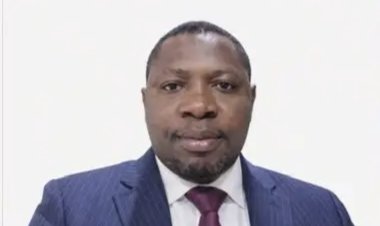
Delivering the keynote address titled “Biotechnology Underpinning Improvement in Cropping Systems for Diversity and Resilience,” Professor Michael Abberton, Director of the West African Hub, International Institute of Tropical Agriculture (IITA), Ibadan, discussed how biotechnology is shaping agricultural transformation in West Africa. He noted that climate change has drastically affected crop yields, pest patterns, and food security, stressing that biotechnology-driven breeding programs can enhance resilience in crops such as cowpea and cassava.
Professor Abberton highlighted IITA’s ongoing initiatives, including a Gates Foundation-supported project focused on improving photosynthesis in cowpea to boost climate tolerance. He also underscored the relevance of demand-led breeding, which connects scientific innovation with real market needs by defining product profiles and focusing on key regional priorities.
In another presentation, Professor Isaiah Oke from the Department of Civil Engineering, Obafemi Awolowo University, Ile-Ife, examined the intersection between biotechnology and engineering. He emphasized that while biotechnology provides knowledge on genetic modification and biomaterials, engineering translates that knowledge into scalable applications. He listed areas of convergence including bioprocess, biomedical, chemical, software, and environmental engineering, describing synthetic biotechnology as a “disruptive technology” with vast potential for global problem-solving.

The Director-General of the National Biosafety Management Agency (NBMA), Dr. Bello Bawa Bwari, represented by Kumane Oghenero, Deputy Coordinator of the South-South Zone, addressed the theme “Biosafety, Bioethics, and Patenting: An Indispensable Tool in Biotechnology.” He acknowledged that while biotechnology offers immense benefits, it also raises biosafety, ethical, and socio-economic concerns. He explained that the Federal Government established NBMA to ensure that modern and emerging biotechnologies, including genetically modified organisms (GMOs), are deployed safely and responsibly in Nigeria.
Professor Isaac Babalola of FUTA’s Department of Agricultural Production and Health stated that the biotechnology workshop was organized to build participants’ technical competence in the biological and physical sciences. He emphasized that FUTA remains committed to advancing modern scientific research and innovation, positioning itself as a leading hub for science and technology education in Nigeria.

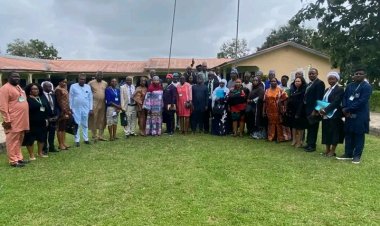
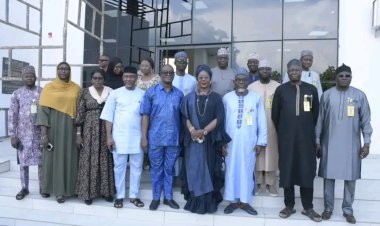
The conference attracted researchers, scientists, and policymakers, all of whom explored biotechnology’s expanding role in sustainable agriculture, national development, and global competitiveness.