FUNAAB First-Class Graduate Leads Food Innovation Research in the United States
The Federal University of Agriculture, Abeokuta (FUNAAB) has celebrated the achievements of one of its First-Class graduates, Dr. Oluwatosin Popoola, who is making significant contributions to food safety, sustainable packaging, and environmental sustainability through cutting-edge research in the United States.
 Philip22
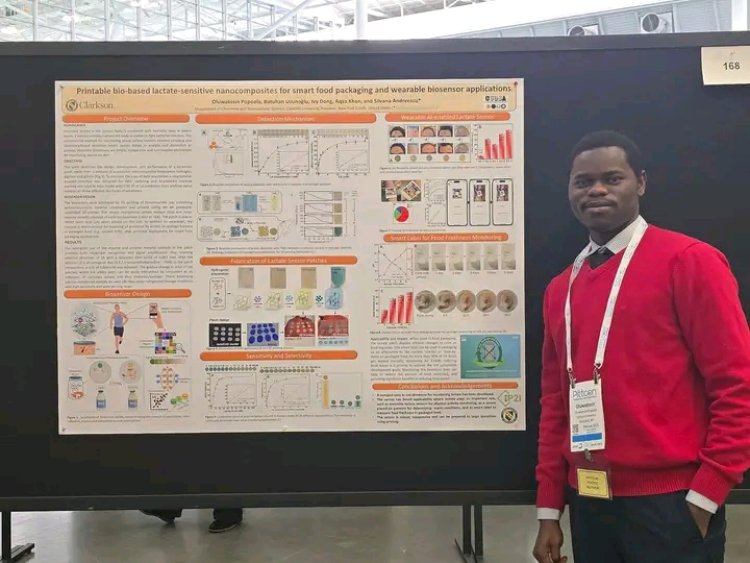
The Federal University of Agriculture, Abeokuta (FUNAAB) has celebrated the achievements of one of its First-Class graduates, Dr. Oluwatosin Popoola, who is making significant contributions to food safety, sustainable packaging, and environmental sustainability through cutting-edge research in the United States.
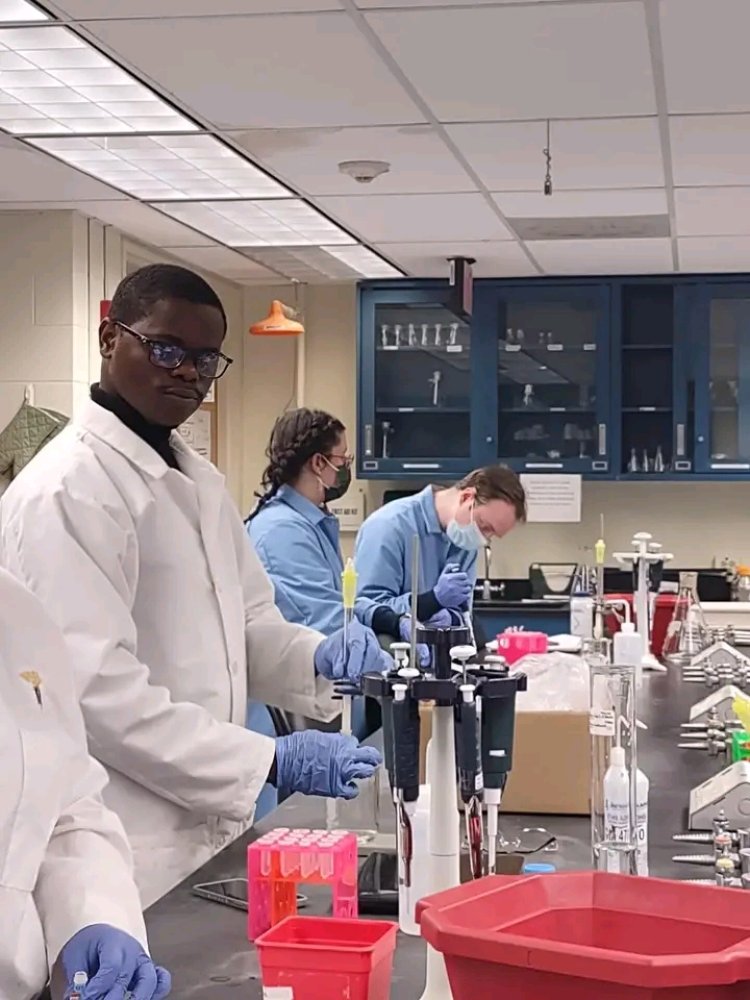
A chemist, researcher, and sustainability innovator, Dr. Popoola is currently leading research and development efforts focused on advancing food safety technologies and sustainable materials, further highlighting FUNAAB's growing reputation for producing globally competitive graduates.
Dr. Popoola studied Chemistry at FUNAAB between 2012 and 2017, graduating with First Class Honours. During his undergraduate studies, he was awarded the highly competitive Total E&S Undergraduate Scholarship, which supported his education from his second year until graduation.
Reflecting on his academic journey, he credited FUNAAB with shaping his scientific mindset through rigorous academic training, hands-on laboratory experience, and mentorship that strengthened his analytical and problem-solving abilities.
After completing the National Youth Service Corps (NYSC), Dr. Popoola taught Chemistry from 2018 to 2020 before securing a fully funded graduate scholarship to Clarkson University in New York in 2021. He subsequently earned both a Master of Science in Chemistry and a PhD in Materials and Analytical Chemistry, graduating with a perfect 4.0/4.0 CGPA.
His doctoral research focused on developing smart and sustainable solutions to address food spoilage, plastic pollution, and rapid food-quality assessment. Among his innovations are biodegradable food packaging materials, nanocellulose-based freshness sensors, antimicrobial packaging films, 3D-printable polymer composites, and portable food-testing technologies.
His research has been published in several leading international journals, including ACS Applied Materials & Interfaces, ACS Sustainable Chemistry & Engineering, Food Chemistry, and Advanced Functional Materials, with a focus on improving food safety, extending product shelf life, and reducing reliance on conventional plastics.
Dr. Popoola currently serves as the Associate Director of Research and Development at Clarus Labs in Mississippi, where he leads the development of portable technologies for monitoring food freshness and quality. His team is also working to transform complex laboratory testing methods into affordable field technologies, including portable assay kits, food test strips, and smartphone-enabled detection platforms.
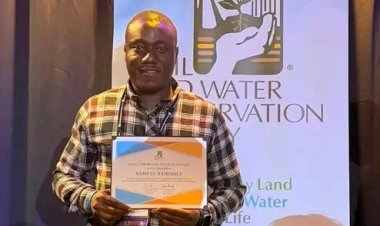
His contributions have earned him several prestigious awards and recognitions, including first place at the 2026 The Pitch Business Competition in Mississippi, where his team received a $10,000 prize for developing an innovative food-testing technology. He has also received Clarkson University's Phalanx Award of Excellence, the C. R. Shipley Jr. Endowed Fellowship Award, multiple recognitions from the American Chemical Society, and was granted United States permanent residency under the EB-1A Extraordinary Ability category.
Despite his international accomplishments, Dr. Popoola continues to acknowledge FUNAAB as the institution that laid the foundation for his academic and professional success. His achievements further reflect the university's commitment to producing graduates whose research, innovation, and leadership contribute to scientific advancement and sustainable development on the global stage.