Prof. Ilesanmi Calls for Gender-Responsive Humanitarian Action at Redeemer’s University Inaugural Lecture
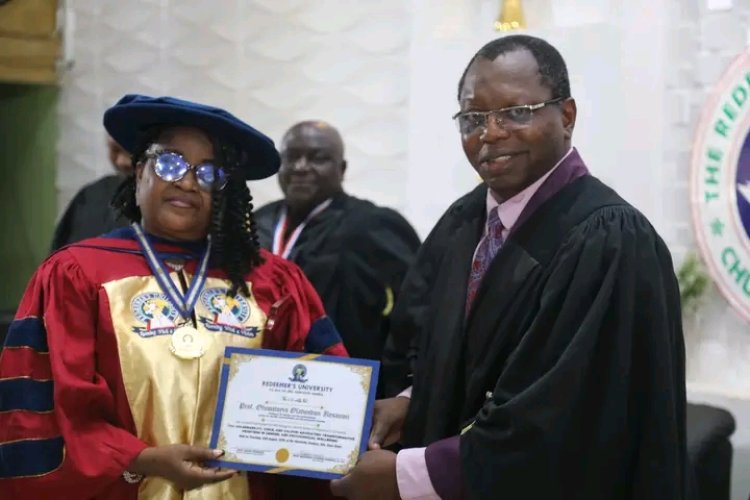
Professor Oluwatoyin Olatundun Ilesanmi, Professor of Gender and Humanitarianism at Redeemer’s University, Ede, Osun State, has called for a fundamental shift in Nigeria’s approach to humanitarian response, urging government institutions and humanitarian organisations to integrate gender accountability, psychosocial care and human rights into disaster management and national development strategies.
 Philip22
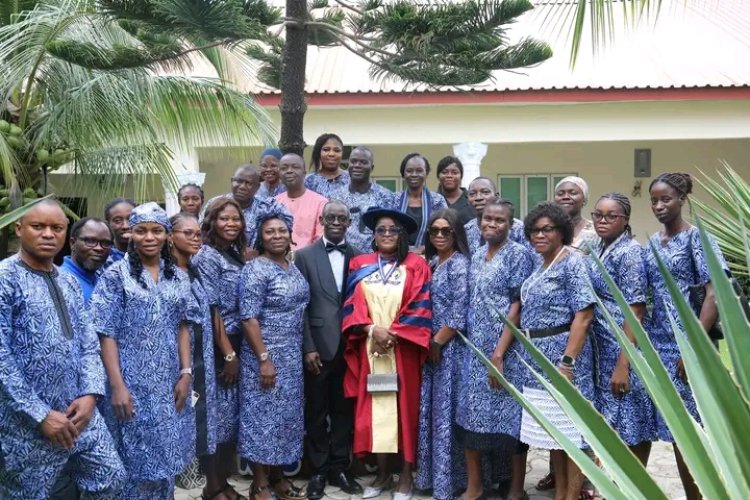
Professor Oluwatoyin Olatundun Ilesanmi, Professor of Gender and Humanitarianism at Redeemer’s University, Ede, Osun State, has called for a fundamental shift in Nigeria’s approach to humanitarian response, urging government institutions and humanitarian organisations to integrate gender accountability, psychosocial care and human rights into disaster management and national development strategies.
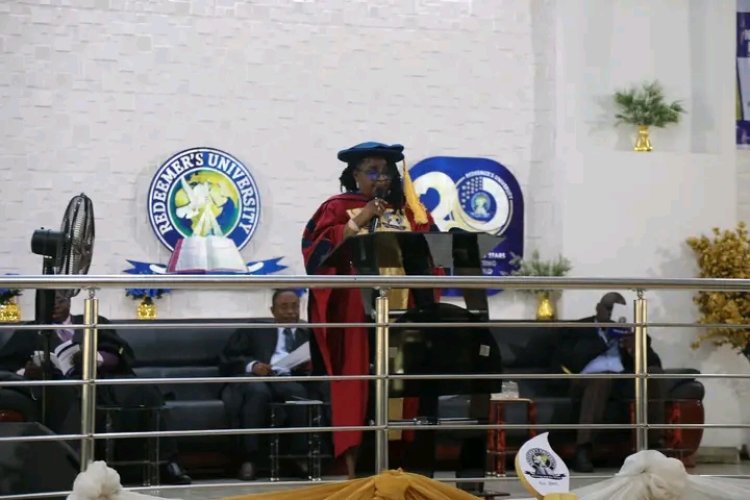
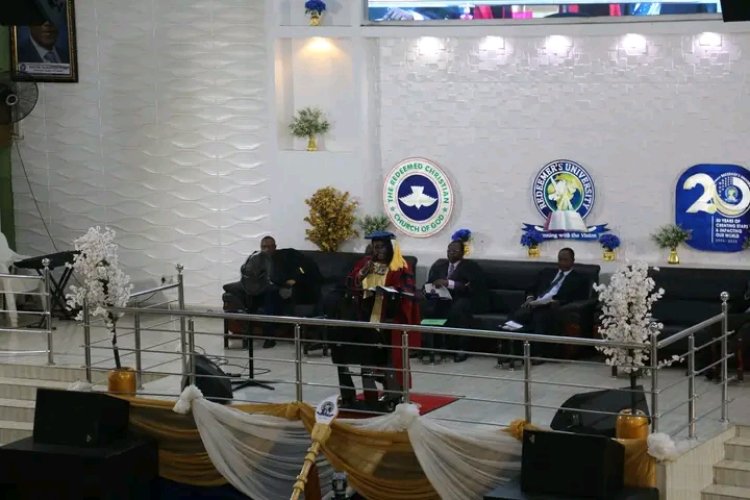
Prof. Ilesanmi made the call while delivering the 24th Inaugural Lecture of Redeemer’s University, titled “Vulnerability, Voice, and Valour: Navigating Transformative Frontiers in Gender, Humanitarianism, and Psychosocial Wellbeing.”
The lecture drew on her academic and professional experience spanning psychology, gender studies, humanitarianism and psychosocial wellbeing, with particular emphasis on protecting vulnerable populations affected by conflict, displacement, violence and social exclusion.
Prof. Ilesanmi began her academic journey at the University of Ife, now Obafemi Awolowo University, where she obtained a B.A. in English Studies. She later earned an M.Ed. in Guidance and Counselling from the University of Ibadan, followed by a PhD covering Clinical and Humanitarian Psychology, Gender and Development, and Conflictology. She currently heads the Centre for Gender, Humanitarian and Development Studies at Redeemer’s University and has more than 70 publications to her credit, alongside several edited literary works.
She explained that gender is central to humanitarian response because crises do not affect all categories of people equally. According to her, marginalised populations often bear a disproportionate burden when humanitarian interventions fail to account for gender and other forms of vulnerability.
Prof. Ilesanmi described “vulnerability, voice and valour” as an analytical continuum that moves from identifying vulnerability, to enabling affected people to express their experiences and concerns, and ultimately to empowering them to participate in transformative action.
She urged humanitarian organisations to move beyond reactive relief models centred primarily on distributing emergency materials. Instead, she advocated the mandatory integration of psychosocial, clinical and family-sensitive services into emergency response protocols to address the psychological and social consequences of crises alongside immediate material needs.
The professor also called on government ministries to recognise that vulnerability is often socially distributed and rooted in structural inequalities that exist before disasters occur. She identified poverty, inadequate housing and age-related inequalities as factors capable of worsening the effects of disasters, stressing the importance of gender-responsive budgeting and institutional accountability.
She further challenged Nigerians to examine cultural practices and social attitudes that perpetuate violence and silence survivors, including female genital mutilation and the stigmatisation of survivors of sexual violence.
According to her, Nigeria’s complex humanitarian environment, characterised by challenges including insurgency, kidnapping, sexual violence, displacement and ecological distress, requires a development framework that places human dignity and psychosocial wellbeing at its centre.
Drawing on empirical research, including studies of the Ife-Modakeke crisis, Prof. Ilesanmi noted that conventional disaster-response systems often fail to adequately address the needs of older persons and people living with disabilities. She therefore advocated structurally inclusive systems that guarantee vulnerable populations equitable access to relief and recovery opportunities.
She argued that psychosocial healthcare and gender mainstreaming should be treated as integral components of national economic development rather than peripheral social interventions.
On nation-building, Prof. Ilesanmi urged the Federal and state governments to translate academic research into practical policies and guidelines capable of implementation at the local government level.
She specifically called for the effective implementation and funding of state-level Multi-Sectoral Costed Action Plans under the Violence Against Persons (Prohibition) Act (VAPP), stressing that such frameworks must reach communities rather than remain at the policy level.
She also advocated reforms in the security sector, particularly the training of police officers and other security personnel in human-rights-based and trauma-informed approaches to handling sexual and gender-based violence. She maintained that security institutions must be equipped to protect survivors, preserve confidentiality and avoid responses that compound existing trauma.
Prof. Ilesanmi further proposed what she termed “community-level psycho-architecture,” urging local governments to incorporate safety, accessibility, shelter facilities and psychosocial considerations into housing and neighbourhood planning.
In the education sector, she recommended gender-responsive pedagogy, stronger anti-sexual-harassment mechanisms and independent complaint structures capable of protecting survivors.
For the health sector, she advocated integrated healthcare models incorporating mental health and genetic counselling into primary healthcare, while calling for frontline health workers to receive training in trauma-informed care and gender-sensitive approaches to reproductive health and sickle cell disorders.
Her lecture ultimately emphasised the need for Nigeria to move from crisis response that merely manages immediate emergencies to a people-centred humanitarian and development system that anticipates vulnerability, amplifies affected communities and builds long-term resilience.