National Union Of Teachers Experts React to FG UTME Waiver for Colleges of Education
The Nigeria Union of Teachers warned that removing UTME requirements could weaken teaching standards and reduce the credibility of the profession. Education experts also noted that poor employment opportunities for NCE holders discourage students from pursuing teacher education.
 judithhh

The Federal Government’s latest decision to exempt candidates seeking admission into Colleges of Education and non-engineering agriculture programmes from writing the Unified Tertiary Matriculation Examination (UTME) has sparked mixed reactions across Nigeria’s education sector.While the government believes the policy will expand access to tertiary education and increase enrolment in critical sectors such as teacher education and agriculture, experts and stakeholders argue that the move alone may not solve the deeper challenges discouraging young Nigerians from pursuing careers in teaching and agriculture.
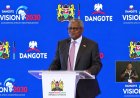
The Minister of Education, Tunji Alausa, announced the policy during the 2026 Policy Meeting on Admission into Tertiary Institutions in Abuja. According to him, candidates with four credit passes in relevant subjects can now apply for admission into Colleges of Education without sitting for UTME, although they must still register with the Joint Admissions and Matriculation Board through the Central Admissions Processing System (CAPS).
Alausa explained that the reform is part of broader efforts aimed at removing barriers to higher education and increasing admission into teacher education and agriculture-related programmes. He also noted that similar admission reforms introduced last year had already increased tertiary institution admissions from about 770,000 to over 1.1 million students nationwide.
According to the minister, the government remains committed to expanding educational opportunities, especially in sectors considered vital to national development.
In recent years, the government has introduced several reforms to revive interest in teacher education and agriculture.
One of such reforms is the Dual Mandate Policy, which allows Federal Colleges of Education to award both the National Certificate in Education (NCE) and Bachelor of Education degrees. The initiative is expected to make teaching more attractive and reduce dependence on university affiliations.
Similarly, the government has continued to establish specialised universities of agriculture, including institutions such as Federal University of Agriculture, Abeokuta and Michael Okpara University of Agriculture, to strengthen agricultural research, training and innovation.
Despite these efforts, stakeholders insist that deeper structural problems must be addressed before meaningful progress can be achieved.
The President of the Nigeria Union of Teachers, Titus Amba, expressed concern that removing UTME requirements for Colleges of Education could weaken the quality and credibility of teacher training in Nigeria.

Speaking during a teachers’ workshop organised in collaboration with the Teachers Registration Council of Nigeria, Amba cautioned that policies affecting teacher education must be handled carefully.
According to him, many Nigerians may begin to see teaching as a profession for academically weak students if admission requirements continue to be lowered.
He stressed that teaching should remain a respected profession and not merely a fallback option for unemployed graduates from other disciplines.
Education expert, Dr. Gloria Eguaroje, argued that poor employment opportunities for NCE holders remain one of the biggest reasons students avoid Colleges of Education.
She noted that many private and public schools now prefer degree holders over NCE graduates, making the qualification less attractive to young people.
According to her, lowering admission standards further could damage the reputation of the NCE programme even more.
Eguaroje called on the government to create policies that guarantee employment opportunities for NCE holders. She suggested that schools across the country should be mandated to employ a certain percentage of NCE-qualified teachers to encourage more students to embrace the teaching profession.
She also criticiZed the current low UTME benchmark for Colleges of Education, warning that further reducing entry requirements could undermine the quality of future teachers.
Stakeholders in the agriculture sector also believe that waiving UTME requirements will not automatically attract youths into agriculture unless long-standing problems affecting the sector are resolved.
A farmer and agriculture graduate, Mr. Kehinde Oladele, identified poor access to land, insecurity, limited financing and outdated farming methods as major obstacles discouraging young Nigerians from pursuing agriculture.
Oladele explained that many agriculture graduates are unable to practise what they studied because they lack access to farmland. He added that Nigeria’s land tenure system, which is largely based on communal ownership and inheritance, continues to hinder large-scale farming and agricultural investment.
He also pointed to insecurity in farming communities, poor access to credit facilities, and the rising cost of modern farming inputs as major barriers affecting agricultural productivity.
According to him, attracting youths to agriculture requires more than relaxed admission policies. He stressed that the government must modernise farming practices, improve security in farming areas, and provide easier access to land and agricultural financing.
Although many stakeholders acknowledge that the UTME waiver could temporarily improve enrolment figures, they insist that sustainable growth in teacher education and agriculture can only happen when the government addresses the underlying economic and professional challenges affecting both sectors.
For teacher education, experts say improved welfare, better job opportunities and enhanced professional respect are essential.
For agriculture, they believe that solving land access issues, insecurity, poor financing and low mechanisation will play a more significant role in attracting young Nigerians to the sector than admission waivers alone.
As debates continue over the policy, many Nigerians are watching closely to see whether the latest reforms will truly transform enrolment patterns or simply provide a short-term increase in admission numbers without solving the deeper problems facing the two critical sectors.