UI Professor Advocates Strategic Systems Management for Organisational Excellence
A Professor of Operations Management and Productivity Systems at the University of Ibadan, Professor Christopher Osita Anyaeche, has emphasised the need for deliberate system design and effective management in transforming organisational complexity into operational clarity.
 Philip22
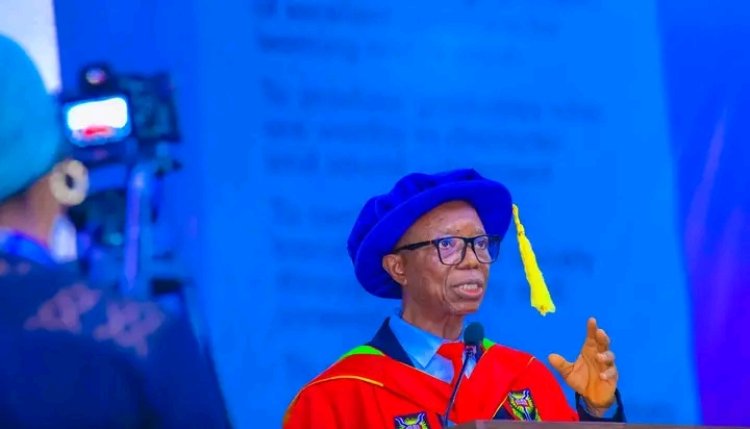
A Professor of Operations Management and Productivity Systems at the University of Ibadan, Professor Christopher Osita Anyaeche, has emphasised the need for deliberate system design and effective management in transforming organisational complexity into operational clarity.

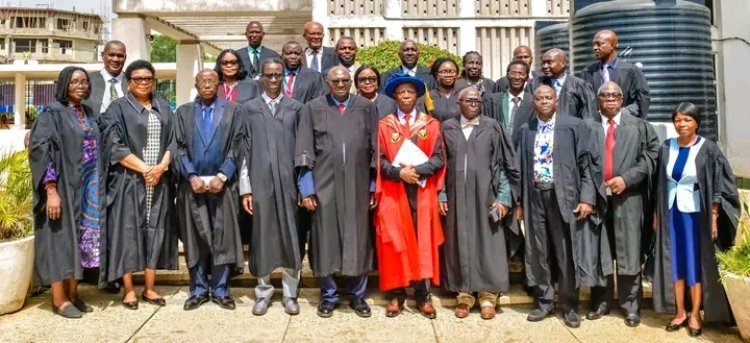
The professor made the assertion while delivering the institution’s 611th inaugural lecture on behalf of the Faculty of Technology.
The lecture, titled “From Complexity to Clarity: Operations Management and the Pursuit of Work Systems’ Excellence,” examined the growing complexities of modern organisational systems and the strategic frameworks required to improve efficiency and productivity.
Speaking during the lecture, Professor Anyaeche described the modern world as an interconnected system driven by increasingly complex human and technological interactions. According to him, individuals operate within structured systems, interact with machines, and depend on processes that continue to expand in sophistication as technology advances.
He noted that organisations today are compelled to manage multiple operational processes, evolving technologies, diverse stakeholders, and rising performance expectations, warning that poor management of these complexities often results in inefficiency, confusion, and declining productivity.

The scholar explained that Operations Management offers practical solutions for addressing such challenges through four critical principles — simplification, standardisation, optimisation, and sustainability.
According to him, simplification focuses on eliminating unnecessary elements within systems, while standardisation promotes consistency in processes and outcomes. He added that optimisation improves performance and resource utilisation, whereas sustainability ensures the long-term viability and resilience of operational systems.
Professor Anyaeche stated that the effective integration of these principles enables organisations to achieve clarity, operational efficiency, resilience, and overall excellence.
He further argued that complexity itself is not the problem confronting modern organisations but rather the inability to manage it effectively.
“Clarity is not the absence of complexity but the mastery of it,” he stated.
The inaugural lecturer also stressed that despite rapid technological advancement, operational systems remain fundamentally human-centred. While machines and algorithms support workflows, he noted that innovation, ethical decision-making, leadership, and creativity continue to depend on people.
He therefore called for greater attention to human factors in the design of work systems, including employee motivation, teamwork, workplace learning, and leadership development.
According to him, poorly designed systems often lead to frustration, low morale, and operational errors, whereas well-structured systems empower workers, strengthen accountability, and improve organisational performance.
The lecture marked the eighth inaugural lecture in the 2025/2026 academic session of the University of Ibadan.

The event attracted members of the academic community, researchers, students, and other stakeholders interested in productivity systems and organisational management.