UI Vice-Chancellor Says Accreditation Helps Universities Benchmark Against Global Standards
The Vice-Chancellor of the University of Ibadan, Professor Kayode O. Adebowale, has described accreditation exercises as critical mechanisms for measuring universities against global academic standards and international best practices.
 Philip22

The Vice-Chancellor of the University of Ibadan, Professor Kayode O. Adebowale, has described accreditation exercises as critical mechanisms for measuring universities against global academic standards and international best practices.

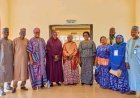
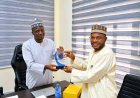
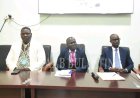
Professor Adebowale made the remarks while receiving a delegation from the National Universities Commission (NUC) for the accreditation of postgraduate programmes at the Pan African University Life and Earth Sciences Institute, including Health and Agriculture (PAULESI), hosted by the University of Ibadan.
According to the Vice-Chancellor, the University of Ibadan was founded on the principles of excellence, integrity, and service, values he said successive administrations have continued to uphold in sustaining the institution’s academic reputation.
He explained that PAULESI is a continental initiative of the African Union Commission (AUC) established to strengthen science, technology, research, and higher education across Africa. He noted that the institute was domiciled at the University of Ibadan following a competitive selection process.
Professor Adebowale stated that similar Pan African University institutes were also established in Kenya, South Africa, Algeria, and Cameroon, with Nigeria serving as the hub for the West African sub-region.
He added that the broader objective of the Pan African University initiative is to produce highly skilled researchers capable of addressing Africa’s developmental and scientific challenges through research-driven solutions.

The Vice-Chancellor stressed the importance of maintaining institutional standards that would keep African universities globally competitive, warning that failure to sustain quality assurance mechanisms could undermine educational progress.
He acknowledged the challenges confronting public universities but maintained that they remain central to the advancement of higher education and national development in Nigeria.
Professor Adebowale further described the ongoing exercise as the first accreditation of postgraduate programmes within PAULESI, expressing optimism that it would establish a strong framework for continuous improvement in postgraduate education across the continent.
He assured the accreditation panels of the university’s full cooperation and support throughout the process.
Speaking on behalf of the accreditation contingent, Professor Ado Saleh, head of the Reproductive Health Team, said the exercise was aimed at assessing whether the programmes meet the standards prescribed by the National Universities Commission.
He noted that accreditation remains essential for quality assurance, academic credibility, and institutional accountability within Nigeria’s university system.
Professor Saleh described the accreditation team and the university as partners working toward the common goal of strengthening educational quality and maintaining national and international academic standards.

Also speaking, a Deputy Director at the NUC, Mrs. Uchenna Obidiagbo, disclosed that the contingent comprised eight accreditation panels involving twenty-six professionals assigned to assess programmes within PAULESI.
The postgraduate programmes undergoing accreditation include:
- Plant Breeding
- Medicinal Plant Research and Drug Development
- Petroleum Geoscience
- Avian Medicine and Vaccine Production and Quality Control
- Reproductive Health
- Sports Management and Policy Development
- Environmental Management
- Mineral Exploration
The accreditation exercise is expected to evaluate curriculum quality, staffing, research infrastructure, laboratories, and compliance with postgraduate training standards established by the National Universities Commission.