ABU Celebrates 120 Out-of-School Girls After Four Months of Vocational Skills Training
ABU Celebrates 120 Out-of-School Girls After Four Months of Vocational Skills Training
 UmarFarouk123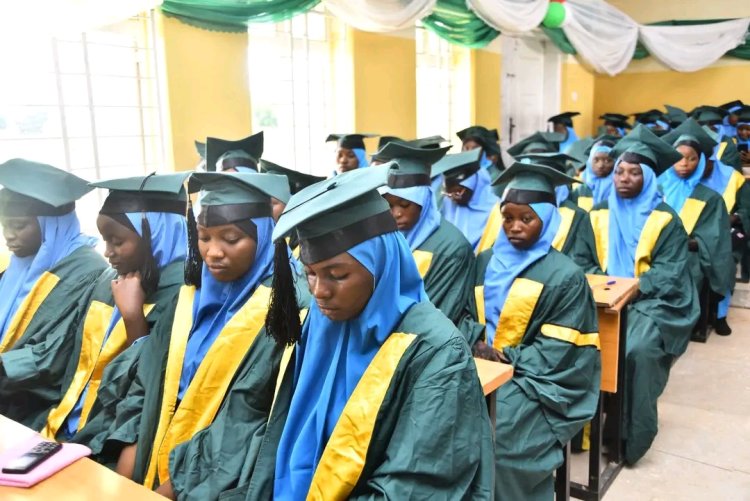
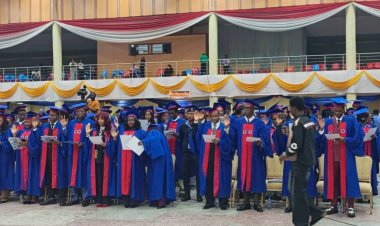
A total of 120 out-of-school girls have received certificates after four months of vocational skills training at Samaru College of Agriculture, Ahmadu Bello University, Zaria.
They received the certificates at a ceremony marking their graduation held at Samaru College of Agriculture on Wednesday, 16th September, 2026.
It was the graduation of the 1st cohort of the vocational skills training for the out-of-school girls organised by the Division of Agricultural Colleges, DAC, of Ahmadu Bello University in collaboration with the Centre for Girls Child Education.
The young women were given the vocational skills training in different areas of agricultural value chain that includes horticulture, beekeeping, goat farming, and catering and restaurant management.
The programme was essentially to give out-of-school girls a second chance and make their lives better.
At the occasion, the Vice-Chancellor, Prof. Adamu Ahmed, described the event as significant as it was dealing with girls, who for one reason or another, had been excluded from conventional educational opportunities.
Ahmed, represented by the Deputy Vice-Chancellor, Advancement, Research and Innovation, Prof. Aliyu Rafindadi Sanusi, said ABU believed that "being out of school should not mean being out of opportunity".
"Today is really about these young women. Graduation ceremonies are often associated with certificates, but what we celebrate today goes beyond a certificate.
"These girls have acquired practical skills that can give them greater confidence, greater independence and, importantly, an opportunity to contribute to the economic wellbeing of their families and communities," he stressed.
He said the graduation was the result of the collaboration between the Centre for Girls Child Education and the Division of Agricultural Colleges which provided the practical training.
The Vice-Chancellor praised the two organizations for the initiative which he described as a good example of what could happen when an organization is committed to addressing the educational needs of vulnerable girls.
To the graduands, the Vice-Chancellor urged them to use what they have learnt and keep learning, as "your training is not the destination, it is the beginning".
"Support one another. Turn your skills into opportunity, and where you can, become a source of opportunity for another girl," he counseled them.
Also speaking, the Director, Division of Agricultural Colleges, Prof. Bashir Ahmed Babaji, described the event as the celebration of courage, determination, and new beginnings.
Prof. Babaji explained that the young women have not only learned production and management of the aspects but they have also acquired skills to guard against any post-harvest loss.
"They have acquired practical skills that turn farms into businesses and ideas into income," he said.
The Director said the door is now open for the graduands to enroll into various ND programmes in the DAC's three agricultural colleges.
Babaji called on organisations both governmental and non-governmental to use this kind of initiative to assist in addressing societal needs.
The Director, Centre for Girls Child Education, Hajiya Habiba Mohammed, also spoke at the graduation ceremony.
Hajiya Habiba, who spoke on the initiative, congratulated the young girls on the skills learnt during the four months of intensive training.
The event was well attended. Principal Officers of the Division of Agricultural Colleges and key officials of Samaru College of Agriculture were present.