Crackdown on Fake Prestige Nigeria Moves to Regulate Honorary Doctorate Abuse
The Federal Government of Nigeria has introduced a new policy banning honorary doctorate recipients from using the “Dr” prefix, classifying its misuse as academic fraud. The directive, announced by the Minister of Education, aims to separate earned academic qualifications from honorary titles and curb growing abuse linked to prestige, politics, and financial influence.
 judithhh
Federal Government of Nigeria has banned honorary doctorate recipients from using the “Dr” prefix, classifying its misuse as academic fraud and introducing strict new rules to protect academic integrity.
While many academics have hailed the ban on honoraries adorning the ‘Dr’ prefix on their names, the policy has also raised an alarm among the elites. They question the governance structure in higher education, the criminal nature of academic misrepresentation, and the complex social psychology that drives wealthy Nigerians to purchase validation they could not earn. Yet, some argued it may be easier for a camel to pass through the eye of a needle than for the government to prosecute honorary doctorate offenders, writes IYABO LAWAL.
In a country where titles often carry more weight than the individuals bearing them, the Nigerian government fired a major salvo at the heart of the nation’s honour economy. Following an initial regulatory framework issued by the National Universities Commission (NUC) earlier in the year, the Federal Executive Council (FEC) finalised a sweeping policy prohibiting recipients of honorary doctorates from prefixing “Dr” to their names.
The federal government’s recent directive barring recipients of honorary degrees from using the prefix “Dr” in official, academic or professional settings is a public attempt to separate earned academic credentials from ceremonial honours in a society where titles often carry unusual social power.
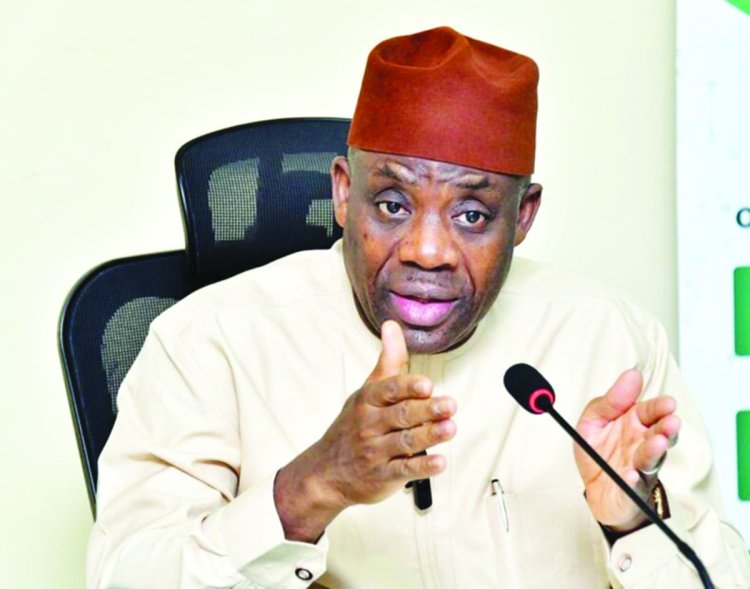
The announcement, delivered by Minister of Education, Dr Tunji Alausa, was unequivocal. It warned that the unauthorised use of the “Dr” prefix by honorary awardees will now be classified as academic fraud. Violators face severe legal, administrative, and reputational consequences.
“The recent trend we’ve seen with the award of honorary degrees has revealed a growing abuse and politicisation of this academic privilege,” Alausa stated during a press briefing at the Presidential Villa. “We’ve seen awards being used for political patronage, for financial gain, as well as the conferral of awards on serving public officials, which, as part of the ethics of honorary degree awards, should not happen.”
Under the new directive, beneficiaries must restrict their title usage to post-nominal letters indicating the honorary nature of the award, such as “Chief Louis Clark, D.Lit. (Doctor of Literature, Honoris Causa)” or “Mrs Miriam Adamu, LL.D. Hons.”
While many academics have hailed the policy as a vital step towards restoring institutional integrity, it has raised the alarm among Nigeria’s elite. It also raises deep-seated questions about governance, the criminal nature of academic misrepresentation, and the complex social psychology that drives wealthy Nigerians to purchase validation they did not earn.
For years, the conferment of honorary degrees in Nigeria has been clouded by allegations of a “pay-to-play” culture. As the NUC itself revealed during a damning investigation in November 2025, the scale of the abuse is staggering.
The commission uncovered that 32 institutions, ranging from unaccredited foreign universities to local professional bodies lacking degree-awarding powers, were operating as honorary doctorate mills. Even more shocking were the price tags attached to these titles.
The NUC’s recent directive is not the first attempt to curb this excess. In 2012, the Association of Vice-Chancellors of Nigerian Universities (AVCNU) issued what became known as the Keffi Declaration, which explicitly prohibited universities from awarding honorary degrees to serving political office holders and warned against the misuse of the ‘Dr’ title by recipients.
However, the declaration was widely ignored. Instead of issuing checks, some universities, facing severe funding shortages, turned a blind eye and, in some cases, actively participated in the trade, using honorary awards as fundraising tools to fill budget gaps.
This complicity has led to a disturbing situation in Nigeria where convocation ceremonies are often overshadowed by the parade of politicians and wealthy “philanthropists” receiving honorary doctorates, while the graduating students, who earned their degrees through years of study, become mere spectators at their own celebration.
The new NUC guidelines aim to close the loopholes that allowed this culture to thrive. The directive, backed by the Education Act CAP E3 of 2004, outlines a strict 16-point framework.
Key provisions of that framework include strict eligibility (serving elected or appointed public officials are now explicitly excluded from consideration), no self-nomination (universities are barred from considering self-nominated candidates, a common practice where wealthy individuals would lobby for awards), caps on numbers (universities are now restricted to awarding a maximum of three honorary degrees per convocation) and the end of ‘Dr’ (likely the most consequential rule is the prohibition on recipients using the prefix ‘Dr’. Instead, they must append the designation Honoris Causa (h.c.) after their name (e.g., John Doe, D.Litt. h.c.).
The NUC’s Executive Secretary, Prof Abdullahi Ribadu, has been at the forefront of this initiative. He stressed that the indiscriminate conferment and misuse of honorary titles diminish public trust in the education system.
An investigation commissioned by the NUC identified 32 “honorary degree mills”, including 10 unaccredited foreign universities, four unlicensed local universities, 15 professional bodies without degree-awarding powers, and three other non-degree-awarding institutions. These entities were found to be offering these degrees without proper oversight, often for a fee, a practice Ribadu condemned as “exploitation”.
The new guidelines, developed with input from Nigerian universities, are designed to standardise the conferment process, preserve academic integrity, and protect the global reputation of Nigerian universities.
The NUC’s plan to collaborate with law enforcement agencies to conduct a nationwide clampdown on institutions and individuals abusing these titles signals serious intent that goes beyond mere guidelines.
The NUC’s directive represents an effort to restore integrity to the honorary degree system. The explicit ban on serving public officials and the strict rules on the use of the ‘Dr’ title are direct responses to the “bastardisation” of the awards highlighted.
However, the effectiveness of these directives will largely depend on their enforcement. Public reaction has been mixed, with strong support and scepticism about enforcement. If consistently enforced, these measures could indeed check abuse and re-establish the meaning of “character and learning” in the context of academic honours.
Ribadu was emphatic on this point, stating that using ‘Dr’ based on an honorary degree without clarification “amounts to false representation, which is punishable under various fraud-related laws in Nigeria”.
Legally, the line between social vanity and criminal fraud depends entirely on context and intent. In Nigeria’s Criminal Code and Cybercrimes Act, impersonation and obtaining under false pretences (419) require a material benefit to have changed hands under false representations. If an honorary degree holder uses “Dr” on a wedding invitation, it is a matter of social vanity.
However, if that same individual uses the prefix on an official government prospectus, a corporate loan application, or a university recruitment bid to imply they hold an earned PhD or medical degree, it constitutes direct criminal academic fraud.
There is clearly a legal issue here. If someone presents an honorary degree as an earned doctorate, that is a false claim about academic status. That can amount to misrepresentation and, in the government’s formulation, academic fraud.
In Germany, for instance, using an unauthorised ‘Dr’ title, including one from a non-accredited foreign university or an honorary one without the ‘h.c.’ suffix, is a criminal offence punishable by fines or imprisonment.
In 2024, high-profile EU politicians were forced to resign after “doctorate inflation” scandals, reinforcing the academic-purpose-only rule.
To enforce compliance within the tertiary education ecosystem, the minister explained that the Ministry of Education and the NUC will issue strict compliance circulars to all university Senates, registrars, and governing councils.
The government is insisting that only universities that have successfully graduated their first set of earned PhD students are legally permitted to confer honorary degrees. This strips newly established, cash-strapped private and state universities of the ability to sell doctorates.
Additionally, universities are strictly limited to a maximum of three honorary degrees per convocation ceremony, ending the era of mass conferrals in which up to a dozen wealthy patrons were decorated in a single day.
Also, the NUC will publish a yearly official register of all legitimate honorary degree recipients and create a central verification portal for employers, banks, and state institutions.
To tighten the noose on the indiscriminate bestowal of honorary doctorates, active political officeholders—whether elected or appointed—are entirely barred from receiving these titles to curb political sycophancy.
The furore surrounding the “Dr” prefix highlights a deeper societal malady: Nigeria’s fierce obsession with credentialism.
In Nigeria, titles are not merely designations of labour; they are currency. They dictate seating arrangements at high-society weddings, determine protocol at state functions, and command deference in corporate boardrooms.
When an individual successfully combines these domains, becoming, for instance, “High Chief (Dr) Alhaji,”they achieve a form of social invulnerability.
The root cause of this credentialism lies in the collapse of institutional trust. In a country with unpredictable economic structures, an official title serves as a protective shield. It signals to the police at a checkpoint, a bank manager reviewing a file, or a politician awarding a contract that the bearer is a person of influence who cannot be easily dismissed or mistreated.
Dr Chinyere Okoro of the University of Nigeria, Nsukka (UNN), also backed the minister’s stance. She noted that academics spend between four and seven years conducting rigorous research, writing theses, and defending them before earning a PhD.
Okoro said that when honorary recipients use the same prefix without meeting those standards, it misleads students and the general public.
Similarly, Prof. Aminu Danladi of Ahmadu Bello University (ABU), Zaria, described the ban as consistent with international academic ethics.
He explained that in the United Kingdom, the United States, and many Commonwealth countries, honorary degree holders are encouraged to avoid using “Dr” in formal contexts.
Danladi said the Minister’s directive brings Nigeria in line with global best practice and will help employers, students, and the public distinguish between academic qualifications and honorary recognition, both of which are valuable, but fundamentally different.
However, Emeka Obiakor, a business leader and honorary doctorate recipient, said the ban disrespects decades of contribution to national development, philanthropy, and community service.
Obiakor argued that honorary degrees are not fake degrees but are conferred by university senates after careful deliberation.
“Stripping us of it feels like diminishing the service we’ve rendered. If the concern is clarity, let the universities issue guidelines, not an outright ban,” he said.