FUNAAB AMREC Trains Staff on Work Ethics, Institutional Mandate to Boost Service Delivery
The Agricultural Media Resources and Extension Centre (AMREC) of the Federal University of Agriculture, Abeokuta, has organised a staff development training aimed at strengthening professionalism, institutional awareness, and service delivery among its personnel.
 Philip22
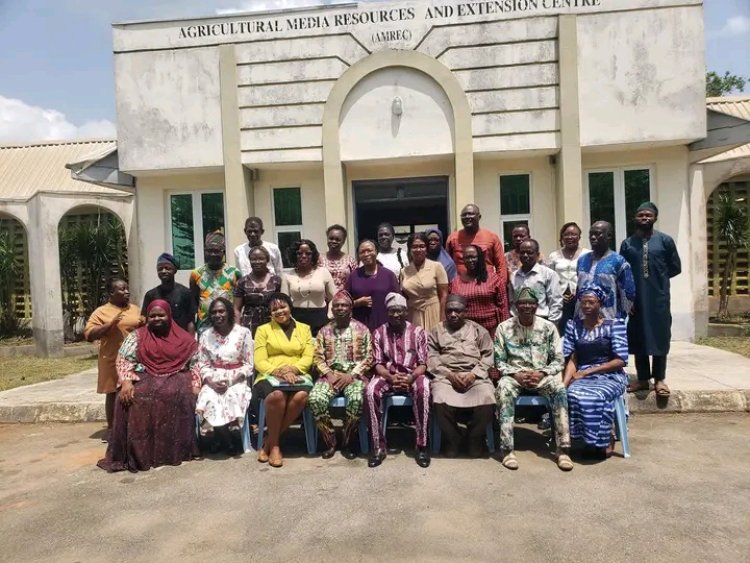
The Agricultural Media Resources and Extension Centre (AMREC) of the Federal University of Agriculture, Abeokuta, has organised a staff development training aimed at strengthening professionalism, institutional awareness, and service delivery among its personnel.
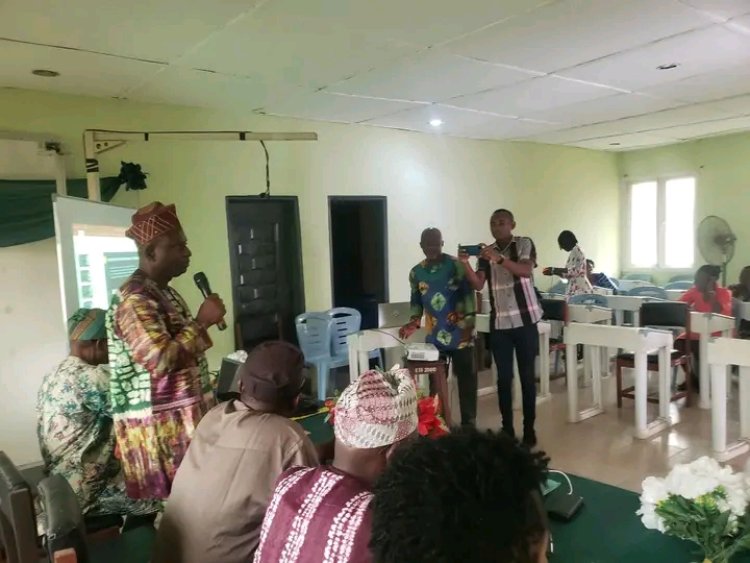
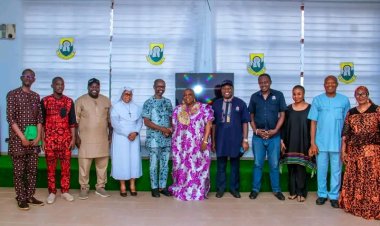
Held on April 15, 2026, the training, themed “AMREC Overview and Job Ethics,” brought together members of staff for capacity building and strategic repositioning of the Centre.
Declaring the workshop open on behalf of the Vice-Chancellor, the Deputy Vice-Chancellor (Development), Prof. Olawale Dairo, represented by the Director of the Institute of Food Security, Environmental Resources and Agricultural Research, Prof. Kazeem Bello, underscored the need to revitalise AMREC. He described revitalisation as restoring purpose and energy to the system, noting that the Centre serves as the University’s third core arm alongside teaching and research. He outlined key priorities, including addressing inefficiencies, preserving institutional values, embracing innovation, and strengthening personnel capacity.
In his welcome address, the Director of AMREC, Prof. Jacob Olaoye, said the training was designed to promote accountability, enhance performance evaluation, and support strategic growth. He reiterated the Centre’s role in bridging research, communication, and community engagement to address agricultural challenges such as food security and sustainable development.
Delivering a lecture on “AMREC Work Ethics: Building a Strong Foundation for Success,” former Deputy Vice-Chancellor (Academic), Prof. Christian Ikeobi, defined work ethics as the values and principles guiding workplace conduct. He stressed the importance of honesty, punctuality, competence, respect, and dedication, while cautioning against unproductive practices such as superficial compliance. He also referenced the University’s recognition at an international agricultural engagement involving Nigerian delegates to China as evidence of its strong ethical standards.
In a separate presentation, the Deputy Director of AMREC, Prof. Olalekan Oyekunle, provided an overview of the Centre’s structure and operations. He explained that AMREC operates under an independent board supported by a Management Committee, administrative units, and five core programmes. He highlighted the Extension and Adaptive Research Programme as critical in bridging the gap between research and practical application through the testing and dissemination of innovations to farmers across Southwest Nigeria.
Speaking on the Centre’s mandate, Prof. Oluwakemi Irehkore noted that AMREC, established in 1991, functions as the University’s extension arm in the Southwest region. She outlined its activities to include diagnostic and market surveys, technology demonstration, capacity building, community interventions, extension communication, youth engagement, and gender-focused initiatives aimed at promoting sustainable agricultural development.
Also speaking, the Dean of the College of Agricultural Management and Rural Development, Prof. Emmanuel Fakoya, represented by the Deputy Dean, Dr. Chioma Adekunle, described the training as timely and necessary for deepening staff understanding of job ethics and institutional responsibilities.
The training concluded with a renewed commitment by participants to uphold professional standards, strengthen teamwork, and advance the Centre’s mandate in driving sustainable agricultural development.