Prof. Fakoya Delivers FUNAAB 110th Inaugural Lecture
Prof. Fakoya Delivers FUNAAB 110th Inaugural Lecture
 UmarFarouk123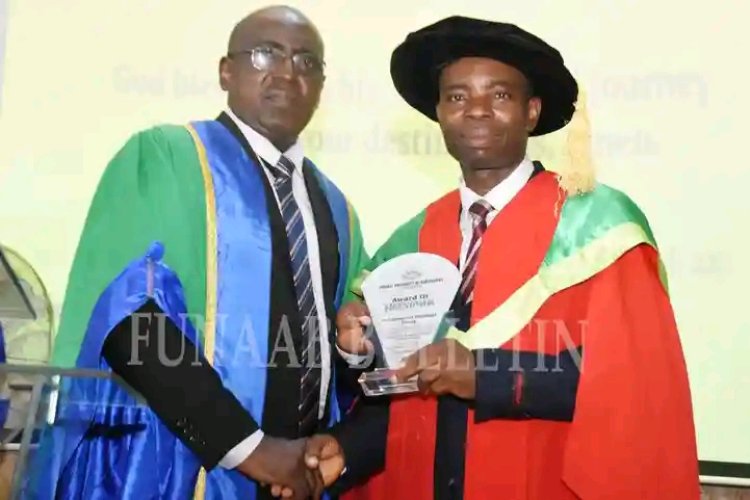
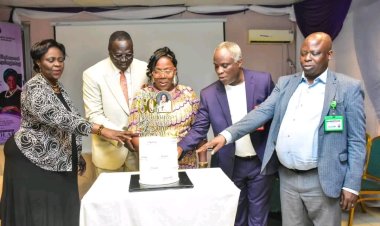
Prof. Emmanuel Fakoya, a distinguished expert in Agricultural Extension and Rural Development at the Federal University of Agriculture, Abeokuta (FUNAAB), has announced the establishment of a ₦1 million annual prize to reward the University’s Best Farm Practical Year student in honour of his late father.
The announcement was the highpoint of the University’s 110th Inaugural Lecture, delivered on, March 4, 2026, at the Prof. Oluwafemi Balogun Ceremonial Building. The prize, which would run for the next 10 years and to begin at the 34th Convocation Ceremony of the University, is aimed at promoting excellence in hands-on agricultural training and motivating outstanding performance among students enrolled in FUNAAB’s Farm Practical Year Programme.
Delivering the Lecture titled “Measurement and Scaling: Bedrock of Robust Agricultural Extension Research Analysis,” Prof. Fakoya advocated a paradigm shift in the formulation of agricultural policies in Nigeria. He emphasised that interventions must be anchored on rigorous empirical evidence rather than anecdotal accounts to ensure effectiveness and sustainability.
According to him, critical sectors such as land management, livestock production, conflict resolution, and women’s empowerment continue to face challenges due to the absence of standardised measurement frameworks. He stressed that without accurate and reliable tools, it would be difficult to objectively assess the true impact of extension programmes on rural livelihoods.
The 110th Inaugural Lecturer called for the development of national and regional frameworks to establish uniform metrics for evaluating key variables, including adoption rates, empowerment indices, and conflict intensity. He maintained that participation, access, and empowerment must be measured using valid and reliable indices to guarantee inclusiveness and gender responsiveness in agricultural interventions.
Prof. Fakoya further underscored the need for a multidisciplinary approach, encouraging collaboration among agricultural economists, sociologists, statisticians, and extension experts. He proposed that universities and research institutes should establish specialised centres dedicated to measurement and scaling studies to drive innovation and standardisation in research methodologies.
Highlighting the importance of advanced quantitative techniques, he recommended the institutionalisation of tools such as Likert scaling, factor analysis, and regression modelling to enhance predictive accuracy in extension research. He added that sustained capacity building in data analytics and psychometrics for both professionals and students would be essential to achieving this goal.
Earlier in his Introductory Remarks, the Vice-Chancellor, Prof. Babatunde Kehinde, commended Prof. Fakoya for his scholarly contributions and described the lecture as timely and impactful. He noted that strengthening research methodology and ensuring data credibility remain pivotal to advancing Nigeria’s agricultural transformation agenda.
Prof. Fakoya currently serves as the Dean of the College of Agricultural Management and Rural Development (COLAMRUD), and he is a member of the University’s Governing Council, as well as Chairman, Committee of Deans and Directors.