RSU: Dollarization, Unethical Practices Devaluing Naira, Frustrating Economy – Prof. Nwanyanwu
Professor Loveday Nwanyanwu of the Department of Accounting, Rivers State University, has warned that Nigeria’s economy will continue to deteriorate unless urgent measures are taken to curb dollarization and unethical financial practices that weaken the naira and frustrate economic growth.
 Philip22

Professor Loveday Nwanyanwu of the Department of Accounting, Rivers State University, has warned that Nigeria’s economy will continue to deteriorate unless urgent measures are taken to curb dollarization and unethical financial practices that weaken the naira and frustrate economic growth.
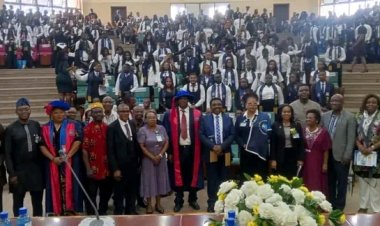
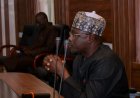
Delivering the institution’s 117th Inaugural Lecture titled “Managing a Nation’s Economy: The Quantitative and Qualitative Accounting Distinction” on Wednesday, 27th August, 2025, Prof. Nwanyanwu noted that the value of the naira is being eroded because government officials and private individuals hoard dollars at home instead of investing locally.

According to Prof. Nwanyanwu, this practice drains liquidity, cripples productivity, fuels inflation, and worsens unemployment. “The problem of Nigeria is not lack of knowledge or expertise, but human behavior. Our people trade in dollars on the streets, hoard foreign currency, and frustrate the economy. If we stop the dollarization of the economy today, the economy will improve by at least 70 percent,” he stated.
He further lamented that such unethical behavior undermines the Central Bank of Nigeria’s monetary policies. Prof. Nwanyanwu called for stronger legislation to discourage individuals and companies from transacting in foreign currencies and urged the government to compel those hoarding hard currencies to deposit them in banks for circulation and investment. He added that governance should be entrusted to technocrats with integrity, transparency, and honesty to restore public confidence.

Highlighting solutions, Prof. Nwanyanwu recommended the use of both quantitative and qualitative accounting in national budgeting, improved fiscal discipline, and the promotion of ethical leadership. He stressed that until Nigerians embrace integrity and transparency, economic prosperity will remain elusive.
In his remarks, the Vice Chancellor of Rivers State University, Professor Isaac Zep-Obipi, commended the lecturer for exposing the damaging impact of unethical practices on the naira and the wider economy. “For me, and I think you will agree with me, he has done justice to the theme of the lecture… And I think he has made his contribution to the development of our economy, which we expected as scholars to do by our researchers. And I am convinced that this university is doing very, very well in this direction,” the VC stated.
Prof. Zep-Obipi emphasized that the university is aligning its procurement processes with international standards through the establishment of an International Law of Procurement. He added that the forthcoming procurement policy would ensure transparency, integrity, and efficient use of resources. “That’s why today, this university has created the International Law of Procurement, aligned with the laws of the Federal and State Governments, where procurement processes are matched with international standards. And I believe, very soon, our administration and procurement policy will be developed to ensure objectivity, integrity, and efficient use of available resources,” he added.
The event, attended by members of the academic community, students, and stakeholders, concluded with a call for Nigerians to change their attitudes and support reforms that will strengthen the naira and stabilize the economy.