UNIMAID Elevates Global Profile, Champions Grassroots Climate Resilience Through Multi-National "CLARITY" Project
UNIMAID Elevates Global Profile, Champions Grassroots Climate Resilience Through Multi-National "CLARITY" Project
 UmarFarouk123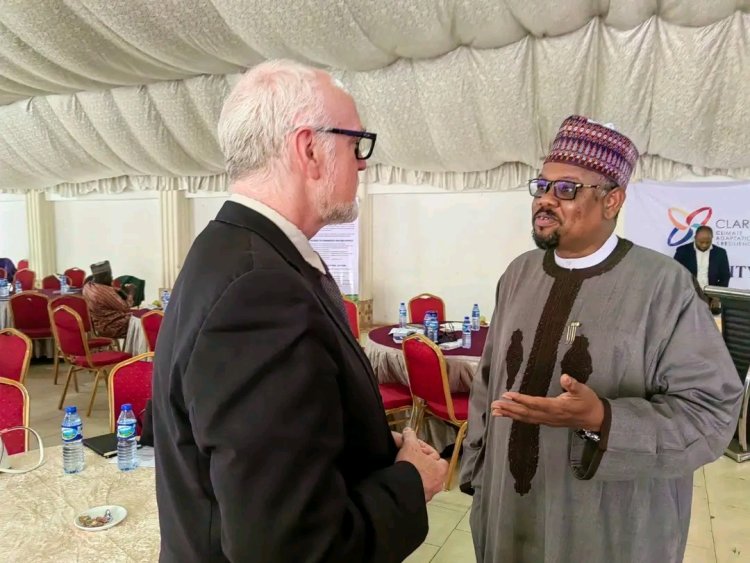
Reaffirming its position as a leading center for impactful global research, the University of Maiduguri (UNIMAID) is spearheading a major international climate adaptation research initiative funded by the United Kingdom and Canadian governments.
The project, driven under the Climate Adaptation and Resilience in Drylands (CLARITY) program, is primarily funded by the UK’s Foreign, Commonwealth and Development Office (FCDO) and Canada’s International Development Research Centre (IDRC). UNIMAID holds the unique distinction of being the only Nigerian university selected to execute this high-level research.
Giving an insight into the project, the Dean of the Faculty of Physical Sciences at UNIMAID and Team Leader for the Nigerian CLARITY research, Professor Ibrahim B. Goni, explained that the initiative focuses on building climate resilience in dryland regions severely affected by extreme weather conditions such as severe droughts and flooding.
Professor Goni, a renowned hydrogeologist, disclosed that the research utilizes an innovative "Transformation Lab" (T-Lab) approach. The T-Lab serves as a collaborative center that brings together diverse stakeholders including rural communities, farmers, women leaders, youth groups, traditional institutions, and government officials to jointly plan and develop localized strategies for climate adaptation.
The Nigerian/Niger Republic joint T-Lab covers the Katsina-Jibia-Maradi axis. While UNIMAID leads the Nigerian team, they are working in close partnership with the University of Abdou Moumouni in Niamey, Niger Republic. The CLARITY project also features parallel T-Labs in Dodoma, Tanzania, and India.
Working alongside Professor Goni on the UNIMAID team is Professor Yakakaa Bukar from the Department of Geography, who leads the social science and community engagement component, supported by doctoral researchers.
"Over the last three years, we have undertaken extensive research activities in the Katsina-Jibia area," Professor Goni stated. "We installed water level loggers to monitor groundwater changes, conducted quality assessments, and interacted deeply with the community to understand their challenges with climate extremes."
Beyond academic research, the UNIMAID team is heavily focused on community empowerment. Professor Goni highlighted that the project instituted a "Community Hydrology Training" program, which equipped local residents with basic hydrological knowledge, enabling them to actively observe and report climate-related issues in their environments.
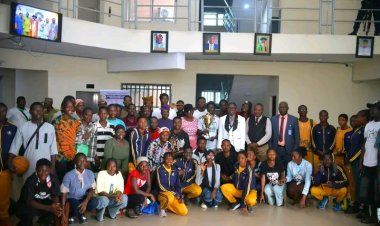
Recognizing the critical role of the younger generation in sustaining climate action, the research team also targeted secondary schools. "We identified that Katsina State has Climate Change Clubs in almost all its secondary schools, which is very positive," Goni noted. "We visited about five of these schools to carry out enlightenment campaigns, ensuring we carry the youth along and build their capacity to understand these changing climate dynamics."
Recently, the UNIMAID team hosted the 3rd Annual CLARITY Workshop in Abuja. The high-level gathering brought together international collaborators from University College London (UCL), the British Geological Survey, the Institute of Development Studies, Cardiff University, and IRD France.
The workshop enjoyed robust participation from community delegates and government line ministries. Adding significant national policy weight to the initiative, the Federal Ministry of Environment, through its Department of Climate Change, commended the UNIMAID-led consortium for bridging the critical gap between science and action. Delivering an address at the event, the Ministry highlighted the severe climate vulnerabilities in the Katsina-Maradi transboundary corridor, emphasizing that climate change and water resource depletion do not respect geopolitical borders.
Praising the T-Lab approach for ensuring adaptive solutions are built from the ground up, the Ministry officially committed to integrating the research outcomes from the UNIMAID project into Nigeria's state-level adaptation planning and major policy frameworks, including the Great Green Wall implementation and the National Adaptation Plan (NAP).
Further underscoring the national strategic importance of the research, the Honourable Minister of Agriculture and Food Security, Senator Abubakar Kyari, represented by Deputy Director Hajiya Iyabo, described the CLARITY project as highly timely and relevant. The Minister commended UNIMAID and its funding partners for generating scientific evidence that directly addresses water security and food systems resilience in tropical drylands. Acknowledging the severe threats posed by erratic rainfall, desertification, and droughts to farming communities, he emphasized the Ministry’s commitment to building a resilient agricultural sector through Climate-Smart Agriculture.
The Minister noted that the scientific tools and practical solutions emerging from the CLARITY project will significantly contribute to informed policymaking and agricultural transformation. He assured stakeholders that the research outcomes will complement ongoing national initiatives, such as the integration of agriculture into Nigeria’s Nationally Determined Contributions (NDCs) and the recently introduced Nigerian Farmers' Soil Health Card Scheme, ultimately ensuring that research translates into practical actions that secure food and nutrition for vulnerable communities.
Similarly, the Katsina State Government assured stakeholders of its readiness to sustain the project's outcomes beyond its December 2026 completion date.
Highlighting the strategic benefits of the project to the University of Maiduguri, Professor Goni stated that the research has massively projected the institution's image on both national and global stages.
"Globally, wherever you see the CLARITY project website or documentation, you see the logo of the University of Maiduguri. This promotes our institutional image immensely," he remarked. "Nationally, because of our leadership in this project, the Federal Department of Climate Change recently invited UNIMAID to participate in a high-level stakeholder meeting to develop climate adaptation activities for the entire country. The University of Maiduguri is now highly recognized as a critical institution in this space." He stated.
By actively driving the CLARITY project, the University of Maiduguri continues to bridge the gap between rigorous scientific research, community empowerment, and actionable government policy in the global fight against climate change.