University of Ibadan and ILRI Deepen Collaboration on Livestock Nutrition, Feed Production
University of Ibadan and ILRI Deepen Collaboration on Livestock Nutrition, Feed Production
 UmarFarouk123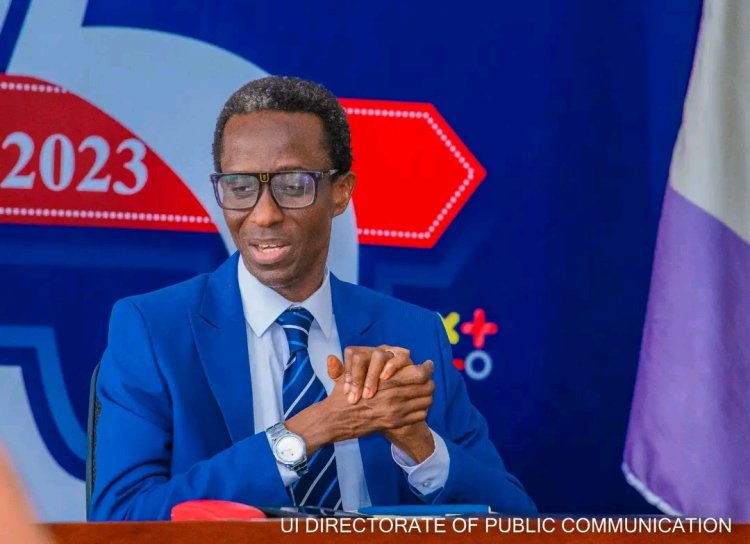
The University of Ibadan has strengthened its research collaboration with the International Livestock Research Institute (ILRI) to advance studies in livestock nutrition, feed production, dairy development and aquaculture.
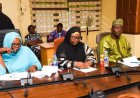
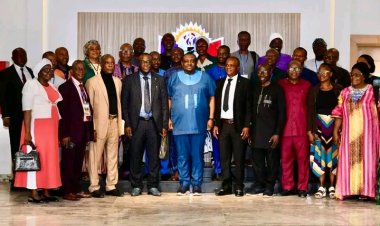
This development was disclosed during a courtesy visit to the Vice-Chancellor by the ILRI research team, where discussions centered on ongoing and future collaborative research projects involving the Department of Aquaculture and Fisheries Management, Faculty of Renewable Natural Resources.
The Deputy Vice-Chancellor, Administration of the University of Ibadan, Professor Peter O. Olapegba, FNPA, fspsp, C.Psych, FSSAN who received the visiting team, commended the ILRI for the strategic partnership with UI.
He noted that the collaboration would provide opportunities for researchers and students to contribute to research addressing food security, livestock production and nutrition in Nigeria.
He gave the commendation on behalf of the Vice-Chancellor, Professor Kayode O. Adebowale, mni, FAS, fspsp during the courtesy visit led by the Dean, Faculty of Renewable Natural Resources, Professor Adejoke Akinyele accompanied by the Head, Department of Aquaculture and Fisheries Management, Professor Flora E. Olaifa and other members of the Department.
Professor Olapegba lamented that the cost of feed remains one of the major challenges confronting livestock and poultry production in Nigeria, noting that feed accounts for approximately 70 to 75 percent of production costs.
He expressed concern about the of importation of food and concentrates in Africa, stating that African countries needed to be alive to their responsibilities in producing sufficient food and feeds locally.
The DVC reiterated that the University of Ibadan appreciates its collaboration with ILRI, expressing the hope that the existing Memorandum of Understanding it has with the University of Ibadan would provide a broader framework for collaboration beyond a single department or project.
According to him, with protein and carbohydrate ingredients constituting a significant proportion of animal feed, there is an urgent need to identify local, affordable and sustainable alternatives that could reduce production costs.
The DVC reaffirmed that UI was ready to deepen its existing collaboration with ILRI, while expressing optimism that the partnership would generate practical innovations capable of improving livestock production, reducing feed costs, strengthening food and nutrition security, and contributing to sustainable agricultural development in Nigeria.
The leader of the ILRI team, Dr. Adetayo Adekeye said the institute was ready to deepen its engagement with the University of Ibadan, describing the university as an important research partner.
He explained that ILRI research activities are focused on the improvement of nutrition, particularly through innovations in livestock production and the efficient utilization of locally available feed resources.
According to him, one of the key areas of collaboration is the evaluation of improved, drought-tolerant forages for livestock production in sub-Saharan Africa.
He said that the project would examine how locally available forage resources could be utilized to improve livestock production while supporting environmental sustainability.
Dr Adekeye stated that research into the utilization of crop residues, including rice straw and sugarcane residues as livestock feed were being conducted, adding that these materials would undergo different treatments to determine how their nutritional value could be improved.
He disclosed that another component of the research focuses on dairy development and genetic improvement of indigenous tropical dairy cattle, stressing that improving the genetic potential of local cattle could contribute significantly to increased milk production and better livelihoods for livestock farmers.
The Scientist said research is also being conducted on fermented-derived protein as a potential feed ingredient for aquaculture and poultry production, reiterating that the high-protein ingredient could help improve animal nutrition and reduce dependence on expensive conventional protein sources.
He explained that the ultimate objective was to lower the cost of animal production and contribute to improved access to nutritious food globally.
Dr. Adekeye said a portion of land had been allocated at the University of Ibadan for one of the research trials and plans were afoot to construct and equip necessary facilities, with the ILRI bearing the project costs.
He emphasized the importance of working closely with Nigerian universities to ensure that research conducted in the country responds to local realities and benefits researchers, students and communities.
Dr Adekeye encouraged researchers from relevant academic units to participate in future collaborative projects, disclosing that additional research opportunities were being explored in the university.