University of Ibadan Professor Abiodun Folawewo Urge Workers to Prioritise Retirement Planning
Experts have advised Nigerian workers to begin preparing for retirement early, stressing that financial security after active service depends on disciplined savings, prudent investments and long-term planning.
 judithhh

Workers have been urged to begin preparing early for retirement, with experts warning that financial security and a fulfilling post-service life depend largely on decisions taken during active employment.
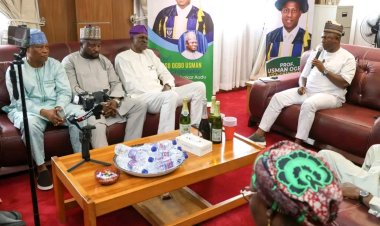
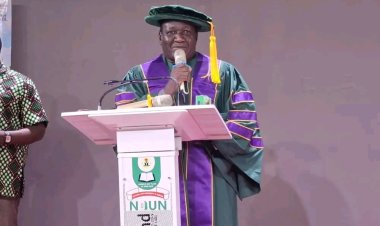
The Dean of the Faculty of Economics and Management Sciences, University of Ibadan [UI], Professor Abiodun Folawewo, and a renowned retirement planning and counselling psychology expert, Professor Emmanuel Akinade, gave the advice at a retirement planning seminar.
Organised by the UI Senior Staff Club in association with Diamond FM and UITV, the seminar brought together academics, financial experts, pension professionals and other stakeholders discussing strategies for achieving financial independence after retirement.
Professor Folawewo, who was a lead discussant, described retirement as an inevitable stage of life that every worker must prepare for.
According to him, retirement may come naturally at the end of one’s career or be forced by unforeseen circumstances such as ill health or accidents, making early preparation imperative.
“The question is not whether retirement will come, but whether you will be adequately prepared when it arrives. If you fail to plan for your retirement, nobody else will do it for you,” he said.
Folawewo noted that retirement often evokes mixed emotions, ranging from anxiety to excitement, adding that adequate financial preparation remains the best way to reduce uncertainty and ensure a comfortable post-retirement life.
He identified Nigeria’s unreliable pension system, inflation, rising healthcare costs and inadequate social welfare for the elderly as major reasons workers should take personal responsibility for their retirement plans.
The economist urged workers to embrace financial discipline by adopting the 50-30-20 budgeting rule, under which 50 per cent of income should be allocated to essential needs, 30 per cent to personal wants and lifestyle, while 20 per cent should be devoted to savings, retirement and emergency funds.
“You must learn to pay yourself first. Intentional savings and prudent investments are indispensable if you hope to maintain financial independence after retirement,” he said.
The dean also urged workers to build diversified investment portfolios comprising stocks, money market instruments and real estate, stressing that investments should be aimed at generating future income rather than immediate consumption.
He also emphasised the importance of home ownership, describing it as one of the most valuable assets retirees can possess, and called on workers to take advantage of mortgage opportunities while still in active service.
In his keynote address, a renowned retirement planning and counselling psychology expert, Professor Akinade, urged Nigerian workers to regard retirement as a phase that should be anticipated rather than feared.
Speaking on the theme, “Your Retirement: Any Plans?”, Akinade said successful retirement extends beyond financial security to include good health, strong family relationships, active social networks and purposeful engagement after leaving active service.
The professor urged workers to invest in sustainable income-generating ventures and remain productive after retirement through consultancy, entrepreneurship, volunteer service and community development initiatives.
According to him, early preparation enables retirees to remain financially independent and socially relevant while reducing the challenges often associated with life after service.
During the interactive session, participants sought clarification on pension administration, voluntary pension contributions, investments in shares, money market funds, artificial intelligence and post-retirement benefits for university professors.
Responding, financial experts urged workers to understand the risks associated with investments before committing funds and recommended portfolio diversification through legitimate investment vehicles capable of delivering sustainable long-term returns.
The seminar also examined retirement practices in Europe and North America, with speakers noting that retirees in developed countries generally enjoy better living standards because of deliberate financial planning undertaken long before retirement.
They explained pension payment structures, including lump-sum benefits and programmed withdrawals, warning that even substantial retirement savings could be depleted rapidly without prudent financial management.
The speakers urged Nigerian workers to cultivate a savings culture, make voluntary pension contributions where possible and invest consistently throughout their working lives to secure a comfortable and dignified retirement.