Education Minister Tunji Alausa Reaffirms Commitment to Preserving Indigenous Languages
Nigeria's Minister of Education, Dr. Maruf Tunji Alausa, has stressed the need to preserve indigenous languages as a means of protecting the nation's cultural identity, history and knowledge systems. Speaking at the launch of Yorùbá: A Tonal Language Homophones by Bankole Olusiji Awosika in Lagos, he described the publication as a significant contribution to education and cultural preservation.
 judithhh

Nigeria's Education Minister, Dr. Maruf Tunji Alausa, has reaffirmed the importance of preserving indigenous languages during the launch of Yorùbá: A Tonal Language Homophones, calling them essential to safeguarding Nigeria's cultural identity and heritage.
He made the remarks on Friday in Lagos during the launch of Yorùbá: A Tonal Language Homophones, a new book by author and linguist Bankole Olusiji Awosika that examines the tonal structure and linguistic richness of the Yoruba language.
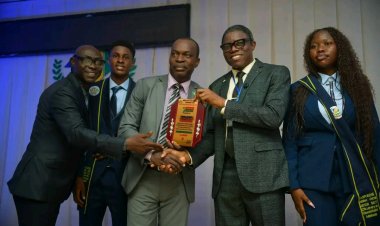
The unveiling, held at Moonstone Hall, Ikeja, attracted academics, education stakeholders, traditional leaders, students, language enthusiasts and members of the literary community committed to promoting indigenous languages.
Speaking at the event, Alausa described the publication as a timely contribution to Nigeria’s educational and cultural development.
“The preservation of our indigenous languages is not merely about communication; it is about preserving history, identity, knowledge systems and our collective heritage. Publications like this deserve to be encouraged because they bridge education and culture in a meaningful way,” he said.
Also speaking, the Permanent Secretary of the Lagos State Ministry of Tourism, Arts and Culture, Bopo Oyekan-Ismaila, commended the publication, noting that books documenting indigenous languages remain valuable educational resources capable of inspiring younger generations to embrace their cultural heritage.

Awosika’s latest work explores how tonal pronunciation determines meaning in the Yoruba language, providing readers with practical explanations of homophones, pronunciation, vowels, consonants and the cultural philosophy embedded in Yoruba expression.
Guests at the ceremony described the publication as another milestone in the author’s longstanding commitment to Yoruba language scholarship and cultural preservation.
Representing the family, Akinyinka Awosika thanked guests for supporting the project and expressed hope that the book would become an important resource for schools, researchers, cultural institutions and language learners both in Nigeria and the diaspora.
The event featured the formal unveiling of the publication, literary reflections, goodwill messages and cultural performances celebrating Yoruba traditions.
Participants also renewed calls for greater investment in indigenous language preservation, stressing that local languages remain central to cultural identity, education and national heritage.
With the publication of Yorùbá: A Tonal Language Homophones, Awosika adds another significant contribution to efforts aimed at documenting and preserving one of Africa’s most widely spoken indigenous languages for future generations.