Educational Evaluation Crucial for Sustainable Development, Says Retiring UI Don
Educational Evaluation Crucial for Sustainable Development, Says Retiring UI Don
 UmarFarouk123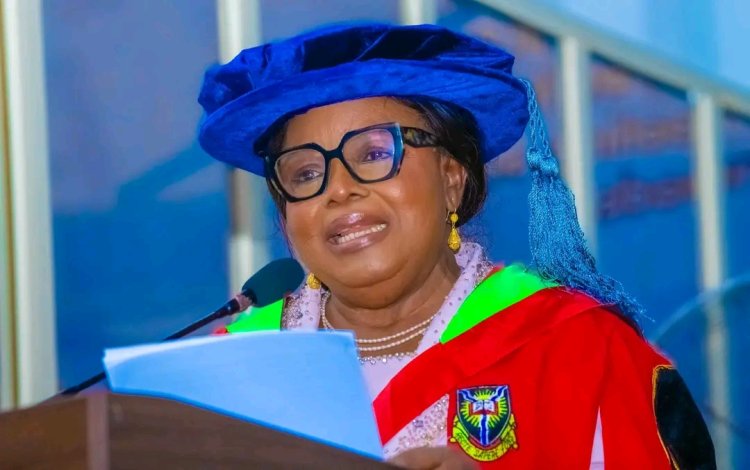
A Professor of Educational Evaluation and Language Education at the Institute of Education, University of Ibadan, Professor Ifeoma Mercy Isiugo-Abanihe, has said that educational evaluation is a critical instrument for sustainable development, educational transformation, and evidence-based decision-making.
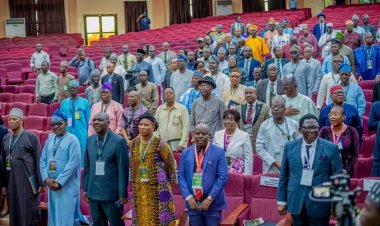
She made this statement while delivering her Valedictory Lecture at the University of Ibadan as she bowed out of active service in the university after years of distinguished service in teaching, research, mentorship and community service.
The lecture was entitled “Repositioning Educational Evaluation for Sustainable Development.”Professor Isiugo-Abanihe explained that educational evaluation evidence can influence educational planning, policy implementation, gender mainstreaming and social transformation and noted that it should not be limited to examination administration and certification alone, but should be viewed as an essential tool for evidence-based decision making and development.
She reiterated that educational evaluation has evolved beyond its traditional role of testing, grading, and certification to become a vital instrument for transformation, improvement, accountability, and sustainable development.
According to her, modern educational systems increasingly recognize evaluation as a mechanism for generating evidence that inform educational planning, curriculum reform, policy implementation, institutional effectiveness, and improved learning outcomes.
She noted that the expansion of mass education, the emergence of quality assurance systems, and the growing emphasis on accountability have significantly transformed evaluation practices across the world. As a result, Professor Isiugo-Abanihe asserted that evaluation now plays a critical role in improving access, quality, equity, and relevance in education.
The Valedictory Lecturer stated that international organizations such as UNESCO, UNICEF, and the World Bank have continued to emphasize the importance of evaluation in advancing literacy, gender equity, inclusive education, youth empowerment, and the attainment of the Sustainable Development Goals.
She added that educational evaluation has become a key driver of strategic reforms aimed at strengthening educational systems and promoting national development.Professor Isiugo-Abanihe observed that technological advancements have further transformed evaluation practices, explaining that digital assessment tools, artificial intelligence, learning analytics, and big data are increasingly being deployed to improve accuracy, efficiency, scalability, and educational outcomes.According to her, adaptive assessment systems and data-driven approaches now make it possible to personalize learning experiences and evaluate educational interventions on a broader scale.
She maintained that the future of educational evaluation lies in dynamic, predictive, and learner-centred systems that provide continuous feedback rather than relying solely on traditional summative assessments.
The Professor of Educational Evaluation and Language Education, however, said that effective educational evaluation depends on the availability of skilled personnel and strong institutional frameworks which are capable of generating and utilizing evidence for educational improvement.
She, therefore, emphasized the need for sustained capacity building for educators, administrators, and policymakers in evaluation methodologies, data literacy, and evidence-informed decision-making.She added that strengthening human and institutional capacity would enable educational systems, not only to generate relevant data but also to translate findings into practical reforms that improve learning outcomes and promote equity.
The retiring don advocated a shift from static standardized testing to continuous and real-time assessment methods, while calling for greater application of artificial intelligence in learning analytics, wider adoption of competency-based education, increased use of digital assessment tools, and stronger alignment of evaluation systems with the Sustainable Development Goals.
Professor Isiugo-Abanihe submitted that the future of educational evaluation in Nigeria and Africa is closely linked to the broader objectives of sustainable development, equity, and social transformation. She stated that as educational systems continue to grapple with challenges such as inequality, population growth, and resource constraints, evaluation must play a more strategic role in guiding reforms, ensuring accountability, and promoting inclusive and context-sensitive educational development.
Speaking at the Valedictory Lecture, the Deputy Vice-Chancellor, Administration of the University of Ibadan, Professor Peter Olamakinde Olapegba, FNPA, fspsp, C.Psych described the occasion as a moment of reflection, celebration, and gratitude for a career characterized by intellectual depth, professional excellence, and unwavering commitment to the advancement of education.
Professor Olapegba who spoke on behalf of the Vice-Chancellor, Professor Kayode Oyebode Adebowale, mni, FAS, fspsp, stated that Professor Isiugo-Abanihe’s contributions to the Institute of Education and the University of Ibadan have been profound and far-reaching through her teaching, research, and service.
Professor Olapegba noted that her work has contributed significantly to the advancement of educational scholarship and institutional development and acknowledged her role in mentoring generations of students and young academics, while contributing to policy-relevant educational research, and upholding the core values of the University.
He added that her dedication has strengthened the Institute of Education’s reputation as a centre of excellence in capacity building, research, and educational development across Africa being its immediate past Director.The DVC said that her legacy would endure not only through her scholarly publications and academic programmes but also through the many lives she has influenced throughout her distinguished career.