Faculty Of Engineering Commends FUL Vice-Chancellor For Proactive Leadership Ahead Of Accreditation Exercises
The Faculty of Engineering and Technology at the Federal University Lokoja (FUL) has commended the Vice-Chancellor, Professor Gbenga Solomon Ibileye, for what it described as proactive and responsive leadership since he assumed office in February 2026.
 Philip22

The Faculty of Engineering and Technology at the Federal University Lokoja (FUL) has commended the Vice-Chancellor, Professor Gbenga Solomon Ibileye, for what it described as proactive and responsive leadership since he assumed office in February 2026.

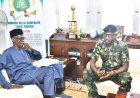
The commendation was made during a strategic advocacy visit by senior academics and faculty leadership led by the Acting Dean, Engr. Professor Kayode Joshua Simonyan, aimed at strengthening engagement with the university management ahead of upcoming accreditation exercises.
The visit, according to the faculty, was part of broader preparations to ensure successful outcomes in the 2026 accreditation cycle and to secure the future of engineering programmes within the institution.
Speaking during the engagement, Professor Simonyan congratulated the Vice-Chancellor on his appointment as the 4th substantive Vice-Chancellor of the university and expressed confidence in his ability to steer the institution toward greater academic and administrative stability.
He noted that since the approval of the Faculty of Engineering by the university Senate on May 27, 2021, the programme has grown steadily and is now firmly established, with pioneer students currently in 300 level and progressing toward completion of their studies.
According to him, the faculty has recorded key milestones, including the adoption of an Outcome-Based Education (OBE) framework, stakeholder validation sessions to align curriculum objectives with industry expectations, and a comprehensive internal assessment comparing current capacity with accreditation requirements.
He also disclosed that the faculty has developed strategic collaborations with agencies and industrial stakeholders such as NASENI, NIWA, and industrial hubs in Itakpe and Ajaokuta, while also conducting mock accreditation exercises under faculty mentorship to prepare for upcoming regulatory assessments by COREN and the National Universities Commission (NUC).
Despite these gains, the Acting Dean highlighted critical gaps requiring urgent institutional intervention to ensure full compliance with accreditation standards and to strengthen the sustainability of the engineering programmes.
He emphasized that while the faculty has demonstrated commitment and resilience, additional support is required to consolidate progress, noting that “the foundation is strong, but the structure requires finishing touches to meet professional benchmarks.”
Responding, Vice-Chancellor Professor Ibileye thanked the delegation for the visit and the confidence expressed in his leadership, while commending faculty members for their dedication and sacrifices in sustaining the programme through its developmental phase.
He assured that his administration remains fully committed to supporting academic units in achieving accreditation readiness, strengthening infrastructure, and ensuring that all programmes meet required professional standards.
The Vice-Chancellor added that the success of the Faculty of Engineering remains central to the university’s long-term academic vision and reaffirmed management’s readiness to work closely with stakeholders to address identified challenges.
The engagement ended with renewed assurances of collaboration between the faculty and university management as preparations intensify for the upcoming accreditation exercises.