FUNAAB Engineering Students Showcase Innovative Solutions Through Practical Training
Students of the College of Engineering (COLENG), Federal University of Agriculture, Abeokuta (FUNAAB), are showcasing innovative engineering solutions and hands-on technical skills through the University's Students' Work Experience Programme (SWEP), with projects ranging from smart security systems to automated cooking devices, agricultural tools and construction materials.
 Philip22
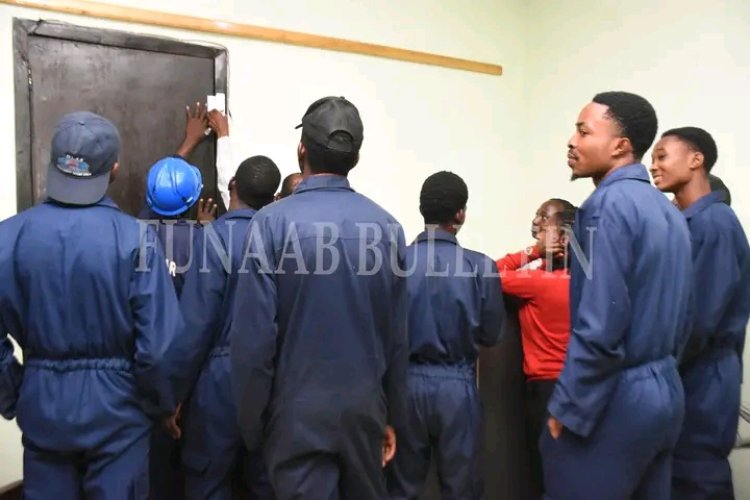
Students of the College of Engineering (COLENG), Federal University of Agriculture, Abeokuta (FUNAAB), are showcasing innovative engineering solutions and hands-on technical skills through the University's Students' Work Experience Programme (SWEP), with projects ranging from smart security systems to automated cooking devices, agricultural tools and construction materials.
The Dean of the College of Engineering, Professor Adedayo Badejo, said the 10-week programme is designed to equip 200-Level Engineering students with practical skills while exposing them to multidisciplinary engineering practice beyond classroom learning.
Speaking during the ongoing exercise, Professor Badejo explained that students rotate across the various departments, where they participate in the design, fabrication, construction and implementation of engineering projects under the supervision of academic staff and technologists.
According to him, the cross-disciplinary approach enables students to gain practical experience beyond their areas of specialisation. For instance, Agricultural Engineering students are exposed to Mechatronics Engineering, while students of Mechanical, Civil, Electrical and Mechatronics Engineering also receive training outside their core disciplines.
He noted that the initiative promotes:
- Teamwork
- Innovation
- Creativity
- Problem-solving skills
Professor Badejo added that the programme equips students with practical experience in:
- Welding
- Fabrication
- Electrical installation
- Electronic circuit design
- Construction techniques
- Quality control
- Project management
The Dean explained that after SWEP, 300-Level students proceed on a three-month Students Industrial Work Experience Scheme (SIWES I), while 400-Level students undertake a six-month SIWES II to gain additional industrial exposure before graduation.
He encouraged participants to take advantage of every aspect of the programme, noting that each student is required to submit a technical report and make a presentation as part of the assessment.
Professor Badejo also commended the university management for providing funds for the procurement of materials used during the practical sessions, describing the intervention as timely and impactful.
He welcomed the recent recruitment of additional academic staff into the college and appealed for sustained investment in modern engineering facilities to strengthen practical training and keep pace with emerging technologies.
Reaffirming the importance of SWEP, he described the programme as an indispensable component of engineering education at FUNAAB, preparing students for industrial training and professional practice through experiential learning. He also commended the commitment of students, academic staff, technologists and other stakeholders for ensuring the programme's continued success.
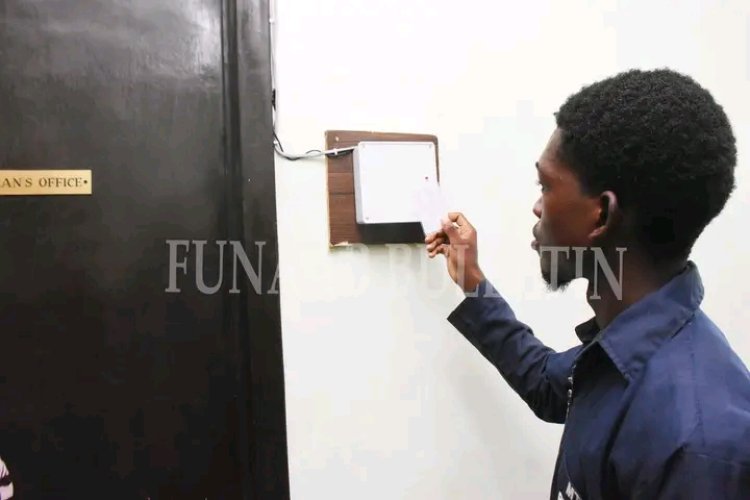
One of the projects attracting attention is an Automated RFID Locking System developed by students from the Departments of:
- Mechatronics Engineering
- Agricultural Engineering
- Civil Engineering
- Electrical Engineering
The smart access control system uses Radio Frequency Identification (RFID) technology to grant authorised users electronic access to offices, replacing the conventional lock-and-key system.
Explaining the technology behind the project, a 300-Level Mechatronics Engineering student, David Oladimeji, said the system combines:
- ESP32 microcontroller
- RFID card reader
- Electromagnetic lock powered by a 12-volt DC supply
He explained that once an authorised RFID card is presented, the system authenticates the user within milliseconds before granting access, demonstrating the practical application of embedded systems and automation technology.
Also speaking, a 200-Level Mechanical Engineering student, Ojumide Olamilekan, described the RFID-based system as a safer alternative to conventional locks because access is restricted to authorised card holders, making it suitable for offices and other sensitive facilities.
Other projects undertaken during the programme include:
- Automated electric stove with an electronic timer
- Fabrication of hand farm trowels
- Production of engineering drawing boards
- Moulding of concrete interlocking blocks