FUE Zaria Hosts International Conference on Inclusive STEM Education
FUE Zaria Hosts International Conference on Inclusive STEM Education
 UmarFarouk123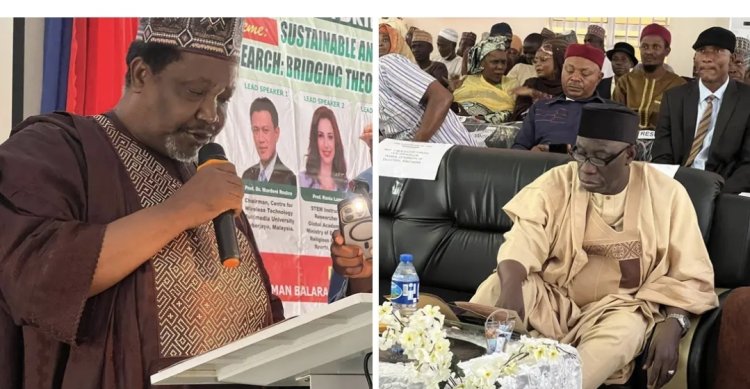
The Federal University of Education, Zaria, has hosted its Second International Hybrid Conference organised by the Faculty of Science and Science Education, bringing together scholars, researchers, policymakers, educationists, students and other stakeholders to deliberate on sustainable and inclusive Science, Technology, Engineering and Mathematics, STEM, education.
The conference, themed “Reimagining Knowledge Systems for Digital Transformation and Sustainable Development in the 21st Century,” focused on digital transformation, research and innovation, inclusiveness, educational excellence and bridging the gap between theory and practice.
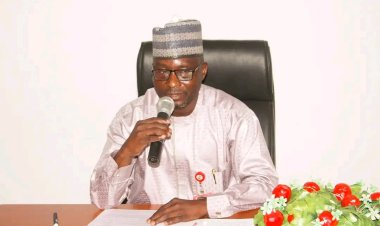
The Vice-Chancellor of the university, Professor Yahya Isa Bunkure, described the conference as a significant milestone in the institution’s academic development and a reflection of its commitment to advancing scholarship, research and innovation.
Professor Bunkure said the rapid emergence of artificial intelligence and other digital technologies had made it imperative for educational institutions to rethink conventional knowledge systems and prepare graduates for the demands of the future. He stressed the need to equip graduates with digital competence, critical-thinking skills, creativity, ethical values and the ability to adapt to changing circumstances.
The Vice-Chancellor also advocated the preservation and integration of indigenous knowledge into modern education, particularly in agriculture, medicine, culture, language, architecture and environmental management. He called for stronger partnerships among government, academia, industry, civil society and development organisations to promote sustainable development.
Professor Bunkure commended the Local Organising Committee, Academic Committee, Technical Committee, Protocol Committee, Student Committee, sponsors and other stakeholders for their contributions to the success of the conference.
The Dean of the Faculty of Science and Science Education, Dr. Mu’awiya Haruna Usman, called for a fundamental transformation of Nigeria’s education system to produce entrepreneurs, innovators and problem-solvers.
Dr. Usman said universities must redesign their curricula to equip students with practical and entrepreneurial skills capable of addressing contemporary challenges. He stressed that sustainable STEM education must be inclusive and accessible to all learners, irrespective of gender, disability, socioeconomic status or geographical location. The Dean further called for stronger collaboration between universities, industries and research institutions to translate scientific knowledge into practical solutions.
The Chairman of the opening ceremony and Vice-Chancellor of the Federal University of Education, Kontagora, Professor Farouq AbdulRashid Haruna, urged participants to maximise the conference’s keynote presentations, technical sessions and panel discussions. He encouraged researchers to develop practical recommendations capable of addressing educational and developmental challenges and announced a ₦500,000 donation to support academic activities of the faculty. He subsequently declared the conference officially open.
The keynote speaker, Professor Onu Amen David, called for stronger university-industry collaboration, curriculum reform and increased investment in research infrastructure.
Professor David said educational excellence should be measured not only by academic qualifications but also by graduates’ ability to demonstrate innovation, creativity, entrepreneurship, critical thinking, ethical reasoning and social responsibility. He urged universities to develop practical solutions to community challenges, including renewable energy, water purification, waste management, recycling, health education and sustainable production. He also advocated greater use of Artificial Intelligence, Learning Management Systems, simulation technologies, Open Educational Resources and digital assessment.
Representing the Kaduna State Commissioner for Housing and Urban Development, Dr. Mohammed Sani commended the leadership of Professor Bunkure and highlighted the university’s growing academic profile. Dr. Sani noted that the hosting of two international conferences within eleven months, with participation by 43 professors and 15 associate professors, demonstrated the institution’s expanding academic engagement.
On behalf of the Commissioner, Right Honourable Dr. Abdullah Aminu Shagali announced a donation of ₦500,000 in support of the conference.
The Chairman of the Academic Staff Union of Universities, ASUU, Alhaji Ubale Ismail, commended the university management and conference organisers for bringing scholars from within and outside Nigeria together. He particularly praised the Local Organising Committee for its dedication and encouraged the Vice-Chancellor to sustain initiatives aimed at strengthening the institution’s academic standing.
Joining the conference virtually from Greece, Professor Rania highlighted the potential of digital technologies to promote inclusive education and expand access to learning. She advocated the use of assistive technologies, accessible learning platforms, differentiated instruction and flexible assessment systems to accommodate diverse learners.
Professor Rania, however, warned that the digital divide remained a major obstacle, particularly in communities affected by limited access to devices, unreliable internet connectivity and inadequate digital literacy. She called for increased AI literacy and responsible use of emerging technologies, stressing that digital transformation must remain inclusive and accessible.
The lead paper presenter, Professor Gafar Shaibu of Bayero University, Kano, also contributed to discussions on the future of STEM education and research.
Participants at the conference called for research institutions to develop innovations that address real-world educational, technological, environmental and socioeconomic challenges. They also advocated closer collaboration among universities, government, industry, professional bodies and communities to strengthen research, innovation and sustainable development.
The conference concluded with a call for stakeholders to translate its recommendations into policies, research initiatives, technological innovations and practical interventions capable of improving education and contributing to sustainable development in Nigeria and beyond.
By Fateema M. Sani and Aisha B. Hassan, NYSC Corps Members