FUNAAB Moves to Strengthen Global Visibility, Improve Ranking Status
FUNAAB Moves to Strengthen Global Visibility, Improve Ranking Status
 UmarFarouk123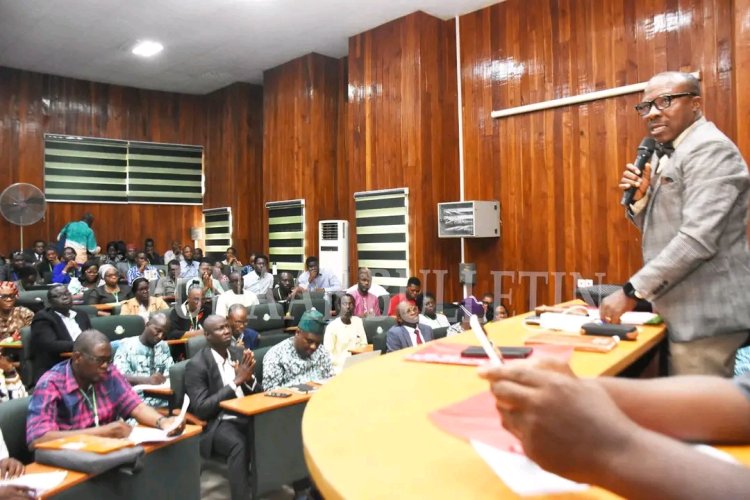
The Federal University of Agriculture, Abeokuta, FUNAAB, has intensified efforts to strengthen its global visibility, enhance research impact and improve its standing in international university rankings through strategic data management, stronger research collaboration and greater visibility of its contributions to the Sustainable Development Goals, SDGs.
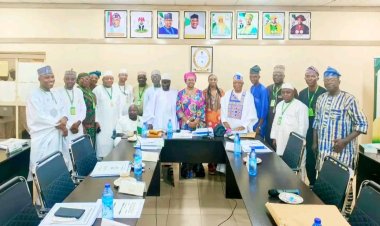
The commitment was reinforced at the opening of a Two-Day Train-the-Trainers Workshop on University Ranking Metrics organised by the FUNAAB Ranking Advisory Committee, FURAC. The workshop, themed “Exploring the Individual Components of University Ranking Metrics,” commenced on Monday, August 24, 2026, at the Green Chamber.
Declaring the workshop open, the Vice-Chancellor, Prof. Babatunde Kehinde, described the initiative as a strategic intervention designed to improve FUNAAB’s global visibility and strengthen its performance in international university rankings. He urged participants to approach the training with open minds and translate the knowledge gained into measurable outcomes. He stressed that its success would depend on the University’s ability to provide accurate information promptly, document its achievements effectively and enhance the visibility of its academic and institutional contributions.
Earlier, the Chairman of FURAC and Director of the Directorate of Academic Planning, Prof. Biodun Badmus, described university ranking as a collective responsibility requiring the active participation of every unit and member of the University Community. He explained that FURAC coordinates the University’s ranking efforts, ensures accurate and timely submission of institutional data, improves global visibility and facilitates regular updating of information on the University’s website. He urged participants to systematically document the University’s achievements, research activities, facilities, conferences, community engagement and other initiatives as verifiable evidence for ranking exercises.
The lead facilitator, Prof. Babatunde Adebesin, Deputy Vice-Chancellor of Hillside University of Science and Technology, Okemesi, Ekiti State, in his presentation titled “Data Storytelling and Reporting for the Global and SDG Impact Ranking,” explained that while data indicates an institution’s position, effective storytelling communicates the significance and impact of its achievements. Using research on space science publications across Africa as an illustration, he noted that research impact extends beyond publication volume to include visibility, relevance, citations and societal influence.
He disclosed that FUNAAB had recorded 5,901 documents involving 3,378 authors on the Scopus/SciVerse platform, with Agricultural and Biosciences remaining its strongest research area, and publications across approximately 148 subject areas. International collaboration accounted for about 38 percent, national collaboration 36 percent, institutional collaboration 21 percent and single authorship only three percent.
He encouraged the University to deepen international research partnerships, noting that internationally collaborative research generally attracts greater visibility and citation impact. He also advised FUNAAB to focus not merely on increasing publication output, but on producing research that is visible, relevant and capable of demonstrating measurable societal impact.
On SDG-related research, Prof. Adebesin identified SDG 2, Zero Hunger, as FUNAAB’s strongest area, with 421 documents recorded between 2016 and 2025. He noted that SDG 6, Clean Water and Sanitation, and SDG 8, Decent Work and Economic Growth, were also significant. He urged the University to strategically align research, teaching, innovation, conferences and community engagement with relevant SDGs and continuously document evidence of such activities.
The facilitator recommended transforming the FUNAAB website into a comprehensive knowledge-sharing platform supported by an accessible institutional repository. He also encouraged academic staff to maintain consistent researcher profiles across Scopus, Google Scholar and ORCID for accurate attribution and tracking of scholarly contributions.
Other presentations addressed key dimensions of university performance and ranking. These included “FUNAAB Core Values: Foundation for the Attainment of Our Vision” by the Vice-Chancellor; “Quality Academic Delivery: A Key Performance Index in World Ranking” by Prof. Biodun Badmus; “X-raying the Rubrics of World-Class University Ranking” by FUNAAB’s SDG Anchor Person, Prof. Adeniyi Olayanju; “Building Standard University Culture in Academic Matters” by the Deputy Vice-Chancellor, Academic, Prof. Olusegun Idowu; “Building Standard University Culture in Development Matters” by the Deputy Vice-Chancellor, Development, Prof. Olawale Dairo; and “Building Standard University Culture in Administrative Matters” by the Registrar, Dr. Titus Adeniyi.
Further sessions focused on “Redefining FUNAAB Research Focus for Enhanced Publications and Income” by the Director, Directorate of Research, Innovation and Partnerships, DRIP, Prof. Oluwagbemiga Adeleye, and “Citations: Research Influence on New Knowledge and Ideas” by the Director, Directorate of Academic Information Systems, DACIS, Prof. Olusegun Folorunso.
The highpoint of the first day was the presentation of certificates to facilitators, followed by responses to questions and comments on strategies to improve the University's ranking status.
The Two-Day workshop continues on Wednesday, August 26, 2026, at the same venue and time. It is expected to strengthen institutional capacity for data collection, documentation, research visibility and evidence-based reporting, while fostering a university-wide culture of systematically capturing and communicating academic, research, administrative, development and community-impact activities for greater global visibility.