NASENI Assesses Progress of FUTA Cassava-to-Ethanol Plant
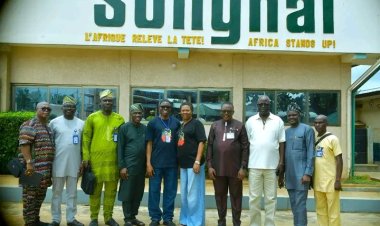
The National Agency for Science and Engineering Infrastructure (NASENI) has conducted an assessment visit to the Federal University of Technology, Akure (FUTA), to monitor progress on the University's cassava-to-bioethanol production project.
 Philip22
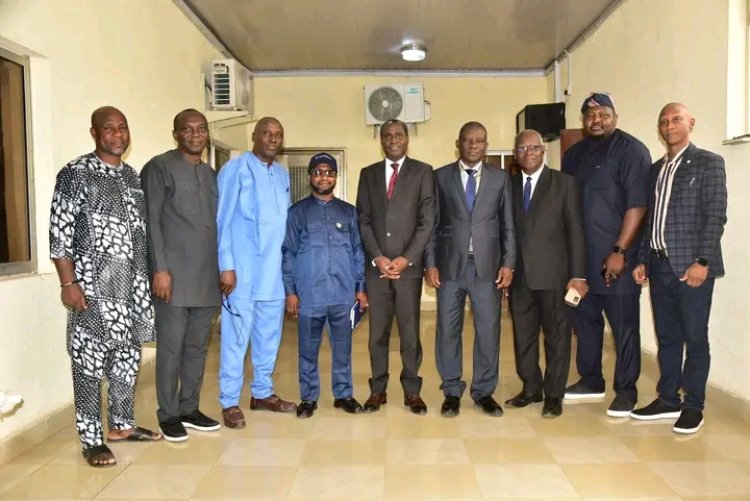
The National Agency for Science and Engineering Infrastructure (NASENI) has conducted an assessment visit to the Federal University of Technology, Akure (FUTA), to monitor progress on the University's cassava-to-bioethanol production project.
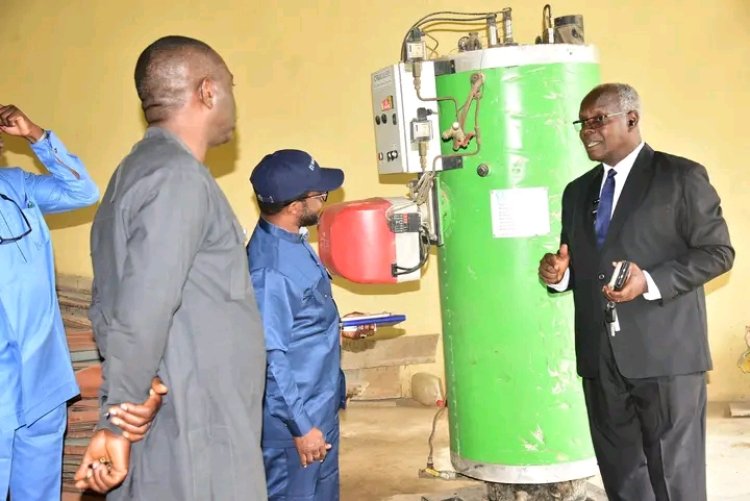
The project, located on the FUTA campus, is focused on converting cassava into ethanol. It is being implemented under the University's STEP-B initiative and funded through the Presidential Implementation Committee on Technology Transfer (PICTT) with support from NASENI.
Speaking during the visit, the project's lead researcher, Professor Olayinka Awopetu of the School of Engineering and Engineering Technology, said work on the facility is progressing steadily.
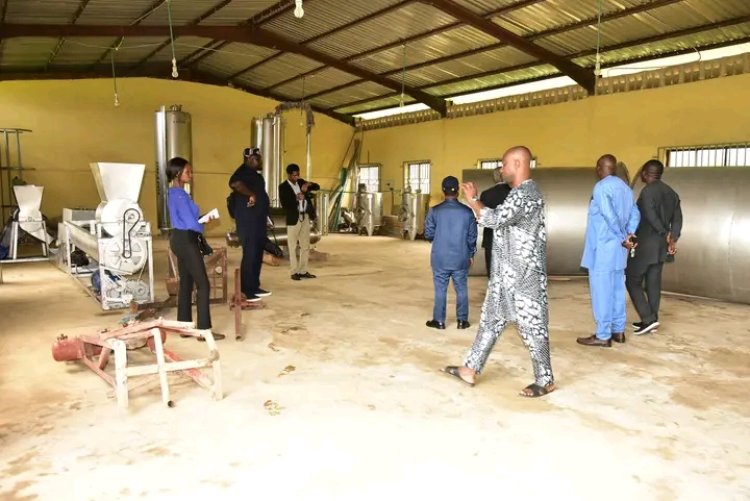
According to him, major processing equipment already installed includes:
- Fermentation tanks with a combined capacity of more than 500,000 litres.
- An electronically controlled cassava washing and peeling machine.
- A fabricated stainless steel fermentation system.
- A wood- and charcoal-fired distillation boiler for steam generation.
Professor Awopetu added that other supporting infrastructure at the facility includes:
- Three boreholes.
- Water tanks.
- A greenhouse.
- A grain storage silo.
- A refrigerator for preserving grains.
- A water treatment plant to prevent machinery blockages.
He described the project as strategically important to Nigeria, noting that it has the potential to enhance energy security, food security, economic growth and environmental sustainability.
The professor commended NASENI for its support and appealed to the agency and the Federal Government for additional funding to facilitate the completion and long-term sustainability of the project.
Also speaking, Professor Akintunde Olurotimi Dahunsi of the Department of Mechanical Engineering said Nigeria's annual ethanol demand is estimated at between 1.5 billion and 1.8 billion litres, while domestic production currently stands at only about 15 million litres.
He noted that the shortfall is largely met through imports from Brazil and other countries.
Professor Dahunsi said Nigeria possesses significant capacity to increase ethanol production from multiple feedstocks beyond cassava, adding that between 70 and 80 per cent of the country's agricultural land remains underutilised.
According to him, expanding ethanol production would create employment opportunities, support small-scale enterprises and boost agricultural productivity, particularly because cassava can be cultivated up to four times annually.
He also highlighted the availability of valuable by-products from the production process.
Professor Dahunsi explained that the project will provide practical training opportunities for students while strengthening collaboration between academia and industry.
He disclosed that the project is also exploring alternative feedstocks, including potatoes and sugarcane waste, to reduce pressure on food resources.
According to him:
- Fermentation waste can be processed into animal feed.
- Captured gas can be converted into biogas.
- Ethanol can be processed into gel fuel for cooking.
On the project's sustainability model, Professor Dahunsi said NASENI and PICTT are expected to receive about 25 per cent of the project's profits over a 10-year period, with the remaining proceeds benefiting the University and the wider society.
During the visit, the NASENI media team also paid a courtesy call on the University's management, where they were received by the Deputy Vice-Chancellor (Academic), Professor Taiwo Amos, and the Deputy Vice-Chancellor (Development), Professor Sunday Oluyamo.
The assessment visit formed part of NASENI's efforts to evaluate the progress of the project and identify opportunities for additional funding and technical support.
Stakeholders said the completed cassava-to-ethanol plant is expected to contribute to job creation, industrial development, renewable energy production, food and energy security, while reducing Nigeria's dependence on imported fuel additives.
Established in 1992 under the Presidency, NASENI is mandated to strengthen Nigeria's science and engineering infrastructure, promote local industrialisation and develop technologies in sectors including renewable energy, electronics, power equipment and agriculture.