NELFUND Dismisses Viral Claim Linking Upkeep Allowance to CGPA
NELFUND has dismissed a viral social media notice claiming that students with a CGPA below 2.50 would no longer be eligible for upkeep allowances. The agency clarified that the information did not originate from it and is entirely false.
 judithhh
NELFUND clarifies that reports about CGPA-based restrictions on student upkeep allowances are false and urges students to rely only on official updates.
The Nigerian Education Loan Fund (NELFUND) has dismissed as false a notice circulating on social media claiming that students with a cumulative grade point average (CGPA) below 2.50 would no longer be eligible to receive upkeep allowances.
In a clarification issued on its official platforms, NELFUND stated that the purported notice did not originate from the agency and should be disregarded by the public.
The fake document alleged that beneficiaries whose CGPA falls below 2.50 would lose access to upkeep support as part of a new policy aimed at promoting academic performance.
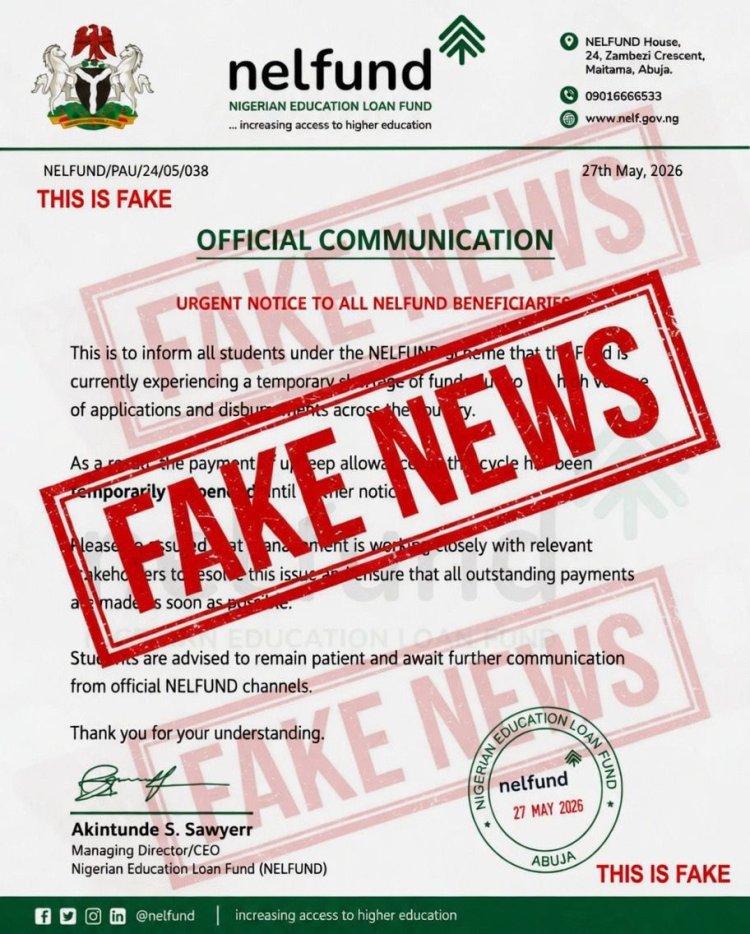
Reacting to the claim, NELFUND described the information as entirely false, stressing that no such policy has been introduced.
“The notice currently circulating online regarding the suspension of upkeep allowances for students with a CGPA below 2.50 did not originate from NELFUND and is entirely false,” the agency stated.
NELFUND urged students, parents, and the general public to rely only on information released through its verified communication channels and official social media platforms.
The Fund also warned against the spread of misinformation capable of causing confusion among beneficiaries of the student loan scheme.
NELFUND reaffirmed its commitment to supporting eligible Nigerian students through transparent and accessible funding programmes, while encouraging stakeholders to verify information before sharing it online.