SuperKids Project Launched to Promote Creativity Indigenous Languages and Problem Solving Skills in Nigerian Children
Education stakeholders have urged Nigerian children to embrace creativity, indigenous languages, and problem-solving skills to improve learning outcomes and prepare for future opportunities. The call was made during the launch of the SuperKids Project in Abuja, a nationwide initiative by the Shelta Impact Programme and the Printrite Foundation targeting children aged 6–12 across Nigeria.
 judithhh
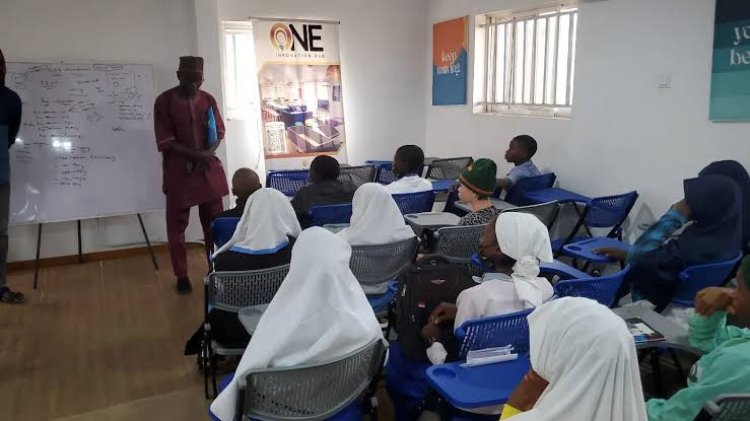
Children are been urged to strengthen their creativity, embrace indigenous languages and develop problem-solving skills as part of efforts to improve learning outcomes and prepare them for future opportunities.
This charge was given in Abuja on Wednesday at the launch of the SuperKids project, an initiative of the Shelta Impact Programme in collaboration with the Printrite Foundation for Sustainable Environment and Education.
The programme targets children between the ages of six and 12 across the 36 states and the Federal Capital Territory.
The initiative is structured as a six-week nationwide engagement featuring weekly competitions, school-based participation and digital registration through a mobile application.
Speaking at the launch, the Chief Operating Officer of Shelter, Stanley Odum, stated that the organisation is expanding its focus beyond household insurance coverage to include child-centred programmes aimed at strengthening families and shaping future generations.
Odum made the remarks on behalf of the Chief Executive Officer, Austin Igwe.
He explained that children remain central to societal development, noting that present-day actions largely determine future outcomes.
“The children are the future. What happens tomorrow can be shaped by the activities we put in place today,” he said.
The COO noted that the new initiative was structured around two main pillars: originality and creativity.
According to him, a key concern is the declining use of indigenous languages among children.
“How many people can still speak their mother tongue? Only a few,” he said.
Odum added that the programme seeks to encourage children to reconnect with their cultural heritage.
The COO noted, “We are focusing inward, encouraging children to reconnect with their roots and speak their indigenous languages.”
Odum further explained that the initiative’s creativity component was designed to help children explore innovative thinking rooted in their cultural environment.
“The other aspect is creativity. We want children to understand that innovation can come from their immediate environment and cultural background,” he said.
He also highlighted the programme’s environmental sustainability focus, saying it aims to promote responsible waste management and environmental awareness among children.
“It means giving children an understanding of how waste can be useful. It promotes a clean and green environment and encourages responsible environmental practices,” he said.
According to him, children will be taught to see waste materials as potential resources that can be repurposed for societal benefit.
Odum stated, “For every waste material a child encounters, there is potential value. They can learn how such materials can be transformed for the benefit of society.”
On security, Odum stressed that ensuring safety requires collective effort and shared responsibility, adding that reliance on government alone is insufficient.
Odum further noted that Shelter is engaging relevant stakeholders, communities, and government authorities to support the initiative.
The Project Manager of the Printrite Foundation, Esther Atar, said the organisation’s programme was driven by the belief that every child has potential regardless of background.
Atar explained that the initiative was designed to encourage children to recognise their abilities and develop problem-solving skills while embracing their cultural identity.
She stated, “This project is built on a simple belief that every Nigerian child is a super kid, regardless of their background. To our super kids, you were chosen because you exhibit greatness. Be problem solvers and speak your language.”
Also speaking, a teacher at Government Science Secondary School, Tunga Maje, Umar Abu, said the initiative would improve social interaction among pupils and boost academic performance.
According to Abu, the programme provides children with opportunities to socialise and compete in a healthy environment that brings out their best.
“The benefit for the children, first and foremost, is socialisation. Secondly, competition brings out the best in them,” he said.
The teacher also stressed the importance of incorporating indigenous languages into the learning process, noting that it enhances understanding among students.
“When students are taught in their mother tongue, they understand better what is being taught. There is no better way to improve both academic performance and other areas of learning than by using the mother tongue,” he added.
He further called for the continuity of such initiatives, stressing that countries which prioritise the use of local languages in education often achieve stronger outcomes in both education and technological development.
A teacher from LEA Primary School, Apo Resettlement, Zuwaira Yahaya, observed that teaching in the mother tongue significantly improved pupils’ comprehension and classroom participation.
Yahaya added that the initiative went beyond language instruction, incorporating practical environmental awareness activities such as waste management and recyclin g, which helped “students better understand issues around cleanliness and sustainability.”
A student of Junior Secondary School, Gosa, Chigbo Stanley, noted that the initiative would help him reconnect with his mother tongue and strengthen his appreciation for learning in it.
“I have been able to learn and better understand my language. I was born and raised speaking Igbo, and I fully support the use of our mother tongue in learning,” Stanley stated.
Several schools took part in the programme, including Redeemer’s Private Secondary School, Living Spring Karu; JSS Pyakasa; NAOWA College Kurudu; LEA Primary School Apo Resettlement; Army Day Junior Secondary School, Maitama; JSS Idu; LEA Primary School, Karu; JSS Kado-Kuchi; JSS Airport; JSS Gosa; LEA Galadimawa; JSS Karamajiji; Government Secondary School Tudunwada Wuse Zone 4; and LEA Primary School Wuse Zone 1, among others.
The education sector is facing challenges, including declining proficiency in indigenous languages among children, uneven learning outcomes, and the growing need to develop creativity and problem-solving skills for a rapidly changing world.
In response, educators and development partners are increasingly promoting mother-tongue-based learning and practical, skills-oriented approaches that connect classroom teaching to local culture and real-life challenges.