UNILAG Graduates Invited to Apply for Sahara Group’s 2025 Graduate Management Trainee Program
University of Lagos (UNILAG) is pleased to announce an exciting career opportunity for its recent graduates through the Sahara Group’s 2025 Graduate Management Trainee (GMT) Program
 UBA CHIDINMA
University of Lagos (UNILAG) is pleased to announce an exciting career opportunity for its recent graduates through the Sahara Group’s 2025 Graduate Management Trainee (GMT) Program. Known for cultivating emerging talent into global business leaders, the Sahara GMT Program offers participants mentorship, leadership coaching, and industry exposure across the energy value chain, making it a prime entry point for young professionals with outstanding academic backgrounds.
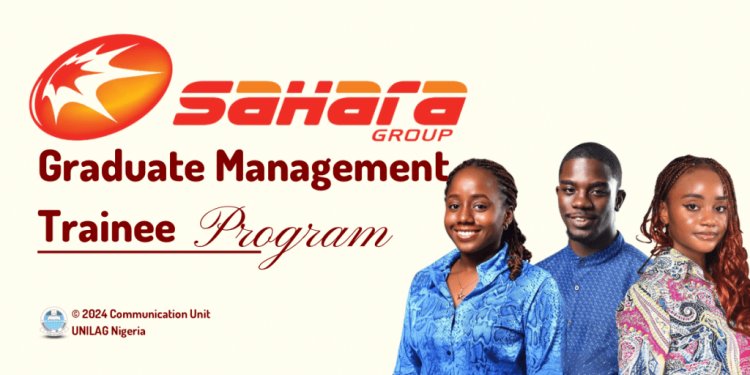
Graduates interested in this opportunity are encouraged to apply by the November 1, 2024 deadline via www.saharagmt.com. Eligibility criteria include holding a Bachelor’s degree with a minimum of a 2:1 in any discipline, 0-2 years of post-graduate work experience, and fluency in English, with proficiency in French being an added advantage.

The Sahara Group’s relationship with UNILAG also extends to an annual ₦10 million award established in honor of alumni and former faculty members associated with the group. This partnership, highlighting Sahara’s commitment to educational advancement, encourages UNILAG graduates to distinguish themselves through initiatives like the GMT Program.
As the 2025 GMT cohort prepares to open new doors in business and leadership, recent UNILAG graduates are urged to seize this opportunity to begin their careers in a dynamic, multicultural environment. https://unilag.edu.ng/?p=43872