AE-FUNAI Hosts Landmark 1st International Hybrid Conference on AI and Economic Transformation
AE-FUNAI Hosts Landmark 1st International Hybrid Conference on AI and Economic Transformation
 UmarFarouk123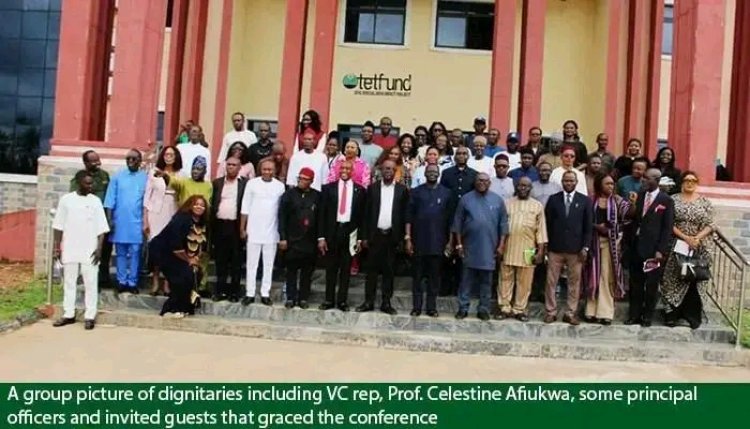
The Faculty of Management Sciences, Alex Ekwueme Federal University Ndufu-Alike, Ebonyi State, has hosted its 1st International Hybrid Conference on Artificial Intelligence and Economic Transformation.
The Vice-Chancellor, Prof. Daniel Nwachukwu while declaring the conference open, described the theme, “Bridging Artificial Intelligence and Management Sciences: Catalyst for Economic Growth and Organizational Transformation in a Digital World,” as timely and relevant. He noted that Artificial Intelligence is transforming key sectors by fundamentally changing decision-making, service delivery, productivity, and innovation.
Prof. Nwachukwu stressed that institutions, businesses, and governments must embrace emerging technologies to remain competitive and address the challenges of the fast-paced digital economy. He commended the Faculty of Management Sciences for convening the conference, which provided a platform for scholars, researchers, industry experts, and policymakers to share insights on integrating Artificial Intelligence into management practices.
He highlighted the role of universities in driving research, innovation, and digital transformation and urged participants to leverage the conference for collaboration and knowledge exchange. The Vice-Chancellor expressed confidence that the discussions and recommendations from the conference would contribute significantly to sustainable economic growth, organizational development, and national progress.
In his welcome address, the Dean of the Faculty of Management Sciences, Prof. Otu Akanu Otu, described the conference theme as a timely response to the realities of an increasingly digital and technology-driven landscape. He welcomed academics, researchers, professionals, students, and guests from various institutions, noting that their participation reflects a shared commitment to academic excellence, innovation, and knowledge-based solutions to contemporary challenges.
Prof. Otu stated that Artificial Intelligence is transforming how organizations function, make decisions, and deliver services across government, business, finance, education, and industry. He emphasized that AI has become a key driver of productivity, efficiency, innovation, and global competitiveness, making its integration into management practices critical for sustainable growth and development. He added that the conference was designed to stimulate robust discussions on the intersection of AI and Management Sciences and to explore practical strategies for addressing emerging organizational and economic challenges.
He further underscored the need to leverage technological advancements responsibly, foster collaboration between scholars and industry professionals, and develop innovative solutions that will drive economic transformation, strengthen institutions, and enable organizations to thrive in a rapidly evolving digital economy.
Delivering the keynote lecture titled “Smart Governance in the Digital Age: Implications for Governance in Africa,” the Enugu State Commissioner for Environment and Climate Change, Prof. Samuel Chijioke Ugwu, emphasized the critical role of digital technologies in enhancing governance and development across Africa. He explained how innovations such as artificial intelligence, big data analytics, block chain, cloud computing, and digital platforms are reshaping governance systems globally.
Prof. Ugwu defined smart governance as the use of technology to improve transparency, accountability, efficiency, citizen engagement, and evidence-based decision-making in government. He noted that smart governance offers African nations an opportunity to address persistent challenges including corruption, weak institutions, insecurity, bureaucratic bottlenecks, and poor service delivery.
He cited the growing adoption of digital governance tools such as electronic service platforms, digital identity systems, Geographic Information Systems, and data-driven policy frameworks. Rwanda, he noted, exemplifies successful digital transformation through its advances in e-governance, digital public services, and smart city initiatives.
While acknowledging challenges such as inadequate digital infrastructure, cyber security threats, privacy concerns, and digital illiteracy, Prof. Ugwu stressed the need for increased investment in technology, capacity building, and supportive regulatory frameworks. He concluded that smart governance is essential for sustainable development in Africa and urged governments and institutions to fully embrace digital transformation to improve service delivery, build public trust, and enhance citizens’ quality of life.
Also speaking at the conference, Associate Professor Theresa N. Ofor, who represented the President of the Chartered Institute of Revenue and Fiscal Management of Nigeria, highlighted the importance of effective fiscal management and revenue administration for national development. She reaffirmed the Institute’s commitment to advancing professionalism, accountability, and excellence in revenue and fiscal management across Nigeria.
Prof. Ofor commended the conference organizers for choosing a theme that aligns with current economic and governance challenges. She emphasized the need for collaboration among academia, professional bodies, and policymakers to develop innovative solutions that strengthen public financial management and promote sustainable economic growth.