ASUU Raises Alarm Over Delayed Implementation of 2025 Agreement
The Academic Staff Union of Universities (ASUU), University of Jos branch, has warned that failure by the Federal Government and state governments to fully implement the 2025 FGN/ASUU agreement could lead to fresh industrial unrest in Nigerian public universities.
 judithhh
The Academic Staff Union of Universities (ASUU), University of Jos branch has warned that the Federal Government’s failure to fully implement the December 2025 agreement reached with the union could trigger another round of industrial unrest across Nigeria’s public universities.
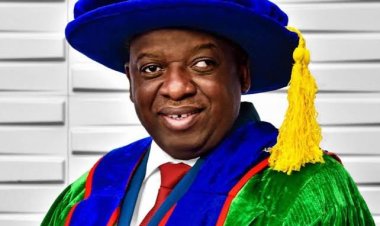
Speaking during a press briefing in Jos on Monday, the branch chairman, Jurbe Joseph Molwus, expressed concern over what he described as the government’s poor commitment to the agreement.
The briefing followed a congress held at the union’s secretariat and recent deliberations of ASUU’s National Executive Council (NEC) at Modibbo Adama University.
According to Molwus, the optimism that greeted the January 14, 2026 unveiling of the FGN/ASUU agreement has gradually faded due to delays in implementation, especially the failure to inaugurate the agreement’s Implementation Monitoring Committee.
He noted that implementation has been inconsistent across federal and state-owned universities, with some institutions selectively paying only parts of the agreed allowances.
The affected entitlements, he said, include the Consolidated Academic Tool Allowance, Earned Academic Allowance, Professorial Allowance, and Responsibility Allowance.
“While some universities have implemented two or three of these allowances, others have not even commenced implementation,” Molwus stated.
He blamed the situation on inadequate funding from both federal and state governments and criticised some state governments for attempting to distance themselves from the agreement despite participating in the negotiation process.
However, the ASUU chairman commended Sa’adu Zungur University and Ekiti State University for what he described as their leadership in implementing the agreement.

On research funding, Molwus faulted the Federal Government’s establishment of the National Research and Innovation Development Fund without consulting ASUU, arguing that the arrangement contradicted provisions already captured in the 2025 agreement.
He also questioned the decision to denominate the fund in foreign currency, warning that it could increase Nigeria’s dependence on borrowing from multinational financial institutions.
The union further highlighted unresolved welfare issues affecting lecturers nationwide, including arrears of the 25/35 per cent wage award, promotion arrears, unpaid third-party deductions, salary shortfalls linked to the IPPIS platform, and the three-and-a-half months salaries withheld during the 2022 ASUU strike.
Molwus argued that withholding the salaries was unjustifiable since lecturers had already recovered the lost academic time and students had completed their programmes.
The ASUU chairman also criticized recent education policy decisions, including the reported reversal of the mother-tongue policy for early childhood education, which he described as retrogressive.
He rejected plans to establish a Nigerian campus of Coventry University under a transnational education arrangement, describing it as a neo-colonial initiative.
Molwus also opposed proposals to scrap certain social science and humanities courses, insisting that all academic disciplines remain valuable to national development.
Linking the crisis in the education sector to wider national challenges, he said Nigeria is currently battling worsening insecurity, economic hardship, and growing political tension ahead of the 2027 general elections.
He added that insecurity has negatively affected farming activities and small-scale businesses across the country, worsening poverty levels among Nigerians.
ASUU called on government authorities, stakeholders, and the media to prevail on both federal and state governments to fully implement the 2025 agreement and address all outstanding issues.
Molwus warned that continued neglect of lecturers’ welfare could fuel frustration within the university system and eventually lead to another nationwide strike.
According to him, “the seeming insensitivity to the welfare of our members is brewing pent-up anger that may result in another round of industrial unrest if not urgently addressed.”