FUNAAB Intensifies Drive to Improve Global University Rankings
The Federal University of Agriculture, Abeokuta (FUNAAB) has intensified efforts to strengthen its position among Nigeria's leading universities and improve its standing in global university rankings through a strategic roadmap focused on institutional excellence and international competitiveness.
 Philip22

The Federal University of Agriculture, Abeokuta (FUNAAB) has intensified efforts to strengthen its position among Nigeria's leading universities and improve its standing in global university rankings through a strategic roadmap focused on institutional excellence and international competitiveness.

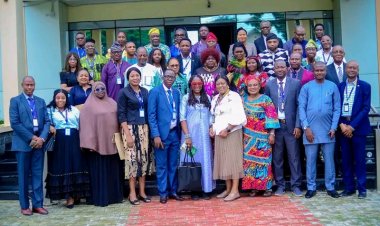
The renewed commitment was highlighted on July 20, 2026, during a capacity-building training organised by the Directorate of Academic Planning (DAP) for its staff, members of the FUNAAB Ranking Advisory Committee (FURAC), and other key personnel.
Delivering the keynote presentation, the University's Sustainable Development Goals (SDGs) Resource Person, Prof. Adeniyi Olayanju, provided participants with detailed insights into the criteria, methodologies, and institutional strategies required to enhance the University's global visibility.
He stressed that the United Nations Sustainable Development Goals, anchored on the principle of "Leave No One Behind," should serve as a framework for inclusive institutional development and sustainable growth.
Prof. Olayanju, a former Vice-Chancellor of Landmark University, described a world-class university as one that generates and disseminates knowledge across disciplines, delivers quality education that addresses societal needs, and produces impactful research capable of advancing national development and global public good.
According to him, FUNAAB already possesses many of these qualities and should strategically build on its strengths to achieve greater international recognition.
He explained that global university rankings are largely determined by excellence in teaching, research output, citation impact, community engagement, institutional reputation, and international outlook. He added that highly ranked institutions are characterised by sound governance, robust research funding, strong international collaborations, favourable staff-to-student ratios, and effective knowledge transfer mechanisms.
The resource person introduced participants to major global ranking systems, including the Academic Ranking of World Universities (ARWU), also known as the Shanghai Jiao Tong University Ranking (SJTUR), Webometrics, Repositories Rankings, and the Times Higher Education (THE) Rankings.
He noted that FUNAAB's current ranking strategy is primarily focused on the Times Higher Education Rankings, which assess institutions through the World University Rankings, Impact Rankings, Young University Rankings, and Sub-Saharan Africa University Rankings using indicators such as teaching, research, citation impact, international outlook, and industry income.
Highlighting the University's achievements, Prof. Olayanju disclosed that FUNAAB ranked second in Nigeria and 26th in Sub-Saharan Africa in the maiden Times Higher Education Sub-Saharan Africa Rankings. He also revealed that the institution placed fifth nationally during its debut in the Times Higher Education Impact Rankings.
He further stated that the University has demonstrated strong performance across several Sustainable Development Goals, including Zero Hunger, Quality Education, No Poverty, Clean Water and Sanitation, Affordable and Clean Energy, Industry, Innovation and Infrastructure, Sustainable Cities and Communities, Climate Action, Life on Land, and Peace, Justice and Strong Institutions.
Prof. Olayanju emphasised that ranking organisations rely heavily on publicly available evidence and urged all colleges, departments, institutes, centres, and directorates to consistently document and publicise their activities through official University platforms.
He identified challenges affecting the University's ranking efforts, including difficulties in data collection, inadequate collaboration among some units, rising participation costs for international rankings, and funding constraints.
To address these challenges, he encouraged stakeholders to provide timely information, strengthen institutional documentation, ensure adequate budgetary support for ranking-related activities, and benchmark against leading institutions to adopt global best practices.
In his remarks, the Director of the Directorate of Academic Planning, Prof. Biodun Badmus, described the presentation as timely and insightful, noting that it had provided participants with a clearer understanding of the University's ranking objectives.
He expressed confidence that the knowledge gained would improve the collection and deployment of ranking metrics and reaffirmed the Directorate's commitment to engaging experts as the University continues to refine its global ranking strategies.
Also speaking, the Director of the Directorate of Academic Information Systems (DACIS), Prof. Olusegun Folorunso, commended the presentation and recommended that the training materials be circulated to promote continuous learning and implementation across the University.
He maintained that FUNAAB possesses the intellectual capacity to compete globally, stressing that stronger institutional branding, improved documentation, and increased visibility would significantly enhance its international ranking performance.
The Head of the Quality Assurance Unit, Prof. Saliu Amolegbe, also described the training as an eye-opener that provided a practical roadmap for achieving higher global rankings.

Similarly, the Director of the Directorate of Research, Innovations and Partnerships (DRIP), Prof. Oluwagbemiga Adeleye, and the Acting Director of the Directorate of Information and Communication Technology Services (DICTS), Mr. Temitope Soretire, underscored the importance of sustained teamwork, effective institutional documentation, enhanced digital visibility, and collective commitment to positioning FUNAAB among the world's top-ranked universities.