COOU Appoints Dr. Uba Bright Obidinma as Director, Centre for Biotechnology and Genetic Engineering
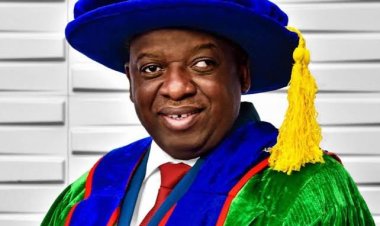
Chukwuemeka Odumegwu Ojukwu University (COOU) has appointed Dr. Uba Bright Obidinma as Director of its Centre for Biotechnology and Genetic Engineering, in a move aimed at strengthening research capacity, innovation and interdisciplinary scientific development within the institution.
 Philip22

Chukwuemeka Odumegwu Ojukwu University (COOU) has appointed Dr. Uba Bright Obidinma as Director of its Centre for Biotechnology and Genetic Engineering, in a move aimed at strengthening research capacity, innovation and interdisciplinary scientific development within the institution.
Dr. Obidinma, a microbiologist and researcher, is recognised for his contributions in environmental microbiology and related fields, including bioremediation, water resources treatment, bioconversion, bioenergy, nanobiofertilizer development, pollution control, public health, plasmid and phage engineering, ecotoxicological assessment and applied nanobiotechnology.
He holds a Ph.D. and M.Sc. in Environmental Microbiology from Nnamdi Azikiwe University, Awka, and a Bachelor’s degree in Microbiology with First Class Honours from Anambra State University, now known as Chukwuemeka Odumegwu Ojukwu University, Uli Campus.
Dr. Obidinma has co-authored over 100 scholarly articles published in peer-reviewed journals and has supervised several postgraduate students. He is a member of professional bodies including the Nigerian Society for Microbiology, the American Society for Microbiology and the Society for Risk Assessment Africa Chapter. He has also served the university in various administrative capacities and contributed to community-oriented initiatives.
His appointment as the first alumnus Acting Director of the Centre for Biotechnology and Genetic Engineering forms part of the university’s strategic effort to consolidate its centres of excellence and enhance research output in biotechnology and genetic engineering.
In his new role, Dr. Obidinma is expected to drive interdisciplinary research initiatives and expand institutional capacity in biotechnology applications capable of addressing societal challenges ranging from environmental sustainability to public health advancement.