Six Varsities Sign Performance Contracts Under World Bank Funded SPESSE Programme
The National Universities Commission (NUC), the World Bank, and six Nigerian universities have signed performance contracts to begin the $65 million additional financing phase of the Sustainable Procurement, Environmental and Social Standards Enhancement (SPESSE) Project.
 judithhh
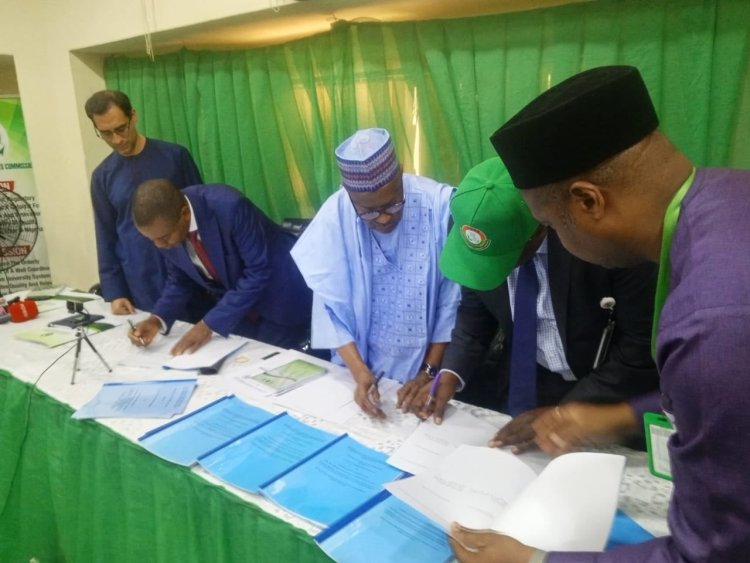
National Universities Commission (NUC), in collaboration with the World Bank and six Nigerian universities, has signed a Performance Contract to commence the additional financing phase of the Sustainable Procurement, Environmental and Social Standards Enhancement (SPESSE) Project.
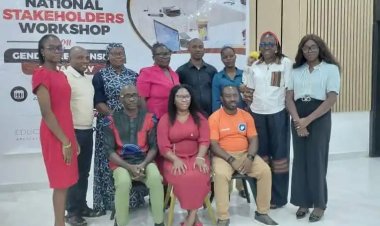
The signing ceremony, held at the NUC Auditorium in Abuja, brought together vice-chancellors, centre leaders, representatives of key federal ministries, the Bureau of Public Procurement, and other stakeholders committed to strengthening governance and professional capacity development in Nigeria.
Speaking at the event, the Executive Secretary of the NUC, Prof. Abdullahi Ribadu, described the contract signing as a major milestone in Nigeria’s efforts to enhance national capacity in procurement, environmental management, and social standards.
According to him, the project’s additional financing of $65 million became effective three weeks ago, complementing the original $80 million funding secured in 2021.
Ribadu explained that SPESSE was established to address critical gaps in Nigeria’s university system, including the shortage of skilled professionals in procurement, environmental, and social standards, as well as the limited availability of specialised academic programmes in these areas.
He noted that six Centres of Excellence were established across Nigeria’s geopolitical zones through a competitive selection process based on institutional readiness and sustainability indicators.
Highlighting achievements recorded during the first phase of the project, Ribadu said participating institutions developed academic programmes ranging from short professional courses to doctoral degrees. He added that significant investments had been made in high-performance computing infrastructure, digital learning platforms, and international collaborations.
The NUC boss disclosed that more than 68 international partnerships had been established to support teaching, research, and professional development, while certification frameworks in procurement, environmental, and social standards had been activated through relevant government agencies.
Looking ahead, he said the new financing phase would focus on strengthening institutional ownership, expanding online and distance learning opportunities, increasing international student enrolment, and deepening collaboration with industry and global partners.
He revealed that the NUC had set ambitious targets, including the production of at least 60 PhD graduates, enrolment of 60 foreign students, facilitation of 18 staff internships, and execution of 60 scholar exchange programmes.
Ribadu further disclosed that three of the SPESSE centres had already commenced PhD programmes, while the remaining three are expected to begin their doctoral programmes in the 2026 academic session.
Representing the World Bank, the SPESSE Task Team Leader described the project as critical to improving governance and public service delivery in Nigeria.
He revealed that the initiative had already trained over 40,000 individuals and certified more than 4,000 public officials. Under the additional financing phase, an extra 24,000 participants are expected to benefit from training programmes.
The World Bank also announced plans to support the deployment of an end-to-end federal e-procurement system powered by artificial intelligence and machine learning, alongside efforts to strengthen environmental and social compliance systems nationwide.
Representatives of the Federal Ministries of Finance, Environment, and Women Affairs commended the project’s achievements and reaffirmed their commitment to its continued success.
The Ministry of Finance noted that the additional funding reflects international confidence in Nigeria’s reform agenda and would contribute to greater transparency, accountability, and institutional efficiency.
Similarly, the Ministry of Environment stated that the project aligns with the Federal Government’s Renewed Hope Agenda, particularly in the areas of institutional reform and environmental sustainability.
The representative of the Ministry of Women Affairs disclosed that nearly 2,000 candidates had been certified in social standards within four months, while another 1,000 candidates were awaiting certification.
Stakeholders emphasized that the long-term objective of the additional financing is to ensure the Centres of Excellence become self-sustaining through revenue generation, government support, and integration into university systems.
Delivering the vote of thanks on behalf of participating universities, Vice-Chancellor of the University of Lagos, Prof. Folasade Ogunsola, expressed appreciation to the World Bank, NUC, partner ministries, centre leaders, and members of the media for their support.
She praised the dedication of the participating institutions and assured stakeholders that the universities would maximise the opportunities provided by the project to deliver lasting value and strengthen capacity development across Africa.
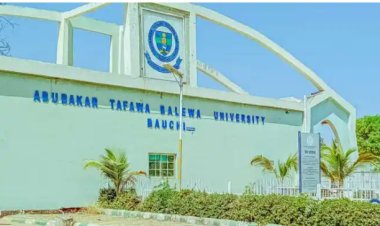
The ceremony concluded with the formal signing of Performance Contracts by vice-chancellors and centre leaders from Joseph Sarwuan Tarka University, Makurdi; University of Lagos; Ahmadu Bello University, Zaria; Federal University of Technology, Owerri; University of Benin; and Abubakar Tafawa Balewa University, Bauchi.