AE-FUNAI Enhances Postgraduate Supervision Through Capacity-Building Workshop
Alex Ekwueme Federal University Ndufu-Alike, Ebonyi State (AE-FUNAI), has launched a major initiative to strengthen postgraduate training by equipping supervisors with modern skills and strategies to improve research quality and ensure timely completion of programmes.
 Philip22

Alex Ekwueme Federal University Ndufu-Alike, Ebonyi State (AE-FUNAI), has launched a major initiative to strengthen postgraduate training by equipping supervisors with modern skills and strategies to improve research quality and ensure timely completion of programmes.

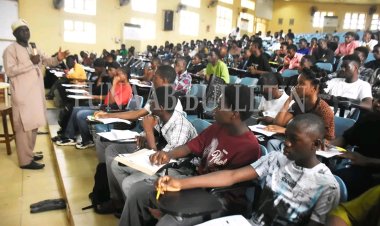
The workshop, organized by the School of Postgraduate Studies, brought together scholars and experts to discuss integrity, mentorship, health, and innovation in postgraduate supervision. It highlighted the urgent need for reforms to address challenges in the supervision process, enhance research outcomes, and adapt to a rapidly evolving academic environment.
In his remarks, the Vice-Chancellor, Professor Sunday Elom, represented by the Dean of the Faculty of Education, Professor Sunday O. Abonyi, praised the initiative for focusing on building the capacities of supervisors. He emphasized concerns about delayed postgraduate completions, noting that institutional constraints such as rigid programme structures, inadequate infrastructure, and limited personnel often impede timely graduation. Additionally, conflicts among supervisors, lack of integrity, and weak supervisee-supervisor relationships, combined with socio-economic pressures and poor time management by students, further prolong studies.
Professor Abonyi called for systemic reforms, regular programme reviews, improved resource allocation, and enhanced training for both supervisors and students. He underscored that integrity and mentorship are central to successful supervision and that supervisors share responsibility for ensuring students graduate on time.

The Dean of Postgraduate Studies, Professor Nwabueze Elom, stated that the workshop focused on enhancing supervisory skills in leadership, communication, performance management, and team development. Participants were provided with practical tools and strategies to effectively guide their postgraduate teams and support the institution’s academic goals.
Professor Chukwunonso E.C.C. Ejike emphasized that postgraduate research is a solemn responsibility to humanity and future generations. He urged supervisors to uphold truth, transparency, and ethical practices, warning against pressures that drive misconduct such as data manipulation, duplicate publications, and gift authorship. He stressed the importance of defining clear research questions, registering protocols, minimizing bias, documenting activities accurately, reporting results honestly, and giving credit where due.
Dr. Peter C. Okoli, Acting Director of the Centre for Internationalization, Linkages, Advancement & Global Ranking, addressed the transformative potential of virtual supervision. He highlighted that remote oversight, accelerated by the COVID-19 pandemic, allows for broader access to expertise, cost-effective supervision, and reduced stress for students. Dr. Okoli stressed that virtual supervision must be carefully managed to mitigate challenges such as reduced direct observation, technology disruptions, and weaker interpersonal connections. He recommended hybrid models combining digital and face-to-face engagement, alongside structured communication protocols and feedback systems, to ensure postgraduate training remains rigorous and adaptive.
The workshop reflects AE-FUNAI’s commitment to fostering excellence in postgraduate education by equipping supervisors with the knowledge, skills, and ethical grounding necessary to guide the next generation of researchers effectively.