Bayero University Kano Challenges ABU Zaria Dominance in Northern Nigeria Academic Landscape
Bayero University Kano Challenges ABU Zaria Dominance in Northern Nigeria Academic Landscape
 UmarFarouk123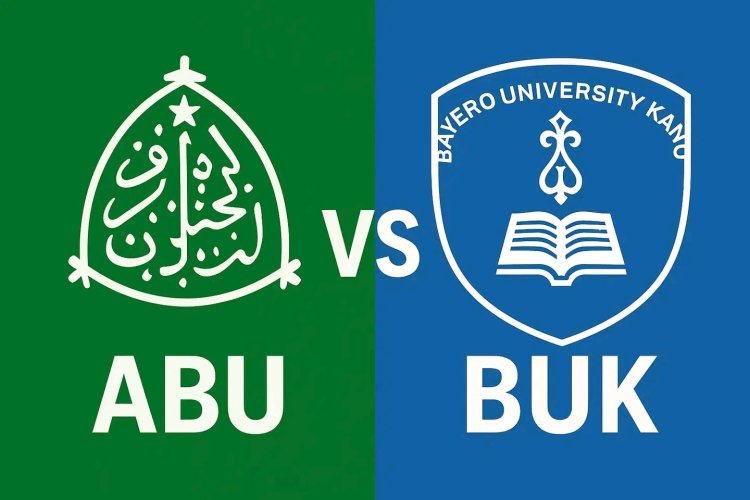
The debate over which university stands as the academic giant of Northern Nigeria has intensified, with Bayero University Kano (BUK) emerging as a strong contender to Ahmadu Bello University (ABU) Zaria's long-standing dominance.
As a first-generation university, ABU has been celebrated for its legacy of producing some of Nigeria's finest minds. However, BUK has grown significantly since its inception as an offshoot of ABU, maturing into an academic powerhouse with rapid expansion in infrastructure, research output, postgraduate programs, international collaborations, and student enrollment.
The recent "ABU Cultural Carnival" organized by the Ahmadu Bello University Students' Representative Council sparked controversy, with some claiming that performers from BUK were involved. Although debunked, the incident highlights the competitive nature between the two institutions. The annual end-of-session activities at ABU often draw praise, fueling the debate about which university is superior.
BUK's growth has reached a point where it confidently challenges ABU's dominance in the North. The rivalry between the two universities is no longer limited to students but also involves lecturers and professors. As BUK continues to expand and improve, it is redefining the academic landscape in Northern Nigeria.
The competition between BUK and ABU represents a new era of academic rivalry in Northern Nigeria, with both institutions striving for excellence and global relevance. As the debate continues, one thing is certain – both universities are committed to producing high-quality graduates and contributing to the region's academic and economic development.