UI Don Advocates Production Subcontracting as Key Driver of Regional Development in Nigeria
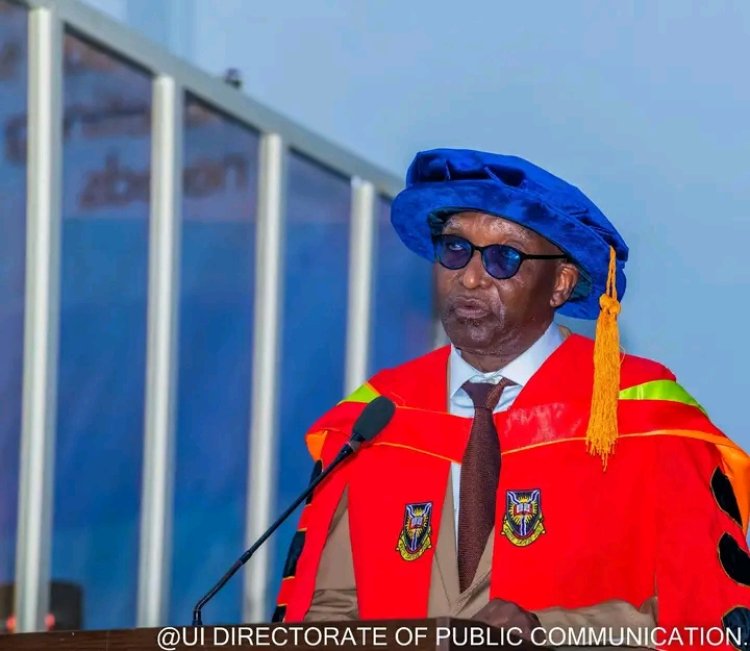
A Professor of Geography, Prof. Dickson ‘Dare Ajayi, has called for the adoption of production subcontracting as a strategic tool for regional development in Nigeria, describing it as a critical mechanism for industrial restructuring and economic integration.
 Philip22
A Professor of Geography, Prof. Dickson ‘Dare Ajayi, has called for the adoption of production subcontracting as a strategic tool for regional development in Nigeria, describing it as a critical mechanism for industrial restructuring and economic integration.

He made the advocacy while delivering the 615th Inaugural Lecture of the University of Ibadan (UI), on behalf of the Faculty of the Social Sciences, titled: “Spatial Linkages and Regional Development.”
Prof. Ajayi explained that production subcontracting plays a significant role in shaping regional development processes, particularly through its impact on micro, small, and medium enterprises (MSMEs) at both national and international levels. He noted that the model allows independent firms to handle parts of production processes for larger firms, thereby improving efficiency and specialization.
He described regional development as a policy-driven effort aimed at promoting economic growth, social welfare, environmental sustainability, and resilience against emerging economic and environmental challenges.
The lecturer classified regions into three categories: formal regions with defined administrative boundaries, functional regions shaped by economic and social interactions, and perceptual or vernacular regions influenced by cultural identity and public perception.
He identified seven major industrial groups involved in production subcontracting as food and beverages; basic metal; iron and steel; chemical and pharmaceuticals; plastic and rubber; pulp and paper products; non-metallic mineral products; and wood and wood products.

According to him, subcontracting often occurs within relatively short distances due to the availability of resources, with market access playing a more decisive role than transportation costs. He added that inter-firm linkages enhance economic activity across different geographic spaces by enabling firms to focus on core competencies while leveraging external expertise.
Prof. Ajayi outlined several advantages of production subcontracting, including reduced investment risk, improved control of labour processes, and faster response to technological and market changes. He further noted that it enhances competitiveness in a rapidly evolving global economy.
He stated that the strategy can be applied at both regional and national levels, urging government at all tiers to integrate it into broader industrialisation and development policies. He stressed the need to address regional disparities by identifying both lagging and prosperous regions and conducting detailed assessments of their resource bases.
The scholar also called for stronger collaboration between government and private investors, noting that successful implementation would depend on coordinated effort and capital mobilisation across sectors.
Prof. Ajayi observed that the rise of subcontracting in developed economies is linked to production restructuring, labour dynamics, and increased global competition, which have driven firms toward more flexible and coordinated production systems.

The lecture formed the 12th Inaugural Lecture in the 2025/2026 academic session.