FUNAAB Hosts Global Women’s Breakfast, Advocates Stronger Inclusion of Women in Science
The Federal University of Agriculture, Abeokuta (FUNAAB) has reinforced its commitment to gender inclusion and scientific advancement by hosting the 2026 edition of the Global Women’s Breakfast (GWB), a worldwide initiative promoting collaboration and equity in science.
 Philip22
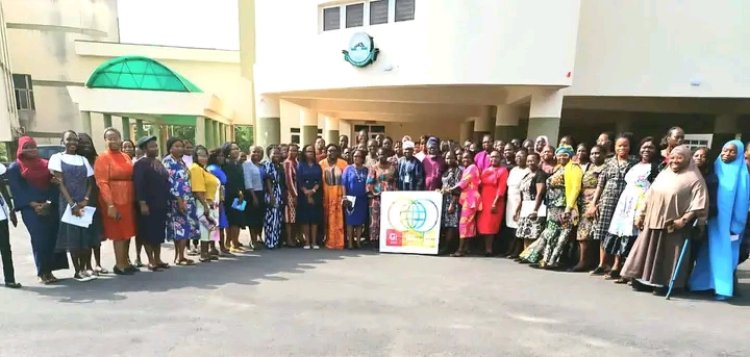
The Federal University of Agriculture, Abeokuta (FUNAAB) has reinforced its commitment to gender inclusion and scientific advancement by hosting the 2026 edition of the Global Women’s Breakfast (GWB), a worldwide initiative promoting collaboration and equity in science.

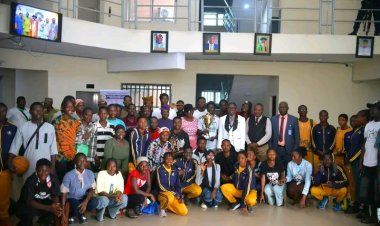
Held under the theme “Many Voices, One Science,” the event brought together female scientists, academics, researchers and students from diverse disciplines and institutions, positioning the university as a platform for inclusive scientific dialogue and innovation across the African continent. Discussions centred on the role of science in societal transformation and the need for equitable participation in research and innovation.
Addressing participants, the Vice-Chancellor, Professor Babatunde Kehinde, represented by the Deputy Vice-Chancellor (Academic), Professor Olusegun Idowu, highlighted the significant contributions of women to scientific progress while acknowledging longstanding gaps in recognition and institutional support. He noted that sustainable breakthroughs in science require deliberate mentorship, institutional commitment and sustained collaboration.
The Vice-Chancellor reaffirmed the university’s commitment to building an enabling environment where women in science can thrive at all stages of their careers, from students exploring research opportunities to established scholars contributing to global scientific discourse.

The programme host, Professor Caroline Akinremi, explained that the Global Women’s Breakfast forms part of a worldwide initiative inspired by the International Union of Pure and Applied Chemistry (IUPAC), aimed at strengthening global networks of women and allies working to eliminate barriers to gender equality in STEM disciplines. She also emphasised the growing relevance of emerging technologies such as Artificial Intelligence, urging participants to embrace innovation while ensuring inclusive participation in technological development.
Delivering the keynote lecture virtually, Dr. (Engr.) Olusola Abayomi-Alli spoke on “Integrating AI and Machine Learning to Advance Women in STEM,” highlighting accessible digital learning pathways and encouraging participants to develop competencies in data analysis, statistics and ethical AI practices. She noted that artificial intelligence is rapidly reshaping multiple sectors and stressed the importance of inclusive participation to prevent technological systems from reinforcing existing inequalities.
In a separate presentation titled “Be the Voice that STEM Needs,” Dr. Enovwo Odjegba urged women to demonstrate confidence and leadership in professional spaces. Similarly, the National Coordinator, Women in Chemistry of Nigeria, Professor Iheoma Adekunle, represented by the Head of the Department of Pure and Applied Chemistry, Professor Abideen Adeogun, commended participants for their contributions and reaffirmed the critical role of women in national development.
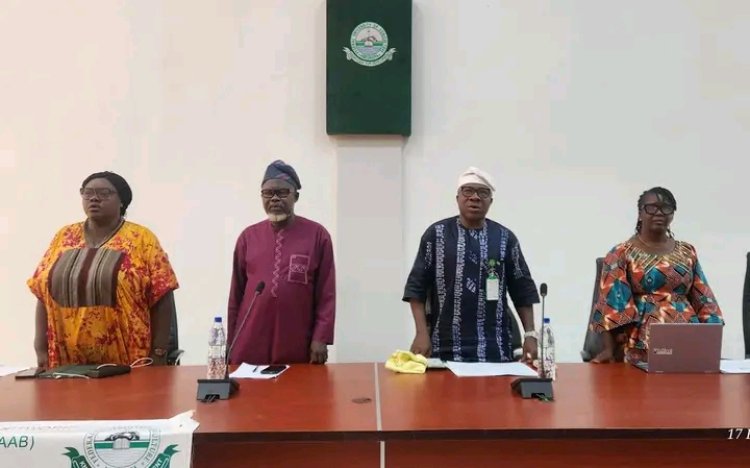
Participants were encouraged to take active roles in shaping conversations around innovation, challenge structural barriers within scientific fields, and contribute to the development of ethical and transformative technological solutions.