How UDUS Duo Secured Back-to-Back Victory at Caliphate Debate 6.0
How UDUS Duo Secured Back-to-Back Victory at Caliphate Debate 6.0
 UmarFarouk123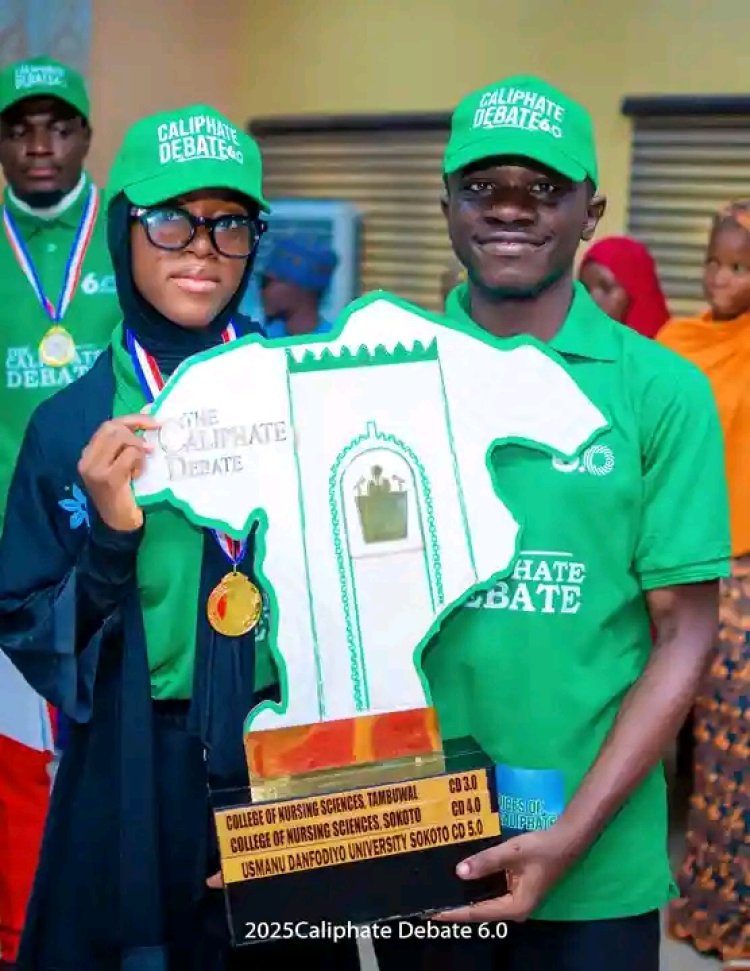
For many people, fifteen minutes is a short period of time, one not enough to finish a bottle of chilled Coke. But in a debating room of British Parliamentary Debate, fifteen minutes is all it takes to win or lose and make lasting impression in the minds of the audience. With no internet access and ignorance of motion beforehand, debaters are required to prepare arguments from scratch.
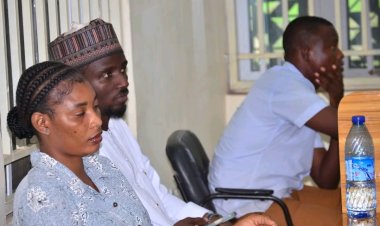
This is the high-stake arena the duo of Muhammad Jawad Oloruntoyin and Maryam Umar of the Faculty of Law, Usmanu Danfodiyo University just returned from, with medals and as champions of the Caliphate Debate 6.0; a British Parliamentary Debate Competition for higher institutions in Sokoto State. Straight from the source, the winners shared the secret behind their success with Gamji Press UDUS.
When asked what debate means to them personally, Maryam explained what debating means to her, “Debating to me is a reflection of my growth. If it was not debate, I do not think I will be who I am today.”
She explained that humans must constantly push themselves beyond comfort zones, and she credits debate for helping her find her voice. “The first stage where I started expressing myself more was debate.”
For Jawad, the relationship between him and debating is a romantic one. He describes debating in a more emotional way, calling it “the love of my life, my girlfriend, my baby and my world.”
???????????? ???????????????? ???????? ????????????????????????????????????????????
Their passion for debating shaped their preparation. They worked intensely, sharing ideas and expanding their knowledge base to remain adaptable as they do not have an idea of what topics they will be debating on, in the debating room until 15 minutes to their speech.
“We started preparations since October. My teammate and I analyzed our capabilities, weaknesses and strengths to better devise a plan,” Maryam recalled. She added that they underwent qualification rounds and training that spanned six weeks in the debate club.
Jawad explained how committed they were to winning the competition. “We read every news we could lay our eyes on and made research on contemporary issues; Artificial Intelligence, insecurity, state policing and more. That’s apart from the training rounds.”
While training, they discovered a strategy which clearly secured their win.
“Our strategy was simple. If we happen to be in the opening, my partner will be the first speaker and I will be the second. That is because I waste time on characterization, and as the second speaker in opening, I can still make new arguments and extensions. If we happen to be in the closing, then I will come as the first speaker and my partner will be the whip,” Jawad explained.
Maryam also noted that although whipping is her strongest role, the competition required her to stretch beyond familiar territory. She credited their strong research base and legal training for helping them rebut unexpected arguments.
Going further, Jawad said, “Preemption! That’s one of our greatest strengths. We always try to leave time to preempt what we would have said if we were in opposition and construct our argument to cover that up.”
He added proudly, “Our strength? For this tournament, everything. Both extensions, rebuttals and mechanism were great. At first we thought we would lose as Opening Government in Round Four, but we gave a framework and all other teams did not engage it.”
On their best and worst rounds, both debaters shared similar reflections. Their strongest performance was the first round, which Jawad described as one of his most defining moments in the competition.
Their weakest, they agreed, was round five. “The fifth round was the worst round because we lost our winning streak and did not take first, though it was a blind round,” Maryam said.
Jawad added, “I did not like my debate in the fifth round, probably because I was tired and I also pointed out a flaw in our prep which affected my speech. We fixed that during the finals.”
???????????????? ???????????????????? ???????????????? ???????????????????????????????????? ???????????????????????? 6.0
For the duo of Jawad and Maryam, beyond trophies and medals won, the experience came with important lessons.
“I learnt the importance of having a very good connection with your partner to discuss and analyze the motion, rather than one imposing ideas on the other,” Maryam shared.
For Jawad, the lesson learnt was simple, “I will just say I improved my debating skills.”
When asked whether debate offers value for solving real-world problems, their answer was a firm yes.
Maryam explained that debate provides space to hear diverse perspectives, especially from young people who experience challenges firsthand.
On this, Jawad also agreed, “Yes. For example, I have never thought of what could be a solution to INEC’s independency since the president appoints the chairman. But for the finals debate, I gave a practicable solution, even though it might be difficult in reality, it is not unrealistic. Besides, debate goes beyond BP. It includes what we see on TV where news channels invite professionals to debate live.”
For students considering joining a debate club, Jawad offered honest encouragement. “It is not easy, it has never been easy and it will never be easy. But never tell yourself you cannot, because you can. It can take time but you will get there. Trust yourself and build yourself. Having speaking prowess will help in the outer world. So for anyone considering joining, join now. For those who are members already, tighten your belt and train harder. Always remember to leave your comfort zone.”
As for what lies ahead, Maryam is gradually shifting her focus from debating, but rather training the next generation of debaters.
“My journey is shifting from competing, where I have won a lot internally, to training others and making an impact. The best feeling is seeing the people I train excel, which is even better than when I win myself.”
On the hand, Jawad is leaving the next steps in his debating journey to the hands of fate. “For my next debate journey, I will go with the flow,” he confessed.