IBBU Lapai Faculty of Arts Hosts International Conference on Sahel Security and Democratic Resilience
IBBU Lapai Faculty of Arts Hosts International Conference on Sahel Security and Democratic Resilience
 UmarFarouk123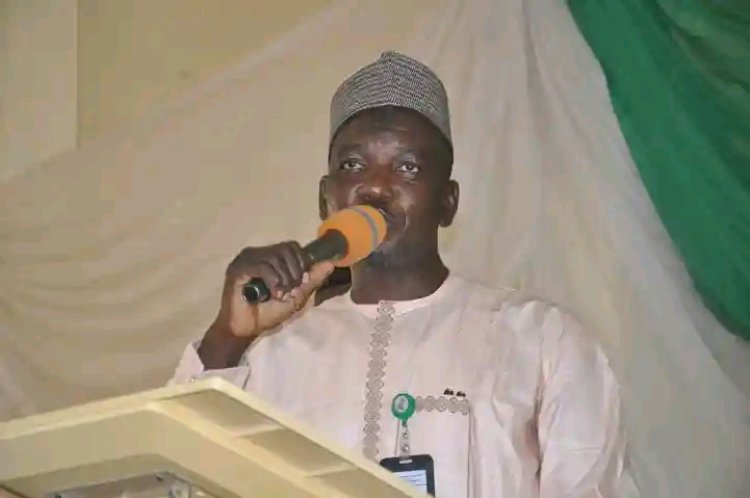
The Faculty of Arts at Ibrahim Badamasi Babangida University (IBBUL), Lapai, has successfully convened its tenth National and first International Conference with the theme “Global Governance and the Sahel: Promoting Democratic Resilience for Economic Development in Africa.”
The conference attracted scholars, security experts, policy makers, and development practitioners from within Nigeria and the International academic community, providing a platform for robust engagement on the growing political, economic, and security challenges confronting the Sahel region and their implications for Africa’s future.
Declaring the Conference open on behalf of the Vice-Chancellor, Professor Mohammed Hadi Sulaiman, the Deputy Vice-Chancellor (Administration), Professor Salihu Mohammed Niworu, praised the Department of History and International Studies for sustaining a strong tradition of annual scholarly conferences that contributes meaningfully to academic discourse and policy thinking. He described the conference theme as highly relevant, stressing that the Sahel’s realities climate stress, armed banditry, governance breakdown, and forced displacement are already spilling into Nigeria.
According to him, only inclusive democratic institutions, responsive governance systems, and people-centered political participation can address oppression, inequality, and insecurity across the region.
He expressed the hope that the conference communiqué would generate practical recommendations capable of informing policy and strengthening democratic culture across Africa.
In his remarks as Chairman of the occasion, retired Comptroller of Customs Hassan Bello Tsaduko emphasized the geopolitical and environmental fragility of the Sahel belt, noting that its semi-arid climate, limited agricultural productivity, and competition over scarce resources have fueled poverty, instability, and transnational crimes such as terrorism, arms trafficking, and money laundering. He also pointed to the paradox of the region’s vast mineral wealth uranium, gold, oil, and lithium arguing that struggles over resource control, foreign influence, and weak governance structures have complicated the promise of global governance institutions to deliver stability and development.
He commended the University for bringing together scholars, government officials, traditional leaders, and civil society actors to deliberate on such a critical issue.
Earlier, the Dean of the Faculty of Arts, Professor Muhammad Alkali, and the Head of Department of History and International Studies, Dr. Mamman Saba Abdulkadir, highlighted the intellectual significance of the gathering, describing it as a testament to the Department’s research visibility and contribution to knowledge production.
They noted that universities remain the engines of societal transformation, and that historical scholarship provides the analytical tools needed to understand governance failures and propose sustainable reforms.
The Local Organising Committee Chairman, Dr. Suleiman Mohammed Evuti, added that recurring coups, fragile democratic institutions, and development frustrations in the Sahel demand deeper academic interrogation, particularly given Nigeria’s leadership role on the continent.
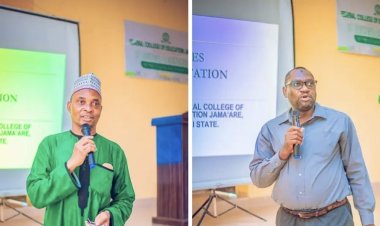
In their separate keynote presentations, Yusuf Musa, Chief Executive Officer of the Centre for Contemporary Studies, and Dr. Suleiman Mohammed Reeza of the University of Morocco examined the dynamics of global governance and its implications for the Sahel region. Both speakers emphasized that strengthening democratic institutions, regional cooperation, and accountable leadership structures remains central to addressing insecurity, weak economies, and governance deficits across the belt.
Similarly, the final paper presenter, Professor Toba Alabi of the Nigerian Defence Academy, reinforced the argument that democratic resilience is a prerequisite for sustainable economic development in Africa.
He noted that without stable governance systems, transparent policies, and citizen participation, efforts at regional integration, security reform, and economic growth in the Sahel will continue to face structural setbacks.
Delivering the closing remarks and vote of thanks, the Registrar and Secretary to Council, Idris Sale Kusherki, applauded the department for maintaining its legacy of academic engagement and acknowledged participants who travelled from various institutions to contribute to the dialogue.
He expressed optimism that the ideas generated during the conference would translate into actionable strategies capable of strengthening governance systems and promoting sustainable development across Africa.