Oyo Assembly Speaker Tasks FUTA to Champion National Science Legislative Dialogue
The Speaker of the Oyo State House of Assembly, Rt. Hon. Adebo Ogundoyin, has called on the Federal University of Technology, Akure (FUTA) to take the lead in driving a Science Legislative Dialogue aimed at shaping policy direction for research and innovation in Nigeria.
 Philip22

The Speaker of the Oyo State House of Assembly, Rt. Hon. Adebo Ogundoyin, has called on the Federal University of Technology, Akure (FUTA) to take the lead in driving a Science Legislative Dialogue aimed at shaping policy direction for research and innovation in Nigeria.
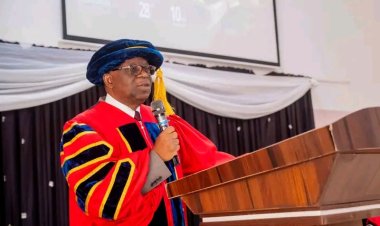
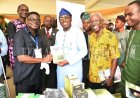
Ogundoyin made the call while delivering the 4th Annual Lecture of the School of Physical Sciences, FUTA, titled “The Politics of Science Funding: Legal Framework and Policy Directions for Research and Development.”
The Speaker, who praised FUTA’s 25-year track record of academic excellence and groundbreaking research, emphasized that legislative engagement is crucial to strengthening the nation’s scientific and technological base. He proposed the creation of a State Innovation Trust Fund Bill, through which each state legislature would allocate a legally mandated percentage of its budget to research and innovation.
“Our goal should be to make science funding a matter of law, not chance,” Ogundoyin stated, promising to use his position as Chairman of the Conference of Speakers of State Legislatures of Nigeria to push for increased and institutionalized funding for science and technology.
He further explained that research funding in Nigeria often fluctuates due to political instability — a phenomenon he described as “political weather funding” — where support for science depends on electoral moods rather than long-term national goals. He identified over-reliance on government subvention, delayed allocations, poor auditing systems, and inadequate infrastructure as major obstacles to sustainable research.

“More than 90% of university budgets in Nigeria depend on government. When these funds are delayed or cut, research virtually stops. Even when approved, late disbursement and weak monitoring systems breed inefficiency and waste,” he lamented.
Ogundoyin urged Nigerian researchers to focus their studies on solving real societal problems, stressing that when science addresses national challenges, it becomes easier to justify and sustain funding. He also advocated for stronger collaboration among universities, government, the private sector, and legislators to promote innovation and knowledge exchange.
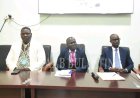
In her remarks, FUTA Vice-Chancellor, Professor Adenike Oladiji, represented by Deputy Vice-Chancellor (Development) Professor Sunday Oluyamo, commended Ogundoyin for bringing a political perspective to the scientific conversation. She noted that science and politics are interdependent, and that policy reforms are vital to improving research outcomes.
“Science is not a solitary endeavor. Its progress is tied to political structures. This lecture provides valuable insight into how Nigeria can better structure its funding mechanisms for science,” she said.
Also speaking, the Dean of the School of Physical Sciences, Professor Barnabas Adebola, explained that the annual lecture series is part of FUTA’s broader vision to address national and global challenges through research and innovation. He appealed for more infrastructural support for the young faculty, including additional laboratories, buildings, and logistics support.

Chairman of the Planning Committee, Professor Kayode Adedayo, expressed appreciation to all participants, donors, awardees, and committee members for making the event a success.
The event reinforced FUTA’s commitment to advancing scientific inquiry and promoting meaningful dialogue between academia and policymakers to foster sustainable national development.