Crescent University Don Introduces MASHET Framework to Expand STEM Education Model
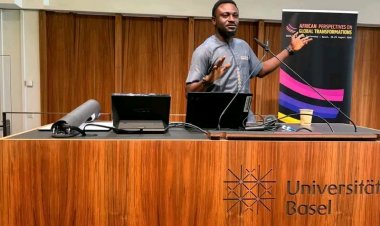
A scholar at Crescent University, Abeokuta, Dr. Kola Adesina, has proposed a new global education framework designed to expand the widely adopted STEM and STEAM models by formally integrating Humanities into the structure. The framework is named MASHET.
 Philip22
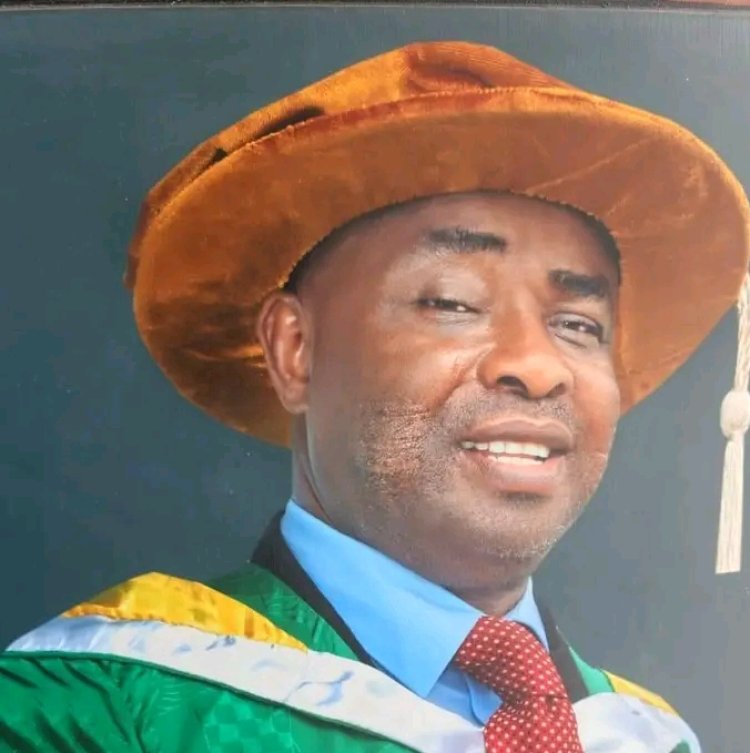
A scholar at Crescent University, Abeokuta, Dr. Kola Adesina, has proposed a new global education framework designed to expand the widely adopted STEM and STEAM models by formally integrating Humanities into the structure. The framework is named MASHET.
Adesina, a communication scholar and Head of the Department of Mass Communication at the Ogun State-based institution, argued that the existing STEM (Science, Technology, Engineering and Mathematics) model, and its STEAM extension (which includes Arts), have continued to marginalise Humanities despite its central role in shaping critical thinking and societal development.
He explained that MASHET stands for Mathematics, Arts, Science, Humanities, Engineering and Technology, describing the inclusion of “Humanities” as a structural correction rather than an optional addition.
According to him, the omission of Humanities in dominant education models has contributed to gaps in reasoning, ethics, and contextual understanding among graduates, particularly in technical fields.
“STEM and STEAM have produced excellent technical minds over 20 years, but they have largely ignored social engineering leading to inadequate thinking in many instances,” Adesina said.
He added: “A graduate who can write code but cannot ask ‘why’ or ‘what is just’ is not truly educated. The Humanities is expected to teach context, ethics, real-time narratives and other courses, no machine can replace.”
Adesina, a veteran journalist turned academic, said the framework was developed after over two decades of reflection following his postgraduate certificate in education at Canterbury Christ Church University, United Kingdom. He noted that his observations of African education systems revealed a consistent pattern where students perform strongly in technical subjects but struggle with critical analysis, ethical reasoning, and communication.

He further stated that global education discourse has increasingly questioned the dominance of STEM-centric models, citing UNESCO’s 2023 call for stronger integration of social and human sciences into science education as validation for the direction of MASHET.
He said MASHET is designed as a corrective framework that does not replace STEM but completes it.
“We are not throwing away STEM. We are completing it. The ‘H’ is not an afterthought. It should be the centre,” he said.
Under the proposed model, Adesina explained that engineering students would engage with narrative ethics, technology students would examine historical consequences of innovation, and science students would combine laboratory work with persuasive writing and critical communication skills. He also emphasised the need for students to consistently interrogate broader societal implications of innovation, including questions around prospects, challenges, and social impact.
He noted that reactions among educators across Africa have been mixed. While some have welcomed the idea as a necessary reform, others argue that adding another dimension could dilute focus on technical competencies that directly support employability.
“In Europe today and some other parts of the world, there is a widespread recognition of inadequacy of the focus on STEAM to the detriment of the societal values of humanity, ethics, contextual thinking, and other social engineering courses; leading to growing calls for more integration of Humanities into the technical curricula,” he said.
Adesina maintained that his objective is not personal recognition but a broader rethinking of how curricula are designed across different cultural and educational contexts.
“I am a journalism lecturer. I teach people to ask questions. That is all I am doing, asking one big question: what did STEM and STEAM forget? The answer is ‘H’ (Humanities). And MASHET has put it back.”
Kehinde Ademuyiwa, who reported the development, is a scholar and doctoral researcher at North West University, South Africa.