Federal University Otuoke Pushes for Commercialised, Impact-Driven Research at 2026 Workshop
The Federal University Otuoke (FUO), Bayelsa State, has called for a major shift in Nigeria’s research culture, urging academics to prioritise innovation, commercialization, and locally relevant solutions over purely theoretical scholarship.
 Philip22
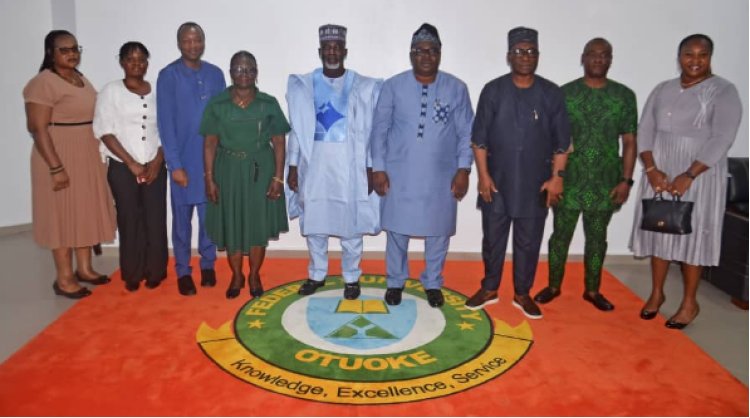
The Federal University Otuoke (FUO), Bayelsa State, has called for a major shift in Nigeria’s research culture, urging academics to prioritise innovation, commercialization, and locally relevant solutions over purely theoretical scholarship.
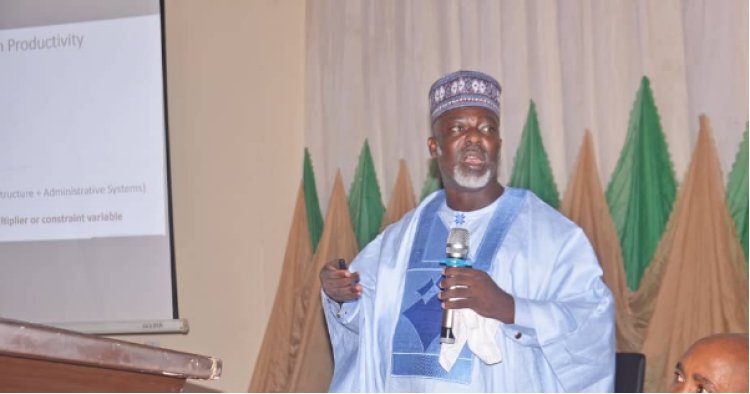
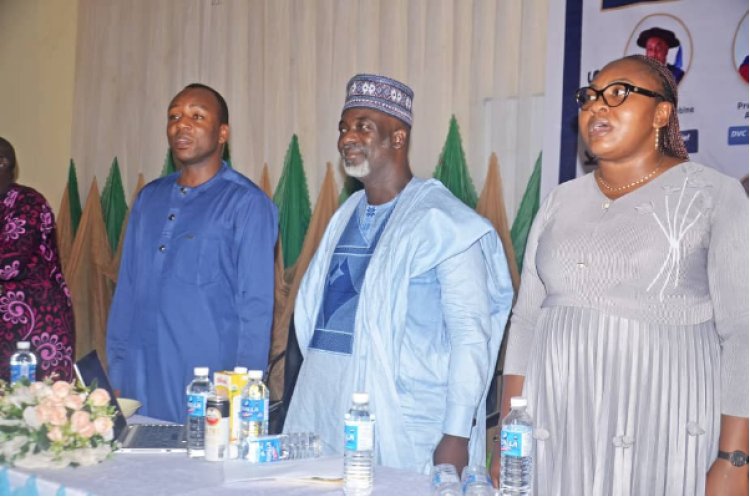
The position was reinforced during the university’s 2026 Research Workshop themed “Effective Research Administration,” held from April 21 to 22, 2026, at the School of Postgraduate Studies Auditorium on the institution’s West Campus.
The workshop brought together academic staff, senior non-teaching personnel, technical staff, and postgraduate students in a strategic capacity-building programme focused on strengthening research systems, improving productivity, and aligning academic outputs with societal and economic needs.
Speaking during the event, the Vice-Chancellor of the university, Professor Promise Mebine, identified what he described as a long-standing disconnect between research efforts in Nigerian universities and their practical outcomes.
According to him, Nigeria is not lacking intellectual capacity, but has struggled to transform research findings into products, services, and innovations capable of solving real societal problems and generating economic value.
Professor Mebine challenged scholars to rethink the purpose of academic research, stressing that publications should go beyond journals and institutional repositories to become tools for development and problem-solving.
He emphasised that research must emerge from local realities and respond directly to community needs, noting that Nigeria’s abundant natural resources and indigenous knowledge systems remain largely underutilised.
The Vice-Chancellor also advocated stronger interdisciplinary collaboration, arguing that research productivity improves significantly when academic and administrative systems work in synergy.
He further stressed the need for environmental sustainability, warning against innovations that undermine ecological integrity, particularly in resource-rich regions where local livelihoods depend heavily on the environment.
Professor Mebine also raised concerns over intellectual property protection and the external exploitation of locally generated academic work without corresponding local benefits.
The keynote speaker, Professor Charles Oluwaseun Adetunji, commended the university’s leadership for prioritising research relevance and institutional transformation.
Drawing from his experience as an international consultant and researcher, Professor Adetunji argued that African universities possess the intellectual capacity to compete globally but are often constrained by weak structures for commercialization and research management.
He noted that impactful research must go beyond knowledge generation to practical application and value creation, warning that research without real-world relevance risks becoming obsolete.
Professor Adetunji, who referenced his success in securing multi-million-dollar international research grants, urged Nigerian institutions to align research efforts with global priorities while maintaining local relevance.
Delivering a keynote lecture titled “Research Administration for Productivity: Optimizing Systems, People, and Processes for Research Excellence,” he identified bureaucratic bottlenecks, fragmented workflows, delayed funding processes, and inefficient administrative systems as major barriers to research productivity.
He recommended the digitization of research administration, automation of routine processes, improved grant management systems, and data-driven decision-making frameworks to boost efficiency and competitiveness.
The workshop also featured presentations on research visibility, grantsmanship, entrepreneurship, artificial intelligence in research, and commercialization strategies.
Professor (Mrs.) Oyintonyo Michael-Olomu highlighted the importance of global partnerships and effective dissemination of research findings, while Dr. (Mrs.) Lolo Teddy Adias emphasised the need for entrepreneurial thinking among researchers to bridge the gap between discovery and market application.
Additional sessions facilitated by Dr. (Mrs.) May Stow and Engr. Odio Abiobele provided practical guidance on grant applications and the integration of artificial intelligence into research workflows.
Principal officers of the university also reinforced the workshop’s core message.
Deputy Vice-Chancellor (Research and Development), Professor (Mrs.) Nateinyin Joy Akporehwe, described the programme as a strategic intervention aimed at repositioning research towards measurable impact and sustainable development.
Deputy Vice-Chancellor (Administration), Professor Chris Onyema, stressed the importance of inclusivity in research, noting that humanities and social sciences remain critical to policy development and societal transformation.
Similarly, Deputy Vice-Chancellor (Academic), Professor Mrs. Ibebietei Temple Offor, cautioned against weak research practices, stressing the need for methodological rigor and credible data collection processes.
The University Librarian, Dr. Gbenga Kayode Oyeniran, encouraged participants to maximise the opportunity for knowledge exchange and institutional capacity development.
The workshop concluded with a renewed institutional commitment to reposition research at Federal University Otuoke as a driver of innovation, economic growth, and societal transformation, while encouraging scholars to embrace interdisciplinary, solution-oriented, and globally competitive research approaches.